Pogostemon cablin (Blanco) Benth.
Summary
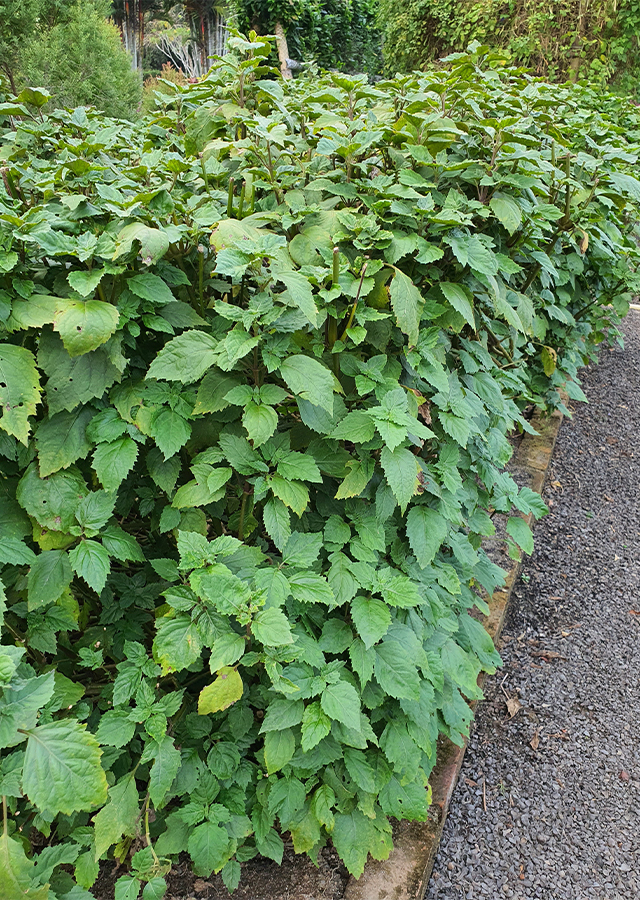
Patchouli (Pogostemon cablin) is an erect shrub 50-150 cm tall of the Lamiaceae family, native to the Philippines or the Malay Peninsula, with Indonesia's main production centers in West Sumatra, Bengkulu, and Aceh. Its essential oil, rich in patchouli compounds, makes it an important export commodity as well as an ingredient in traditional Asian medicine. For generations, patchouli has been believed to relieve headache, dysentery, and boils.
Agroecology
Grows in lowlands to mid-elevations between 1,000-2,000 m above sea level. Grows well in areas with a daily air temperature of 23-28°C, annual rainfall of around 2,200-2,600 mm/year. Requires full sun, fertile and moist soil with a pH of around 6-6.5, and good drainage.
Morphology
- Roots fibrous, fragrant, and creeping underground.
- Stem woody with a diameter of about 10-20 mm, about 20-40 cm long.
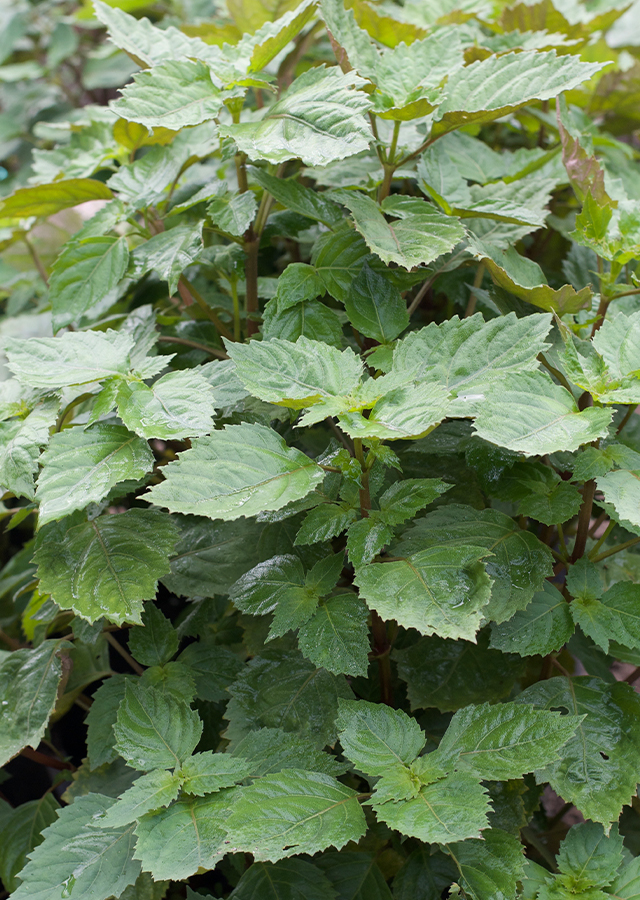
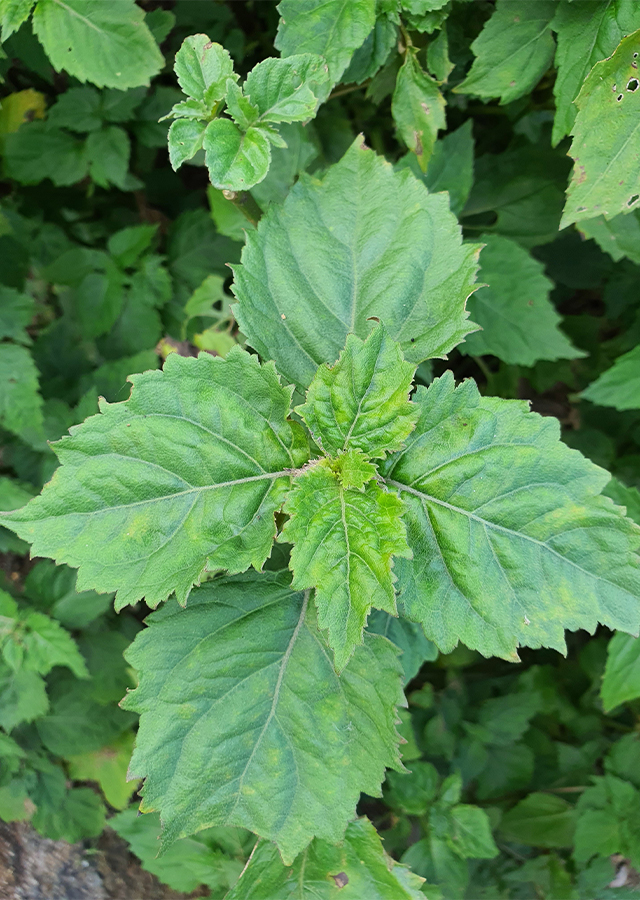
- Leaves round-oval to oblong and heart-shaped, toothed margins. Leaf size about 5-10 cm, green, thin and not rigid.
- Flowers grow at the stalk tip, clustered, characteristically purplish-red.
Cultivation
- Propagated vegetatively using stem and branch cuttings. The stem or branch taken for cuttings is 0.8-1.0 cm in diameter, planted cuttings are 10-20 cm in size and have at least three or four buds.
- Patchouli seed stock can also be shoot cuttings, which must first be sown in a polybag and covered.
Chemical Content
Saponins, flavonoids, tannins, glycosides, terpenoids, steroids, essential oil, rosmarinic acid, phytosterols, organic acids, lignins, alkaloids, glycosides, patchouli alcohol, α-patchoulene, β-patchoulene, α-bulnesene, seychellene, norpatchoulenol, pogostone, eugenol, pogostol.
Benefits
Treats headache, diarrhea, dysentery, and boils; antirheumatic; treats fever; supports kidney health; aids bowel movement; boosts immunity; addresses acne; eliminates body odor.
Simplisia
Not available
Local Names
Dilem, Dilem wangi (Java).
Traditional Recipes
The following recipes reflect traditional knowledge passed down through generations, not a substitute for professional medical diagnosis or advice. Consult a healthcare provider before use.
1. Making Patchouli Oil (Headache and Immunity)
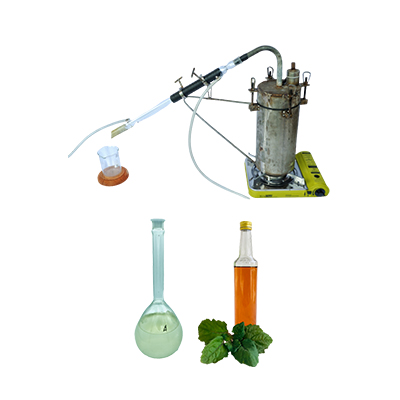
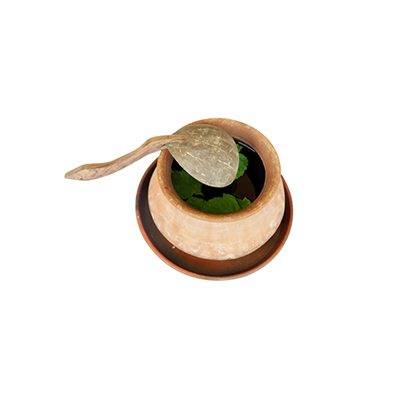
- Take 1-2 kg of leaves and stalks from 6-8 month old patchouli, with greenish-brown stems and dark green leaves. Wash under running water, sun-dry 5 hours/day for 2-3 days, then chop into 15-20 cm pieces and distill by steaming as described below.
2. Eliminating Body Odor
- Boil 100 g of fresh leaves in 10 L of water for 15 minutes.
- Once warm, use for bathing.
Reference Sources
- Liao JB, Wu DW, Peng SZ, Xie JH, Li YC, Su JY, Chen JN, Su ZR. 2013. Immunomodulatory potential of Patchouli alcohol isolated from Pogostemon cablin (Blanco) Benth (Lamiaceae) in mice. Trop. J. Pharm. Res. 12(4): 559-565.
- Liu F, Deng C, Cao W, Zeng G, Deng X, Zhou Y. 2017. Phytochemicals of Pogostemon cablin (Blanco) Benth. aqueous extract: their xanthine oxidase inhibitory activities. Biomed. & Pharmacotherapy 89:544-548.
- Slamet, Ulyarti, Rahmi SI. 2019. Pengaruh lama fermentasi daun nilam menggunakan ragi tempe terhadap rendemen dan mutu fisik minyak nilam (Pogostemon cablin Benth). J. Teknol. Ind. Pert. Indonesia 11(1). Universitas Syah Kuala.
- Swamy MK, Sinniah UR. 2015. A comprehensive review on the phytochemical constituents and pharmacological activities of Pogostemon cablin Benth.: an aromatic medicinal plant of industrial importance. Molecules 20: 8521-8547
- Swamy MK, Sinniah UR. 2016. Patchouli (Pogostemon cablin Benth.): botany, agrotechnology and biotechnological aspects. Ind. Crops and Products 87: 161-176.