Polianthes tuberosa L.
Summary
Sedap malam (Polianthes tuberosa) is a herb up to 1.2 meters tall of the Asparagaceae family, originating from Mexico and spreading to Indonesia after the arrival of Europeans and Chinese. Its distinctively fragrant night-blooming flowers make it a popular cut flower, while its petals are sometimes used as a garnish in cooking. Traditionally, sedap malam is also believed to relieve insomnia, boils, and sore throats.
Agroecology
Sedap malam grows in areas at elevations of 700-1,500 m above sea level, but grows optimally at elevations of 100-900 m above sea level. Prefers open environments with air humidity of 75-90%, daily temperatures between 16-27 °C, rainfall of 1,900-2,500 mm/year. Suitable for planting in andosol soil, clay to sandy loam texture, pH 5-5.7.
Morphology
- Roots fibrous.
- Stem consists of a main stem and a pseudostem (bulb). Main stem whitish-light green, covered with fine hairs.
- Leaves flat and elongated, glossy green. Reddish spots at the base.
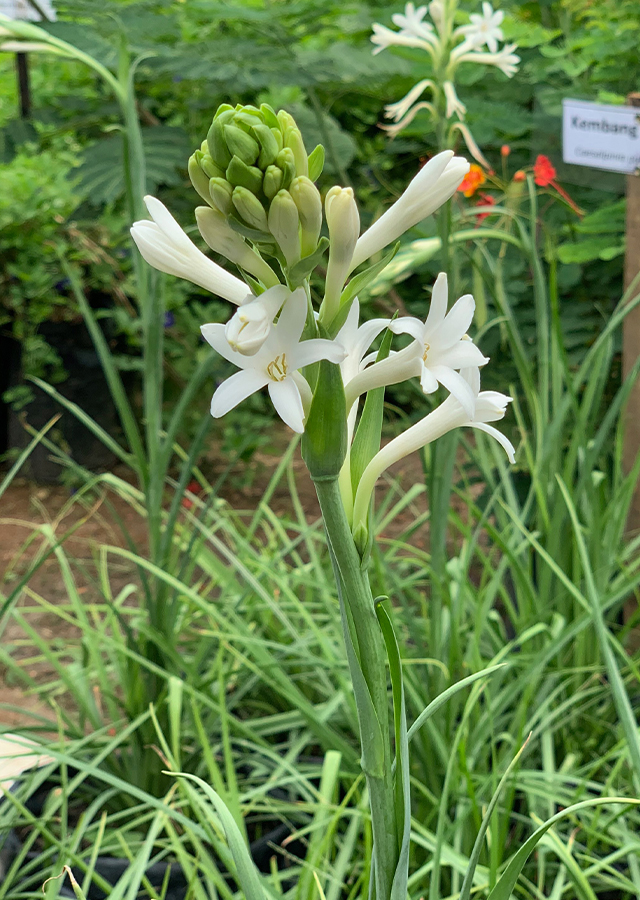
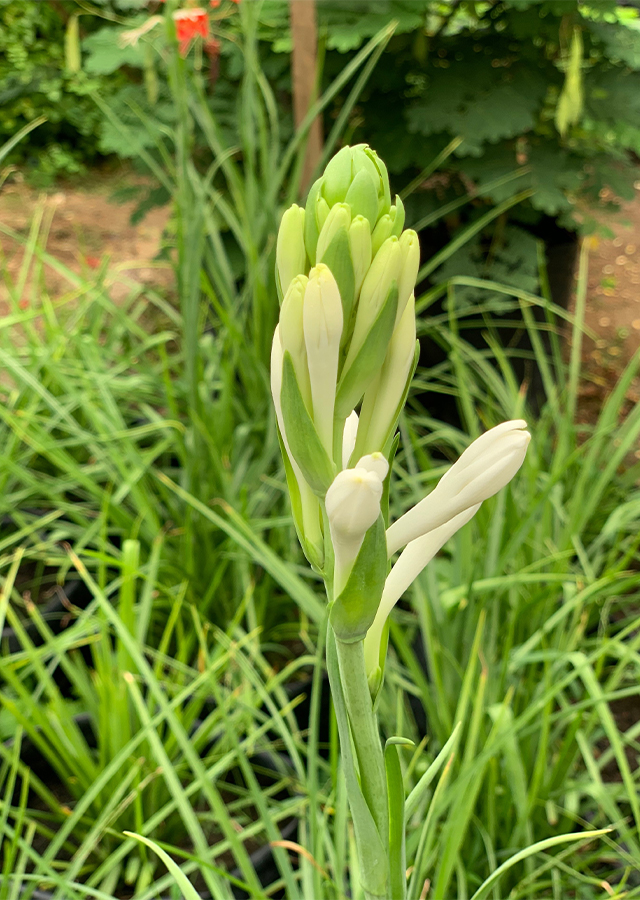
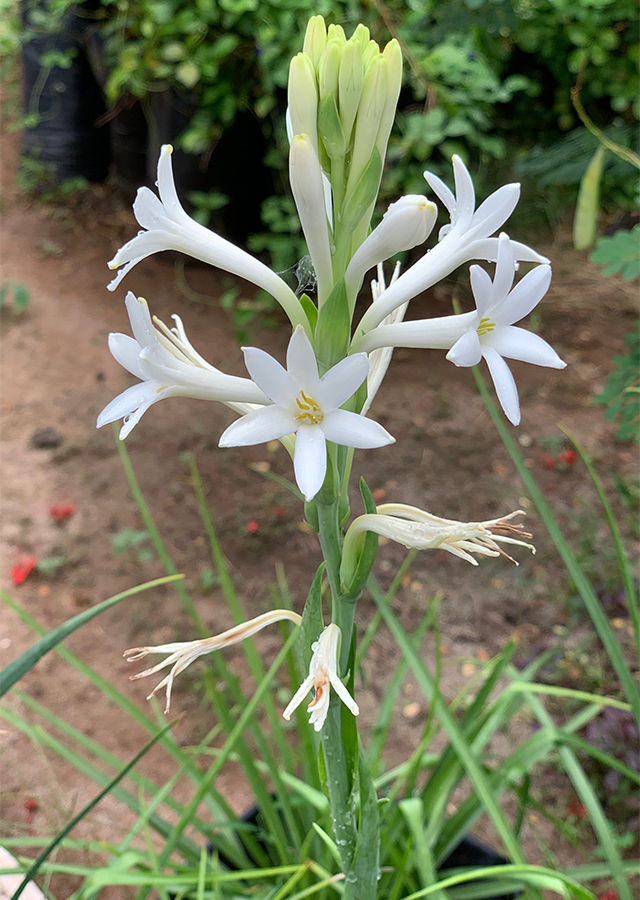
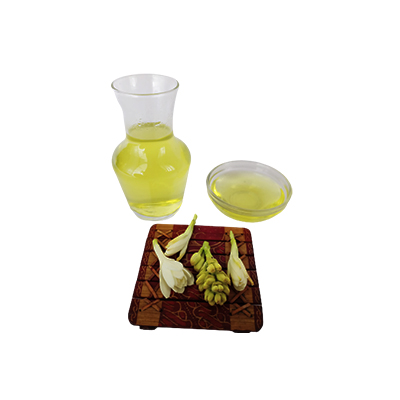
- Flowers compound, 5-12 blooms emerge on the flower stalk. White with a slightly reddish tip, bloom at night, with a long-lasting fragrant aroma.
Cultivation
- Propagated vegetatively (flower bulbs).
- Bulbs are taken from production plants aged more than 2.5 years. Bulbs should be stored for 1-2 months before planting (to speed up sprouting).
Chemical Content
Sapogenin, flavonoids, geraniol, nerol, farnesol, eugenol, spirostanol, furostanol glycoside (steroid), methyl benzoate, 1,8-cineole.
Benefits
Remedy for boils (furunculus), swelling (edema), cataracts, influenza, insomnia, fever reducer (antipyretic), treats rheumatism, sore throat, has antioxidant and antimicrobial activity.
Simplisia
Information not yet available.
Local Names
Sedep malem, Sundal malem (Malay, Java, Sunda), Rasamalang (Makassar), and Rasamaleng (Bugis).
Traditional Recipes
The following recipes reflect traditional knowledge passed down through generations, not a substitute for professional medical diagnosis or advice. Consult a healthcare provider before use.
1. Rheumatism with Heart Complications
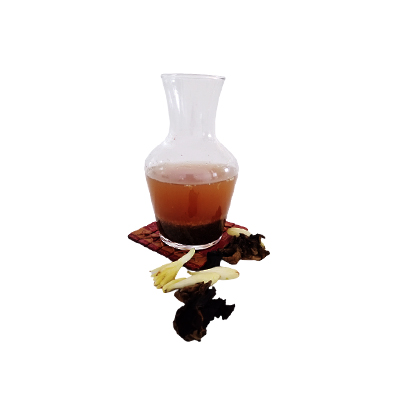
- Wash 10 dried sedap malam flowers and 10-15 g black wood ear mushroom thoroughly.
- Soak the sedap malam flowers until soft and steam until cooked. Put all ingredients into a blender and add 1 glass of water. Blend and pour into a serving glass.
- Drink together with the sediment, once a day
2. Cataracts
- Take 50 sedap malam blooms.
- Boil the flowers with 1,500 ml of water until boiling. Wait until cool.
- Once cool, use to wash the eyes.
Reference Sources
- Ghosh PK, Bhattacharjee P, Das S. 2014. Antimicrobial activity of supercritical carbon dioxide extracts of tuberose (Polianthes tuberosa linn.) flowers against common pathogens. IJPSR 5(4): 1279-1289.
- Jin JM, Zhang YJ, Yang CR. 2004. Pirostanol and Furostanol Glycosides from the Fresh Tubers of Polianthes tuberosa. J. Nat. Prod. 67(1): 5-9.
- Maiti S, Moon UR, Bera P, Samanta T, Mitra A. 2014. The in vitro antioxidant capacities of Polianthes tuberosa L. flower extracts. Acta Physiol Plant 36: 2597–2605.