Polyscias scutellaria (Burm.f.) Fosberg
Summary
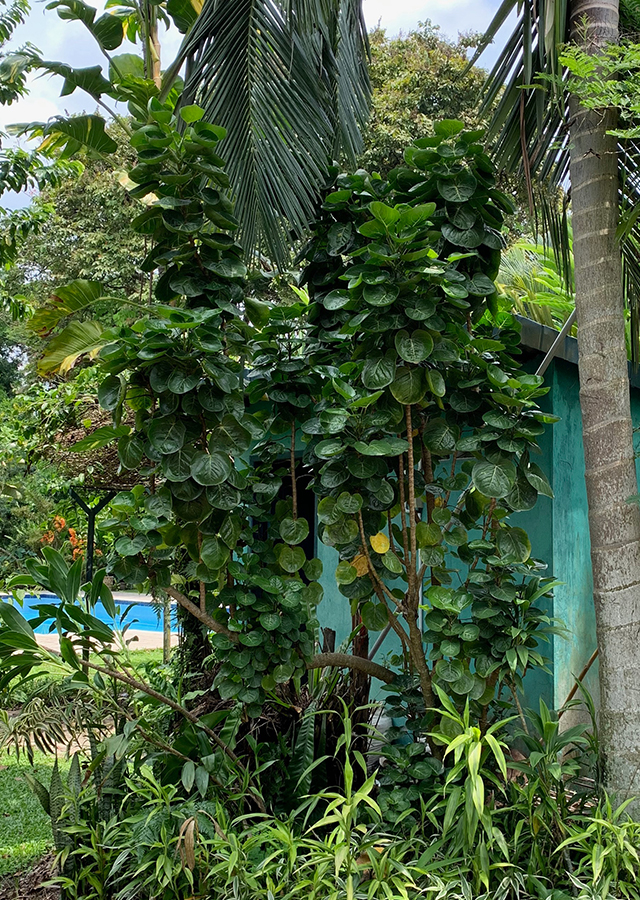
Daun mangkok (Polyscias scutellaria) is a shrub up to 2-6 meters tall of the Araliaceae family, one of Indonesia's native floral treasures commonly planted as a living hedge and yard ornamental. Its uniquely bowl-shaped young leaves are commonly eaten as fresh greens or in urap salad. Traditionally, daun mangkok is believed to be diuretic and help prevent hair loss.
Agroecology
An easy-growing plant with good adaptability. Often found as a wild plant or along riverbanks. Grows well at elevations of 1-200 m above sea level. Prefers open places exposed to sunlight or slightly sheltered.
Morphology
- Stem woody, branching, round shaped, long, and straight.
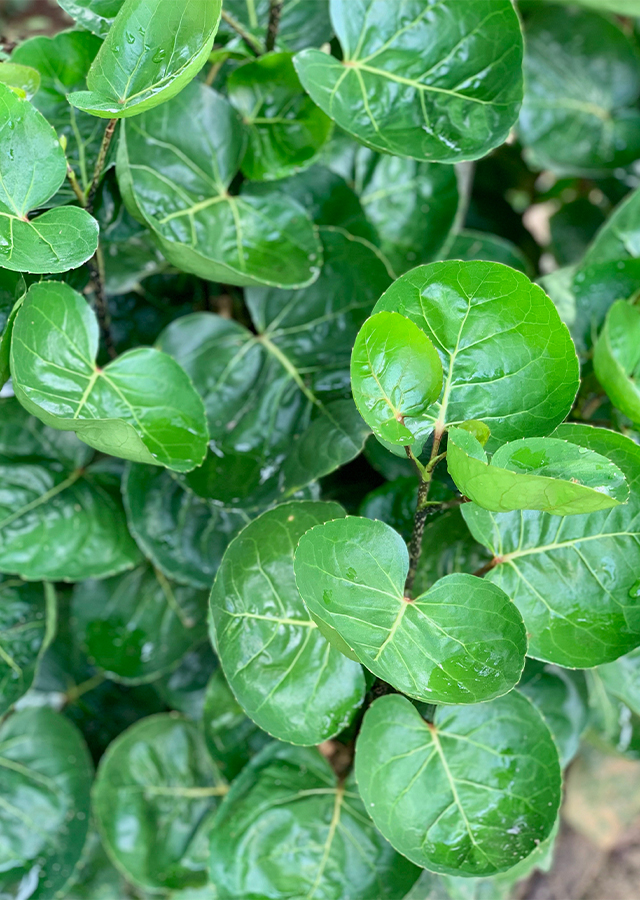
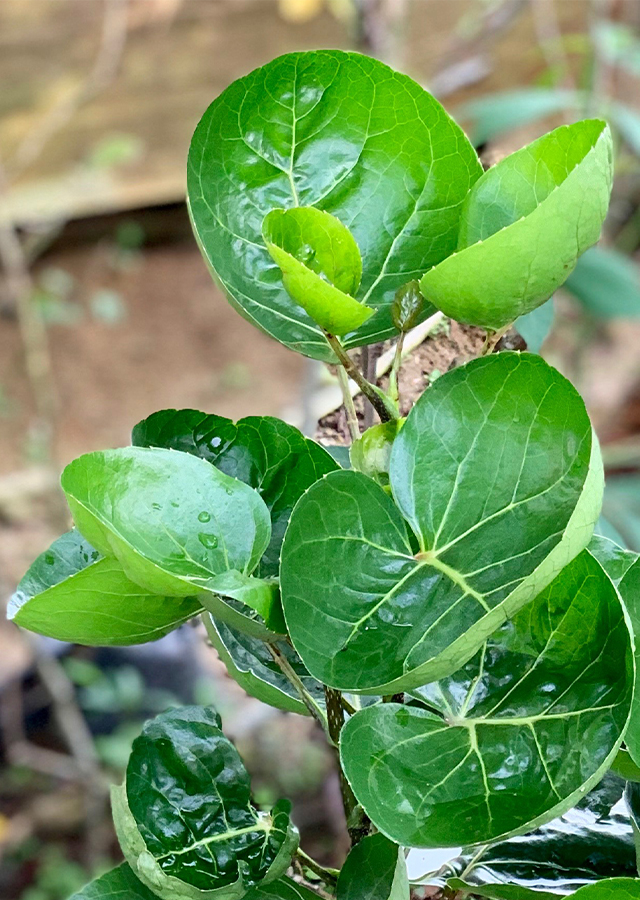
- Leaves bowl-shaped, single, thick, round with a heart-shaped base, pinnate venation, dark green in color.
- Flowers compound, umbrella-shaped, green.
- Fruit a berry, flat, green.
- Seeds small, hard, and brown in color.
Cultivation
Propagated by seed, stem cuttings or air-layering from plants with good stems.
Chemical Content
Polysciasaponin, carotenoids, β-carotene, anthocyanins, ascorbic acid, flavonoids, tannins, peroxidase, saponins, aurone, chalcone.
Benefits
Diuretic, treats breast inflammation, prevents hair loss/promotes hair growth, prevents body odor, wound healing, promotes breast milk flow, relieves toothache.
Simplisia
- Prepare fresh daun mangkok leaves (old and young) then wash thoroughly with running water.
- Dry at room temperature for 3-4 days.
- Once dry, store in a closed container.
Local Names
Mamanukan (Sunda), Godong mangkokan (Java), Puring (Madura), Daun koin, Daun papeda, Memangkokan (Sumatra).
Traditional Recipes
The following recipes reflect traditional knowledge passed down through generations, not a substitute for professional medical diagnosis or advice. Consult a healthcare provider before use.
1. Body Odor
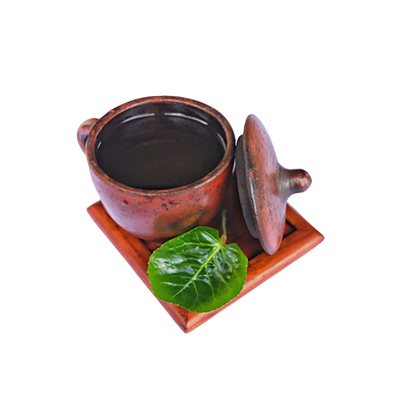
- Wash 3 leaves thoroughly then eat as a fresh vegetable, or.
- Boil 7 leaves with 3 glasses of water.
- Drink 3 times a day.
2. Wounds
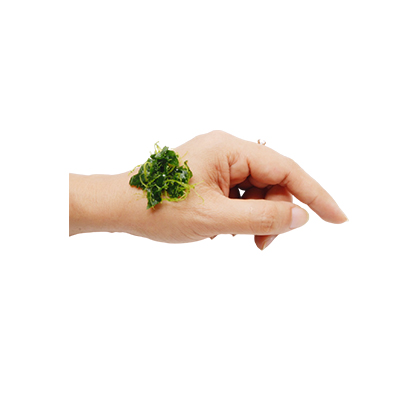
- Wash 5 leaves thoroughly then pound until fine.
- Apply the mixture on the wound and cover with a bandage.
- Change the mixture and bandage 2-3 times a day.
Reference Sources
- Useful Tropical Plants Database. 2014. Polyscias scutellaria. http://tropical.theferns.info/viewtropical.php?id=Polyscias+scutellaria. 20-01-2021.
- Globinmed. Polyscias scutellaria (Burm.f.) Fosberg. https://www.globinmed.com/index.php?option=com_content&view=article&id=105877:polyscias-scutellaria-burm-f-fosberg&catid=286&Itemid=357. 20-01-2021.
- Stuart Xchange. (2016). Philippine Medicinal Plants. Platito. http://www.stuartxchange.org/Platito.html. 20-01-2021.
- Pratiwi SN. 2018. Uji efektivitas ekstrak etanol daun mangkokan (Nothopanax scutellarium) terhadap mortalitas larva Anopheles aconitus. Skripsi. Universitas Muhammadiyah Surakarta. Surakarta.
- Budiharti A. Makalah fitokimia daun mangkokan (Nothopanax scutellarium Merr.) dengan formulasi emulgel sebagai penumbuh rambut.
- Kurniasih D. 2010. Kajian kandungan senyawa karotenoid, antosianin, dan assam askorbat pada sayuran indigenous. Skripsi. Fakultas Teknologi Pertanian. Institut Pertanian Bogor. Bogor.
- Rifkia V, Jufri M, Mun'im A. 2017. Hair growth promoting activity of Nothopanax scutellarium Merr. leaves. J. Young Pharm. 9(3): 436-440.