Portulaca oleracea L.
Summary
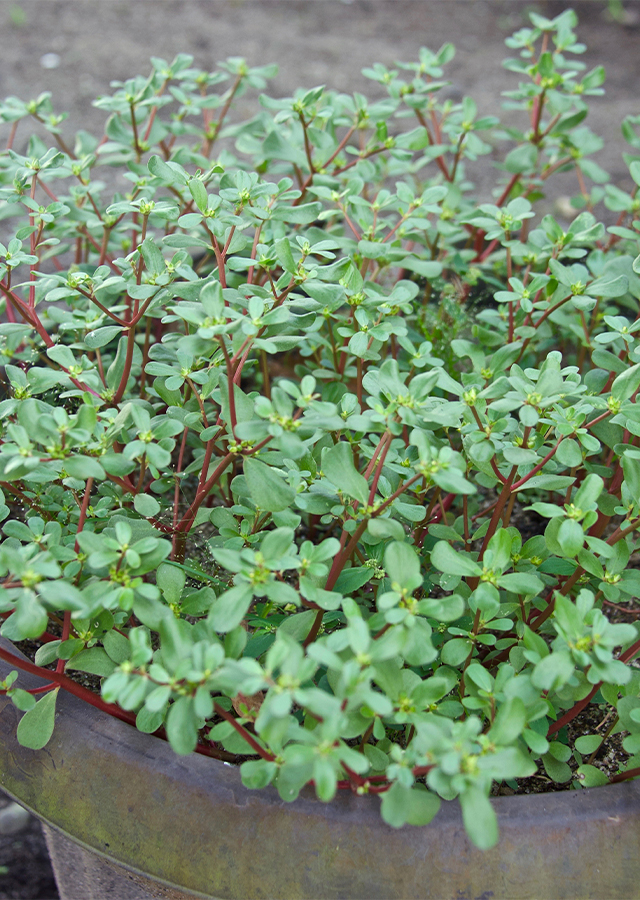
Purslane (Portulaca oleracea) is a herb up to 50 cm tall of the Portulacaceae family, believed to be native to Brazil and now distributed across both tropical and four-season climate regions. Its succulent leaves are commonly eaten as a fresh vegetable in Europe, the Middle East, and Mexico, besides being grown as an ornamental. Traditionally, purslane is used to treat acute appendicitis, dysentery, and vaginal discharge.
Agroecology
A weed that grows in lowlands up to 1,800 m above sea level. Grows wild in open fields, favoring sandy and clay soil. Has good adaptability to its environment, allowing it to survive in water-scarce soil conditions.
Morphology
- Roots taproot, dirty white.
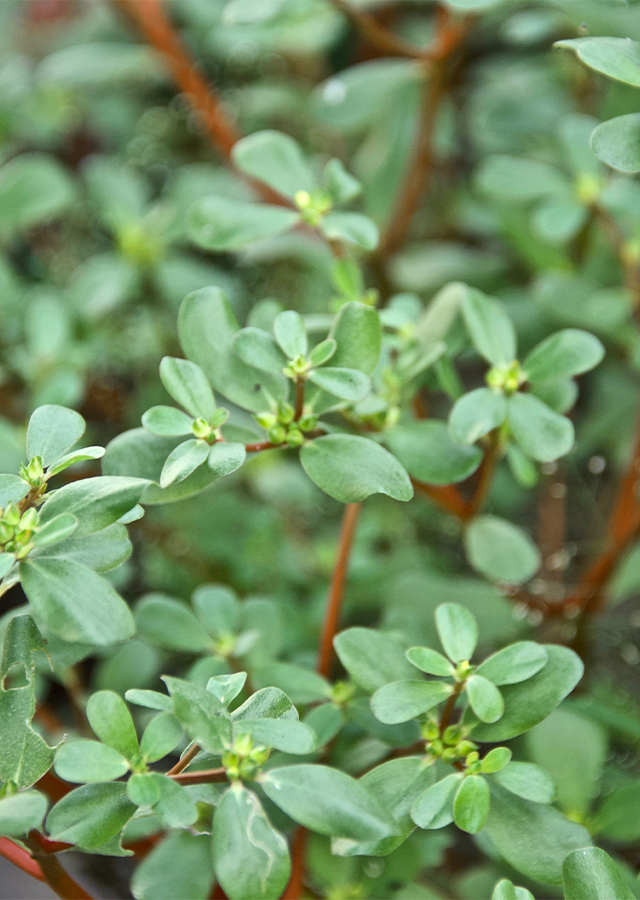
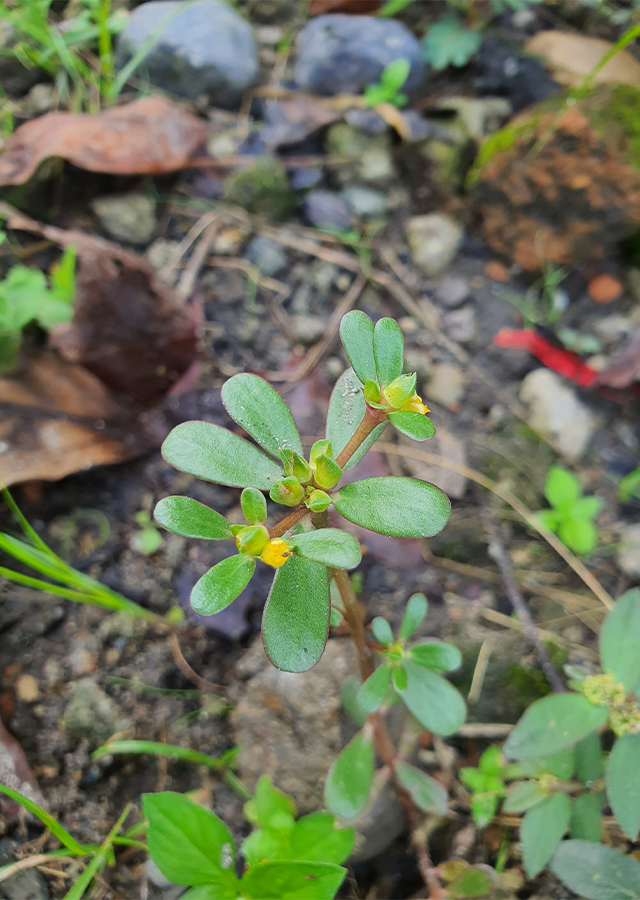
- Stem purplish-red, round, smooth, fleshy, jointed, growing partly or fully erect.
- Leaves simple, fleshy, thick, blunt base and tip, smooth green margins, 1-3 cm long, and 1-2 cm wide.
- Flowers compound, located at the branch tip, small, green calyx, heart-shaped yellow corolla, stigma with three to five lobes, white or yellow.
- Fruit box-shaped, with many seeds, green.
- Seeds round, small, glossy, and black.
Cultivation
- Propagated through dried seeds that fall to the soil surface, and stem cuttings.
- Planting method: planted directly then covered with compost.
- Harvest time is 20-30 days after planting, harvesting the shoots every 2-3 weeks.
Chemical Content
Alkaloids, steroids/terpenoids, tannins, saponins, flavonoids, organic acids (oxalic acid, caffeic acid, malic acid, citric acid).
Benefits
Treats acute appendicitis, acute dysentery and diarrhea, mastitis, vaginal discharge, urinary tract disorders, blood in urine, jaundice, intestinal worms, shortness of breath, wounds, and weak, lethargic, and aching body.
Simplisia
- Wash purslane thoroughly under running water.
- Dry in an oven at 40-60°C, or sun-dry for 5-7 days.
- Store the dried purslane in an airtight container for extraction.
Local Names
Gelang (Sunda), Reserean (Madura), Jalu-jalu kiki (Maluku).
Traditional Recipes
The following recipes reflect traditional knowledge passed down through generations, not a substitute for professional medical diagnosis or advice. Consult a healthcare provider before use.
1. Weak, Lethargic, and Aching Body
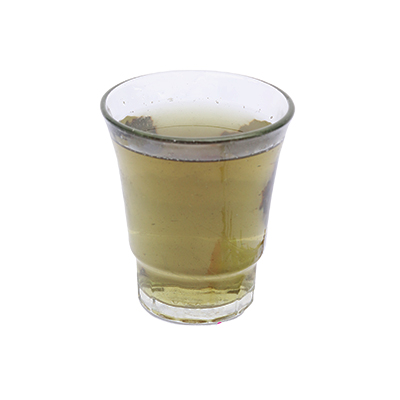
- Boil 9-13 g of fresh purslane in 3 cups of water until boiling and reduced to 1 cup. Let cool and strain.
- Drink once a day.
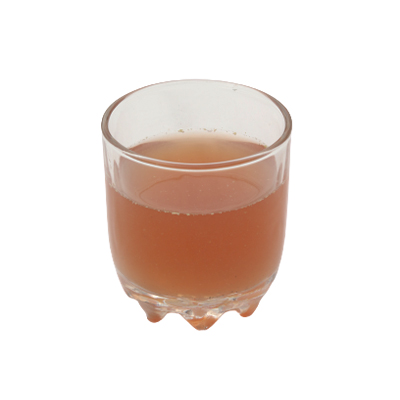
2. Blood in Urine
- Prepare 13 g of purslane and 25 g of fresh plantain leaves, boiled in 3 cups of water until boiling and reduced to 1 cup.
- Drink 1 cup twice a day.