Portulaca quadrifida L.
Summary
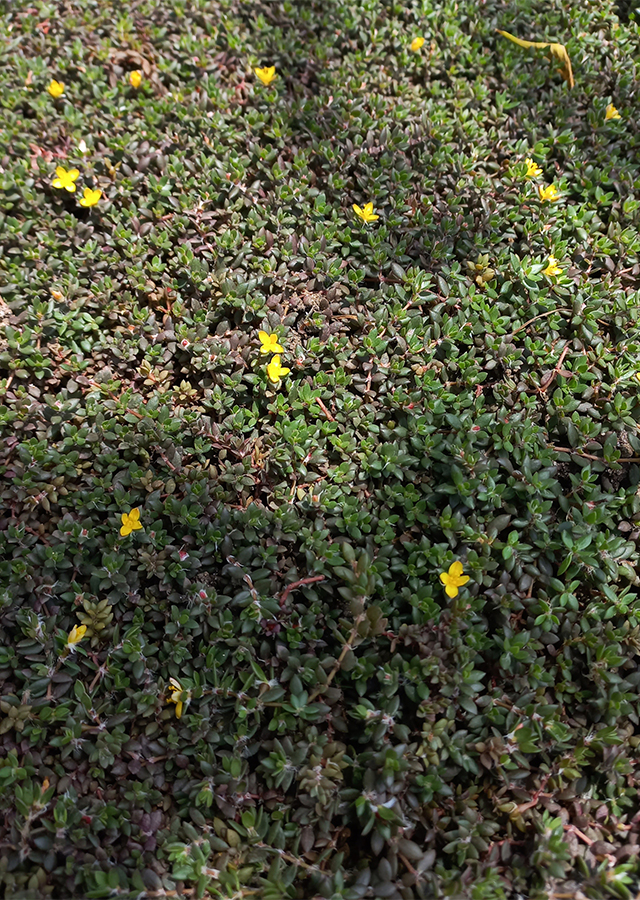
Chickenweed (Portulaca quadrifida) is an annual or short-lived perennial herb spreading up to 30 cm from the Portulacaceae family, distributed in Africa and tropical Asia as a weed rarely cultivated. In Africa, its leaves are used as a traditional vegetable and emergency food during famines. Chickenweed has been used for centuries in Ayurvedic medicine as well as traditional African and Chinese medicine to address rheumatism and kidney disorders.
Agroecology
Portulaca quadrifida is found in the wild among rocks, in sandy or rocky soil, in disturbed places, and as a weed in cultivated land, from sea level up to an elevation of 2,000 m asl. It grows best in areas where the mean annual daytime temperature is in the range of 22-32°C, but can tolerate 16-36°C, with mean annual rainfall in the range of 1,500-2,000 mm, but tolerates 1,000-2,500 mm. This species requires a sunny position in well-drained soil, and is tolerant of various soil types but prefers sand or sandy loam. This species' growth can succeed even in fairly poor soil. It prefers soil conditions with a soil acidity (pH) in the range of 5.5-6.5, but tolerates 4.5-7.5.
Morphology
- Roots a somewhat swollen taproot.
- Stem much-branched, rooting freely from the nodes, fleshy and often reddish.
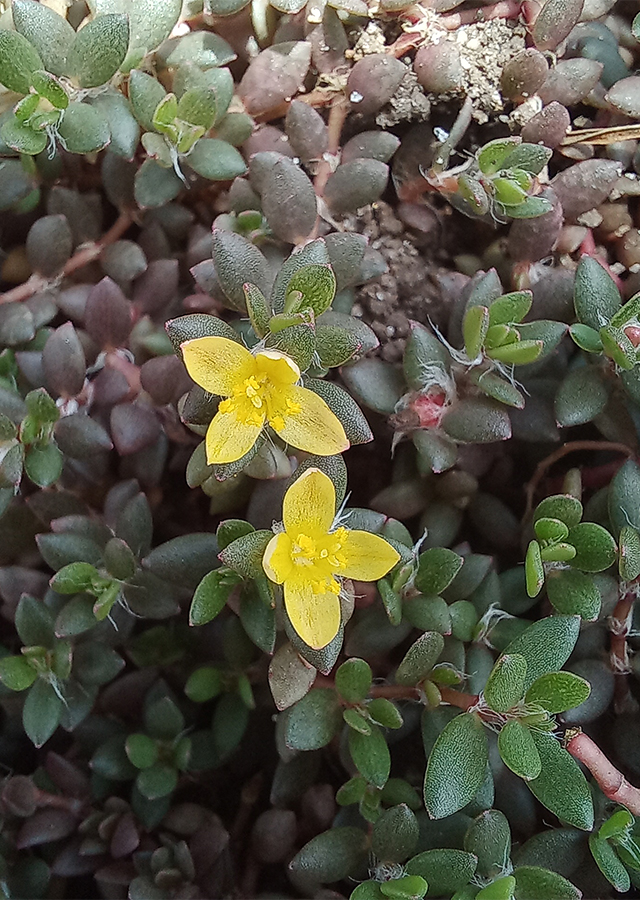
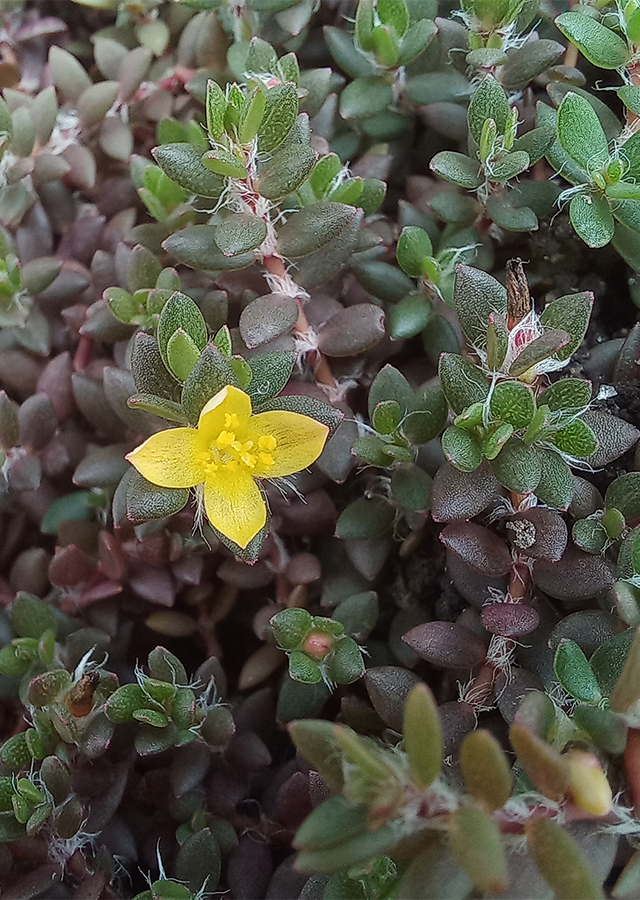
- Leaves opposite, fleshy, elliptic to ovate, 5-10(-14) mm long, 1.5-3(-4) mm wide, stalkless, tip blunt to subacute, smooth, both surfaces more or less flat, veins distinct, whitish stipular hairs.
- Flowers small, solitary at the tip of short lateral branches, surrounded by 4 involucral leaves and numerous white hairs. Sepals 2, ovate, 3-4(-5.8) mm long. Petals 4(5), ovate, usually yellow (rarely apricot, pink, or red colored). Stamens 7-16, arranged in 1 whorl, stigma 4-branched.
- Fruit an obovoid capsule 2-3.5 mm long, splitting near the base leaving only a very thin, papery margin.
- Seeds numerous per fruit, half-round shaped, about 1 mm long, dull gray.
Cultivation
- Propagation is generative using seed, or vegetative using stem cuttings.
- Fresh seeds need light to germinate, but this requirement disappears in older seeds.
- Its seeds are easily dispersed by wind, water, and through bird droppings.
Chemical Content
Alkaloid compounds, saponins, flavonoids, triterpenoids/steroids, tannins and glycosides, amino acids, acid potassium oxalate.
Benefits
Diuretic in nature, treats rheumatism and gynecological ailments, reduces fever, treats kidney and urinary tract disorders, lung disorders, asthma, cough, vaginal discharge, worm infestation, dysentery, diarrhea, an external remedy (for boils, eczema and dermatitis, hemorrhoids, stomach complaints, and swelling), a sedative, analgesic and cardiotonic remedy, an emetic. Has antimicrobial, antioxidant, hepatoprotective, anticancer, anticephalic, antiabortive, antifungal, and neuropharmacological activity.
Simplisia
- Prepare an adequate amount of fresh chickenweed leaves, wash clean with running water.
- Dry under the sun or with an oven at 40°C until the moisture content reaches 10%.
- Grind using a blender until it becomes powder.
- Store in a clean, airtight place.
Local Names
Informasi tidak ditemukan. Butuh penelusuran lebih lanjut.
Traditional Recipes
The following recipes reflect traditional knowledge passed down through generations, not a substitute for professional medical diagnosis or advice. Consult a healthcare provider before use.
1. Dysentery
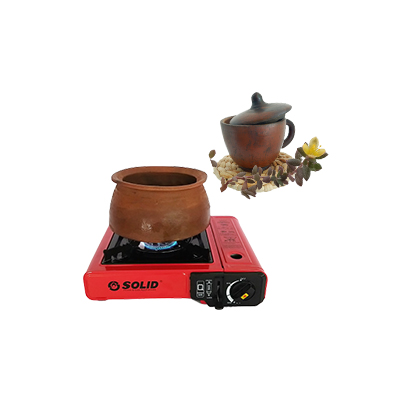
- Take fresh chickenweed leaves and wash until clean.
- Boil until it boils.
- Let it cool to warm/cold.
- Strain then drink.
Reference Sources
- Royal Botanic Gardens. Plants of the World Online: Portulaca quadrifida L. https://powo.science.kew.org/taxon/urn:lsid:ipni.org:names:699334-1. 08-04-2022.
- Tropical Plants Database, Ken Fern. 2017. Portulaca quadrifida. http://tropical.theferns.info/viewtropical.php?id=Portulaca+quadrifida. 08-04-2022.
- PROTA4U. Portulaca quadrifida L. https://www.prota4u.org/database/protav8.asp?g=pe&p=Portulaca+quadrifida+L. 08-04-2022.
- Stuartxchange. 2018. Philippine Medicinal Plants: Sayikan. http://www.stuartxchange.org/Sayikan.html. 08-04-2022.
- Das M., Ashok Kumar D. 2013. Phyto-pharmacological review of Portulaca quadrifida Linn. Journal of Applied Pharmaceutical Research, 1(1).
- Ayushvedah. kutira - Portulaca quadrifida Linn - Potulacaceae. https://ayushvedah.com/druginfo.php?drugid=369. 08-04-2022.