Pouteria caimito (Ruiz & Pav.) Radlk.
Summary
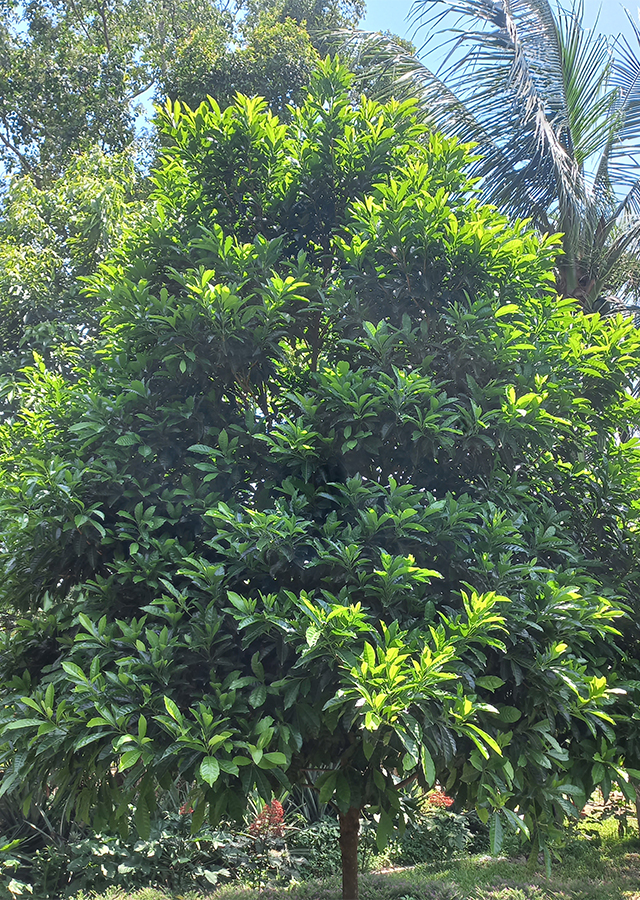
Pouteria caimito or abiu is a tropical fruit tree believed to be native to the upper Amazon River, and became an important component of Native American gardens since the pre-Columbian era. Its fruit, rich in minerals and vitamins, is commonly consumed fresh or processed into ice cream and juice, while various parts of the plant are traditionally used to treat cough, bronchitis, and digestive disorders.
Agroecology
Abiu is generally found growing in forests, especially in seasonally flooded areas, and along coastlines, at elevations from sea level up to 1,500 m asl. It is a hot, wet tropical fruit crop that requires a humid, warm climate year-round. This species grows well in full sun, in fertile, wet soil. Its growth also prefers acidic soil. However, abiu is not frost-tolerant.
Morphology
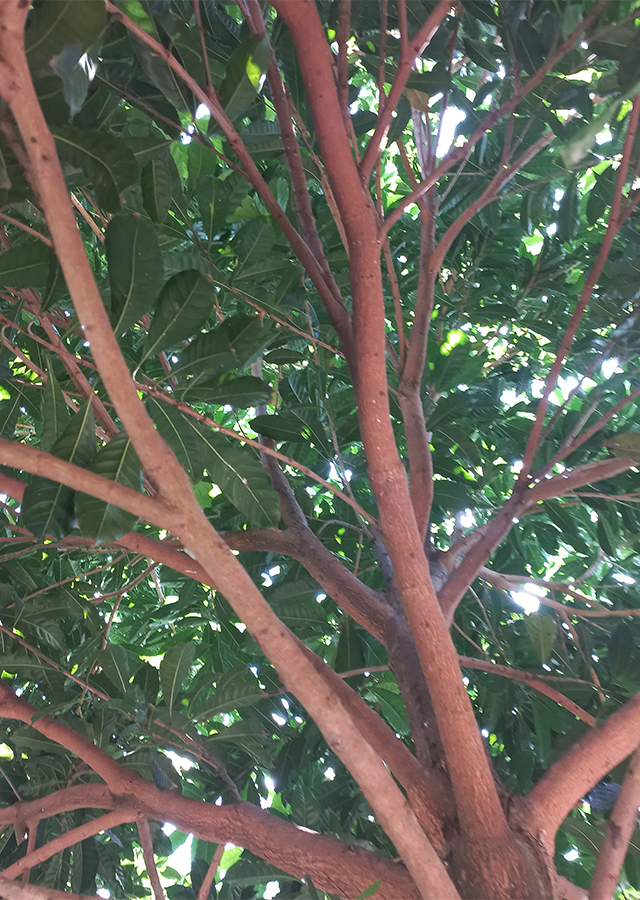
- Stem straight, exuding white or reddish sap.
- Leaves alternate, elliptic to oblong-lanceolate, varying in size from 10-20 cm, 3-6 cm wide, green, veins pinnate, shortly pointed at the tip, sometimes long-tapering at the base, margin wavy. Petiole short, green.
- Flowers small, hermaphroditic, appearing singly or in clusters (about 2-5 flowers) from the leaf axils, growing on slender, elongated shoots. Each flowering branch produces about 20-280 flowers. Petals four to five, white, cream to greenish, corolla tube cylindrical about 5 mm long. Has four overlapping sepals that are light green. Flowers bloom in the morning and remain open for about two days.
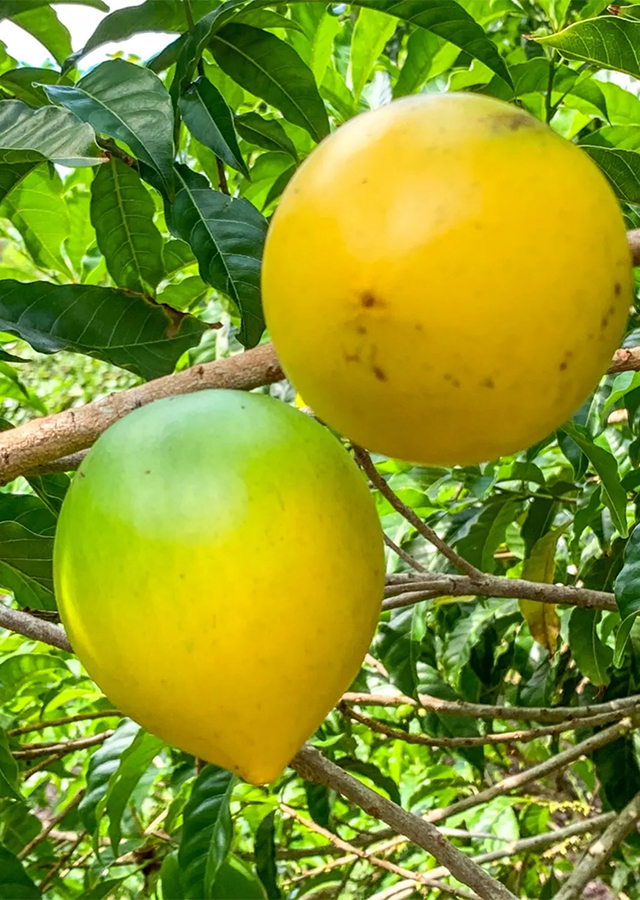
- Fruit a berry, varying in shape from round to oblong, finely hairy and green when young, turning bright yellow with smooth skin when ripe. The flesh is whitish and translucent (clear), mucilaginous, soft in texture, juicy like cream or jelly, sweet-tasting with a rambutan-like aroma. Sometimes has a short "nipple" at the base of the fruit. Fruit that is not fully ripe produces latex that sticks to the lips. Has thin skin that bruises easily. Fruit stalk short and exuding sap.
- Seeds one to four per fruit, ovoid, dark brown to black with a pale hilum on one side. Seeds covered by a thin layer of pulp.
Cultivation
- Plant propagation is generative through seed. Once extracted from the fruit, seeds cannot survive more than a few days and therefore must be planted as soon as possible into clean, well-drained medium. Seeds will germinate within 15 to 20 days. Seedlings can be planted in the orchard once they reach 6-8 months of age after sowing. Planting spacing is 6 x 5 m. One year later, the lower branches are pruned and the plant will begin fruiting within 3 years and significantly by 5 years.
- Propagation can also be done vegetatively using budding techniques. Budded abiu trees will fruit between 1-2 years after being planted in the orchard.
Chemical Content
Palmitic acid, α-copaene, hexadecyl acetate, taraxerol, ß-sitosterol, lupeol, α-amyrin, erythrodiol, the tetracyclic triterpene dammarenediol II, 1-(2-hydroxyethyl)-1,2,4-triazole, 5-hydroxymethylfurfural, 1-methyl-5-fluorouracil, trans-geranylgeraniol, squalene, spinasterol, alkaloids, terpenoids, flavonoids, lapachol, phenylpropanoids, and benzenoids.
Benefits
Treats cough, colds, bronchitis, various lung disorders, diarrhea, abscesses, boils, an anthelmintic, a laxative, heals swollen wounds, reduces fever, maintains eye and digestive health, strengthens the body's immunity, aids weight loss, improves skin health. Has anti-inflammatory, antimicrobial, antianemic, anticancer, and antioxidant activity.
Local Names
Sawo Australia, Sawo mangga.
Traditional Recipes
The following recipes reflect traditional knowledge passed down through generations, not a substitute for professional medical diagnosis or advice. Consult a healthcare provider before use.

1. Cough
- Take a ripe abiu fruit and wash until clean.
- Split the abiu fruit so it's easy to eat.
- Eat the abiu fruit to treat cough.
2. Boils
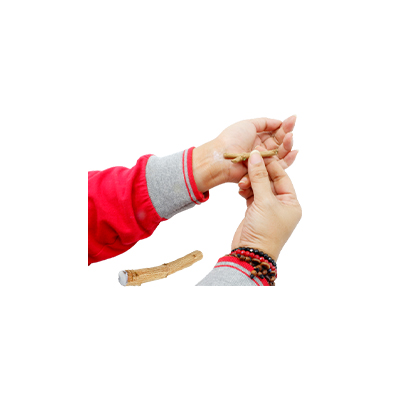
- Take an adequate amount of abiu sap.
- Apply the sap to the boil.
Reference Sources
- Royal Botanic Gardens. Plants of the World Online: Pouteria caimito (Ruiz & Pav.) Radlk. https://powo.science.kew.org/taxon/urn:lsid:ipni.org:names:788845-1. 17-05-2022.
- Stuartxchange. 2017. Philippine Medicinal Plants: Pouteria caimito (Ruiz & Pav.) Radik. http://www.stuartxchange.org/Abiu. 17-05-2022.
- Tropical Plants Database, Ken Fern. 2021. Pouteria caimito. https://tropical.theferns.info/viewtropical.php?id=Pouteria+caimito. 17-05-2022.
- Flora Fauna Web. 2022. Pouteria caimito. https://www.nparks.gov.sg/florafaunaweb/flora/3/0/3085. 17-05-2022.
- Healthbenefitstimes. 2021. Health benefits of Abiu Fruit. https://www.healthbenefitstimes.com/abiu-fruit/. 17-05-2022.
- Arif B. A., Susanto S., Matra D. D., Widayanti S. M. 2021. Identifikasi Senyawa Bioaktif dan Manfaatnya dari Beberapa Bagian Tanaman Abiu (Pouteria caimito). J. Hort. Indonesia ,12(1): 10-20. DOI: http://dx.doi.org/10.29244/jhi.12.1.10-20.
- Purdue University. Center for New Crops & Plant Products. Abiu. https://hort.purdue.edu/newcrop/morton/abiu.html. 17-15-2022.
- Balai Uji Terap Teknik dan Metode Karantina Pertanian. 2022. Kegunaan, Deskrifsi, Serta Cara Penanaman Abiu. http://buttmkp.karantina.pertanian.go.id/?page_id=1754. 17-05-2022.