Pouzolzia zeylanica (L.) Benn.
Summary
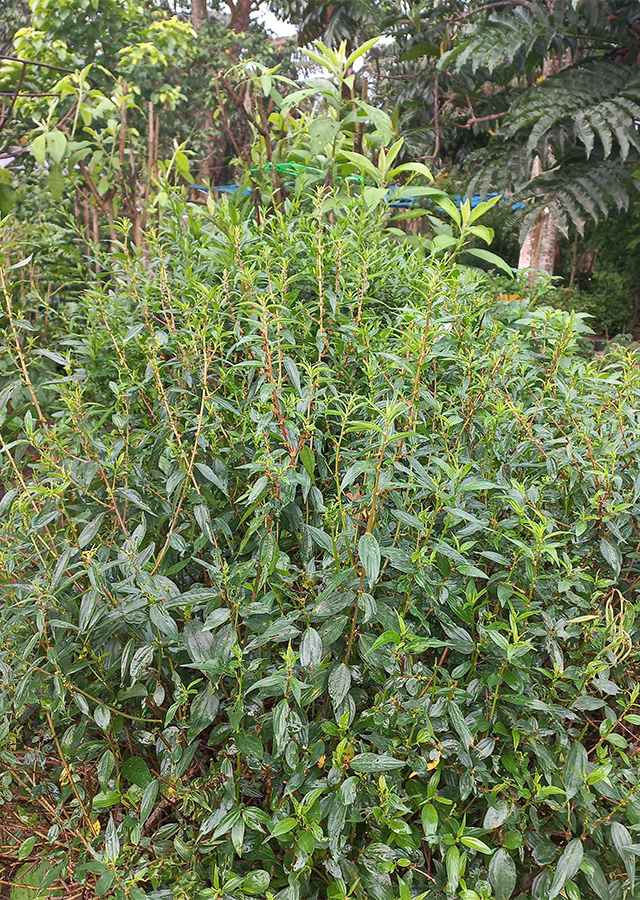
Jukut krinching (Pouzolzia zeylanica) is a herb 12-40 cm tall from the Urticaceae family spread from Southern China to Australia and Polynesia. Its soft leaves and young shoots are cooked as a vegetable with salt, chili, and mustard seeds. Jukut krinching is traditionally used as a wound remedy, cicatrizant, and dysentery remedy.
Agroecology
Jukut krinching grows at elevations of 200-2,400 m asl. Prefers full sun, in moist places, on sandy soil and sandy loam soil. Commonly found in grasslands, thickets along riverbanks, and near rice fields.
Morphology
- Roots fibrous.
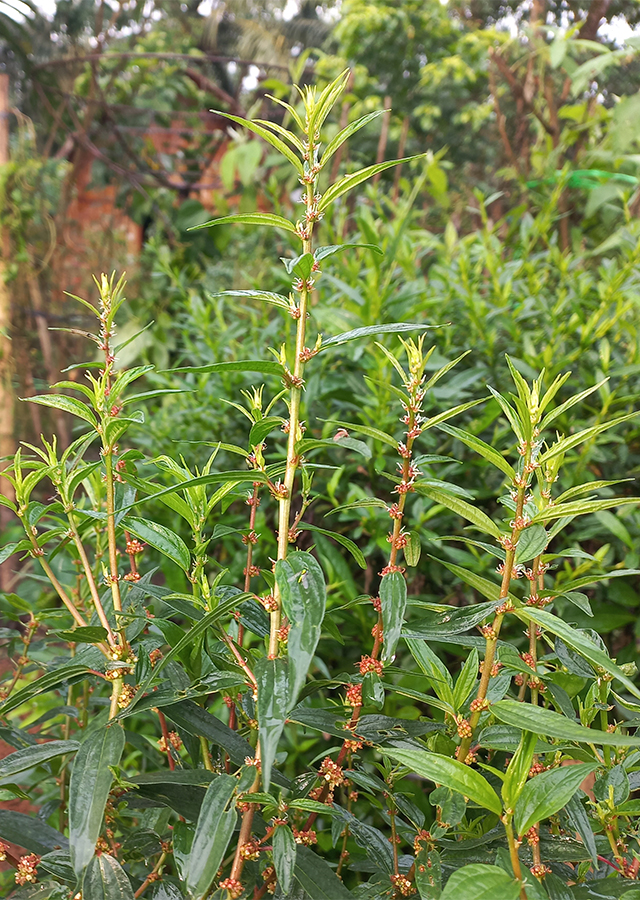
- Stem upright, reddish, covered with white hairs.
- Leaves simple, petiolate, ovate to lanceolate and deeply veined (1.2-9 cm long, 0.8-3 cm wide). Covered with long white hairs, especially along the leaf margin. Base and tip tapering.
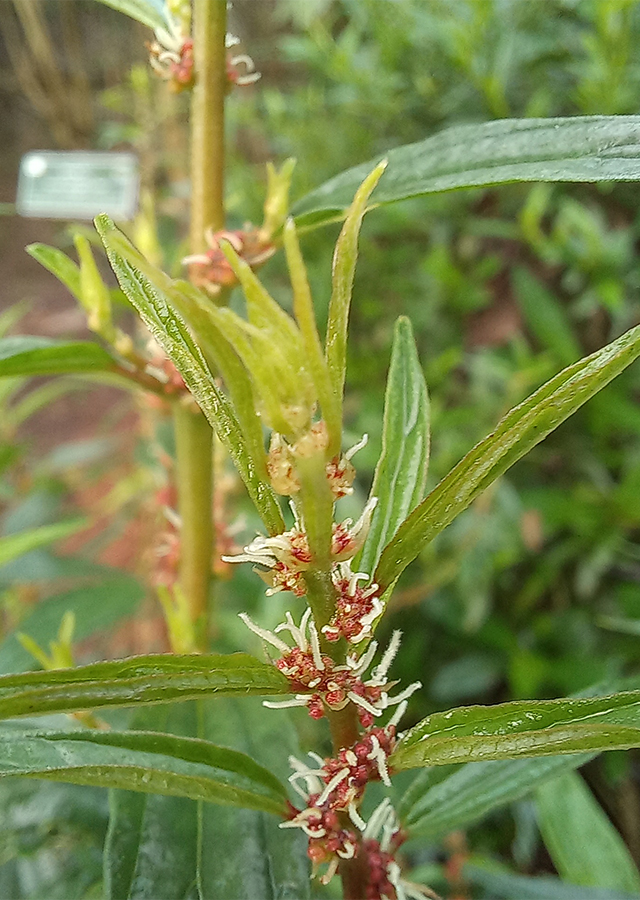
- Flowers small, rarely solitary, unisexual, pale green, covered with simple or uncinate hairs. Calyx absent. Inflorescence axillary, cymose or fasciculate, leafy.
- Fruit dry, indehiscent, known as achenes. Fleshy seeded, white, yellow or light brown, small egg-shaped fruit (1-1.2 mm long).
Cultivation
Propagation generatively using seeds.
Chemical Content
Beta-sitosterol, daucosterol, oleanolic acid, epicatechin, alpha-amyrin, eugenyl-beta-rutinoside, 2alpha,3alpha,19alpha-trihydroxyurs-12-en-28-oic acid, scopolin, scutellarein-7-O-alpha-L-rhamnoside, scopoletin, quercetin, quercetin-3-O-beta-D-glucoside, apigenin, 2alpha-hydroxyursolic acid, N-[2-(3-hydroxy-4-methoxyphenyl)-2-hydroxyethyl]-3-(4-methoxyphenyl)prop-2-enamide, 14,16-hentriacontanedione, sinapaldehyde, 3,4-dihydro-5,7-dihydroxy-4-(4-hydroxyphenyl) coumarin, alkaloid, glycoside, tannin, flavonoid.
Benefits
Has vulnerary properties, as a cicatrizant for gangrenous ulcers, treats itching, dysentery, diarrhea in infants, a poultice for broken bones, to kill worms, skin infections, fever, treatment of acute mastitis, pyogenic infections, digestive disorders, stomach ache, infant malnutrition, dysuria, hemoptysis, bruises, hematemesis, edema, galactagogue.
Simplisia
- Prepare jukut krinching leaves, wash clean with running water.
- Dry under sunlight or with an oven at 40 °C until moisture content reaches 10%.
- Blend into powder.
- Store in a clean, airtight container.
Local Names
No information found. Further research needed.
Traditional Recipes
The following recipes reflect traditional knowledge passed down through generations, not a substitute for professional medical diagnosis or advice. Consult a healthcare provider before use.
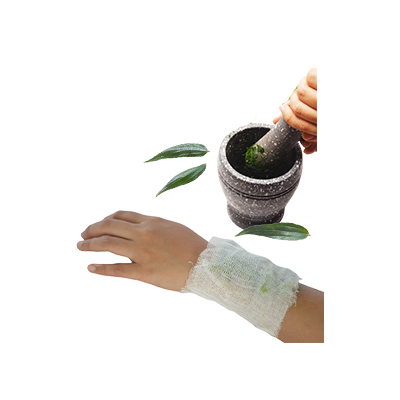
1. Poultice for broken bones
- Prepare jukut krinching leaves and wash with running water until clean.
- Mash into a paste.
- Apply then wrap with gauze.
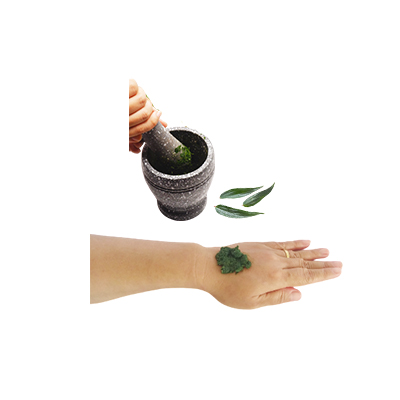
2. Itchy skin
- Take jukut krinching leaves and wash with running water until clean.
- Mash into a paste.
- Apply to itchy skin.
Reference Sources
- Royal Botanic Gardens. 2017. Plants of the World Plants: Pouzolzia zeylanica (L.) Benn.. http://www.plantsoftheworldonline.org/taxon/urn:lsid:ipni.org:names:856264-1. 9-10-2021.
- Stuartxchange. 2019. Philippine Medicinal Plants: Tuia. http://www.stuartxchange.org/Tuia.html. 9-10-2021.
- Flora Fauna Web. 2021. Pouzolzia zeylanica (L.) Benn. & R. Br. https://www.nparks.gov.sg/florafaunaweb/flora/6/6/6649. 9-10-2021.
- Useful Tropical Plants. 2021. Pouzolzia zeylanica. https://tropical.theferns.info/viewtropical.php?id=Pouzolzia+zeylanica. 9-10-2021.