Psidium guajava L.
Summary
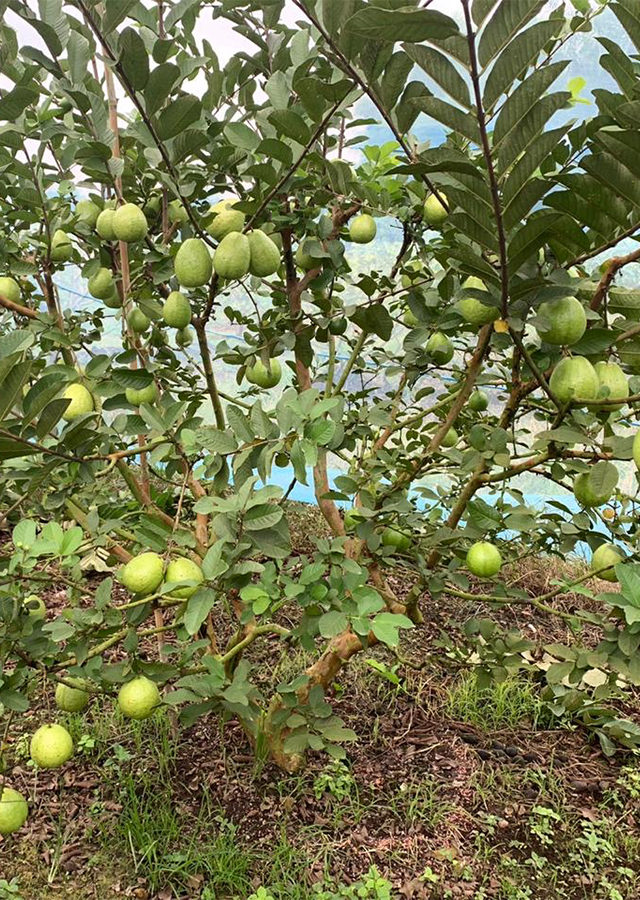
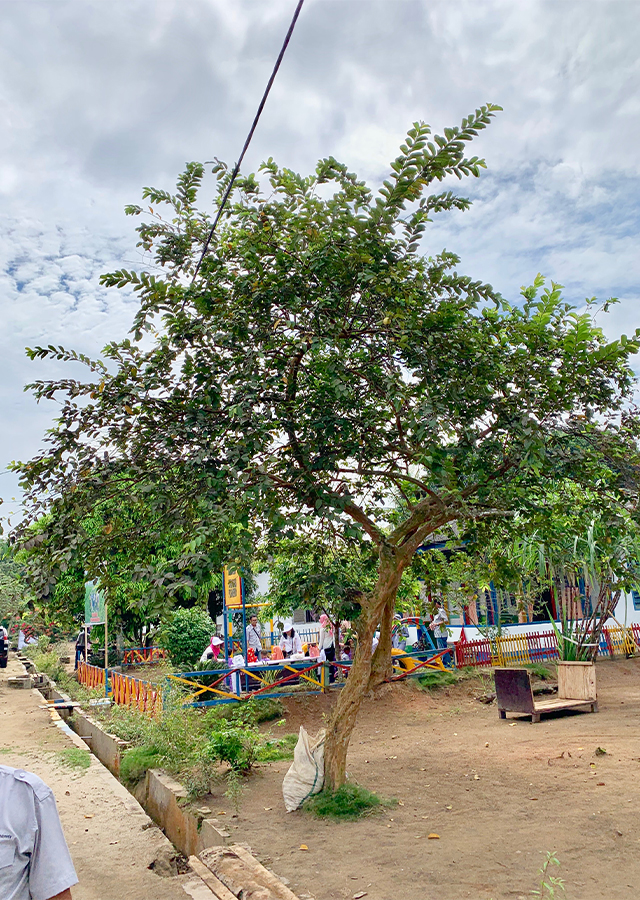
Jambu biji or guava (Psidium guajava) is a shrub or small tree up to 6 meters tall of the Myrtaceae family, recorded as spreading from Taiwan in 1991 to Thailand, Indonesia, and Malaysia. Its leaves are sometimes used as a coloring agent and bitterness remover in traditional cooking. Guava has long been believed to relieve diarrhea, maintain heart health, and speed up wound healing.
Agroecology
Grows in areas at elevations of 50-1,000 m above sea level, tropical climate, rainfall 1,000-3,800 mm/year, average daily temperature 15-34 °C, air humidity 70-90%. Prefers soil with a clay texture with a little sand and soil pH between 4.5-8.2.
Morphology
- Roots branching, long tapering shape and grows straight into the soil.
- Stem young square-shaped, mature stem hard woody brown, not easily broken. Growth direction upright, sympodial branching. Smooth surface, thin bark layer.
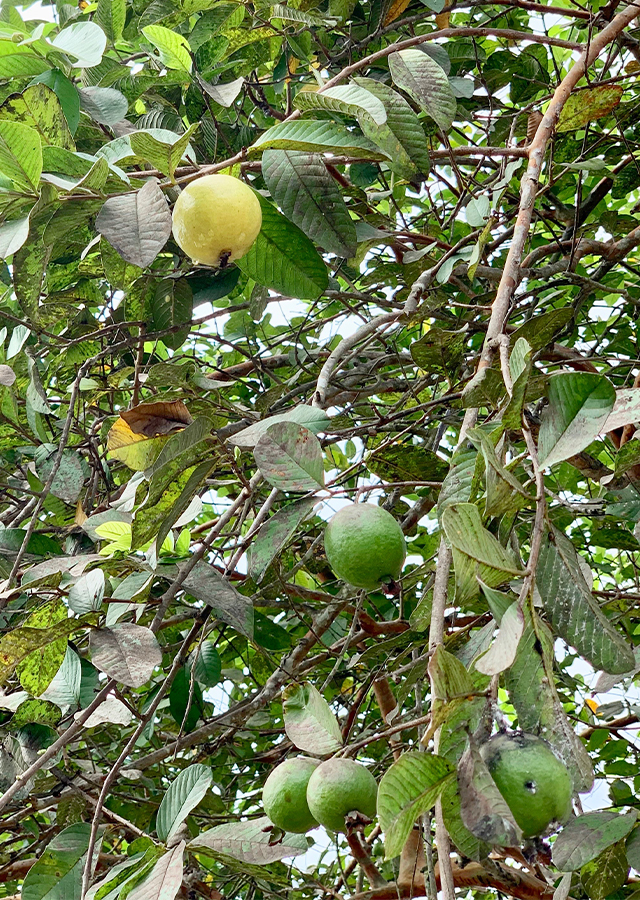
- Leaves single, alternating leaf position, opposite leaf arrangement, pinnate venation. Oblong, elliptical, and inverted egg shape
- Flowers reddish-white with 2 petals. In 1 petal has 4-5 sepals.
- Fruit single type and a berry (fruit with edible flesh), thin fruit skin and smooth to rough surface.
- Seeds small, round, yellowish or cream in color, hard, dense, smooth surface.
Cultivation
Propagated generatively (by seed) and vegetatively (top-grafting, budding, air-layering).
Chemical Content
Tannins, essential oils (eugenol), triterpenoids, malic acid, apfel acid, pentacyclic triterpenoid, guajanoic acid, β-sitosterol, uvaol, oleanolic acid, ursolic acid, phenolics.
Benefits
Good for the digestive system, eye health and pregnant women, relieves flu, diarrhea, maintains heart health, aids weight loss, maintains skin health, toothache remedy, wounds, mouthwash, and swollen gums.
Simplisia
- Prepare guava leaves then wet-sort by separating dirt and foreign material. Wash with clean running water.
- Air-dry the material aimed at preservation and inhibiting decay.
- Dry-sort to separate remaining dirt.
- Pack in a clean, airtight container.
Local Names
Jambu kluthuk (Central Java), Glima breueh (Aceh), Darnbu (Gorontalo), Guawa (Ende), Lutu hatu (Ambon).
Traditional Recipes
The following recipes reflect traditional knowledge passed down through generations, not a substitute for professional medical diagnosis or advice. Consult a healthcare provider before use.
1. Stopping Diarrhea
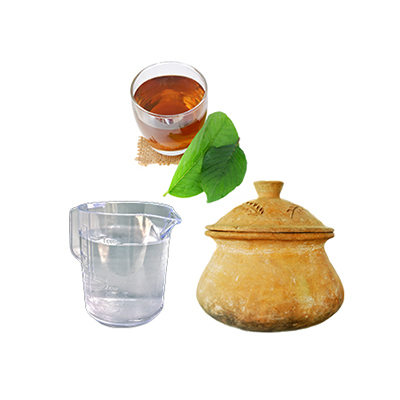
- Prepare 15 g guava leaves, 30 g thorny amaranth leaves. Wash all ingredients thoroughly then boil with 600 ml water until the water is reduced to 300 ml.
- Cool then strain.
- Drink the concoction twice a day.
Reference Sources
- CABI. (2013). Invasive Species Compendium. Psidium guajava(guava). https://www.cabi.org/isc/datasheet/45141. 08-02-2021.
- NCBI. (2017). Psidium guajava: A Single Plant for Multiple Health Problems of Rural Indian Population. https://www.ncbi.nlm.nih.gov/pmc/articles/PMC5628524/. 08-02-2021.
- Pl@nt Use. (2016). Psidium guajava (PROSEA). https://uses.plantnet-project.org/en/Psidium_guajava_(PROSEA). 08-02-2021.
- Sciencedirect. (2008). Psidium guajava. https://www.sciencedirect.com/topics/agricultural-and-biological-sciences/psidium-guajava. 08-02-2021.
- StuartXchange. (2016). Philippine Medicinal Plants. Bayabas. http://stuartxchange.ph/Bayabas. 08-02-2021.