Pycnarrhena longifolia (Decne. ex Miq.) Becc.
Summary
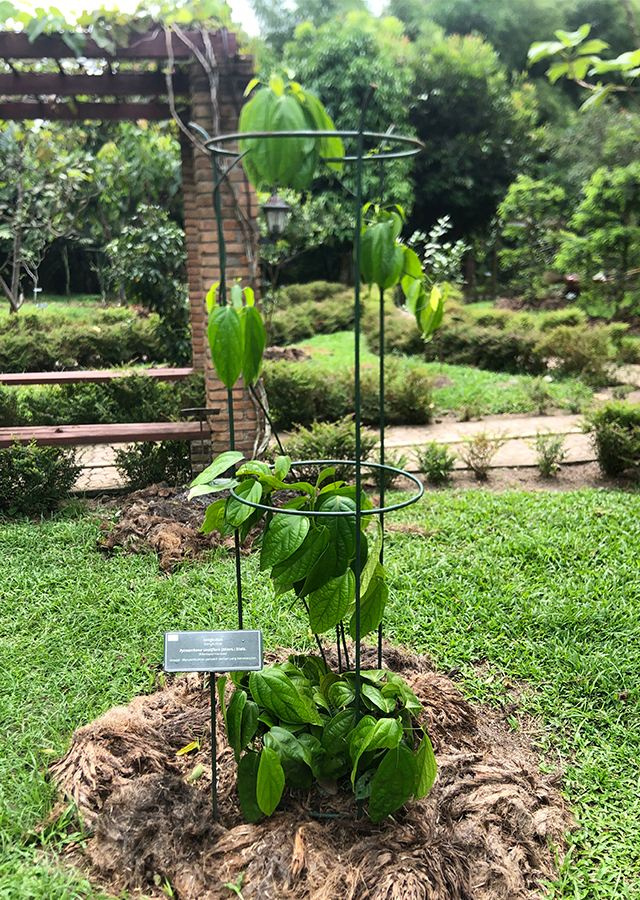
Pycnarrhena longifolia or sengkubak is a plant that grows endemic in Indonesia around Kayan Mentarang National Park, West Kalimantan, and wild in the Bukit Bulan Karst area, Jambi. Its young leaves have long been used for generations as a natural savory flavor enhancer replacing synthetic MSG, besides serving as a cooking seasoning, a raw vegetable side dish, and a natural fabric dye. Its bioactive compound content also has potential for development as pharmaceutical, anti-acne cosmetic, and natural antioxidant ingredients, though its population is now declining due to shrinking forest land.
Agroecology
Sengkubak is generally found growing in lowland areas around 100-150 m asl, and in hilly areas above 500-1,500 m asl. Found in secondary forest and tropical rainforest habitats. Its growth prefers locations with full sun and regular watering, and can also grow under the shade of tall trees.
Morphology
- Stem woody.
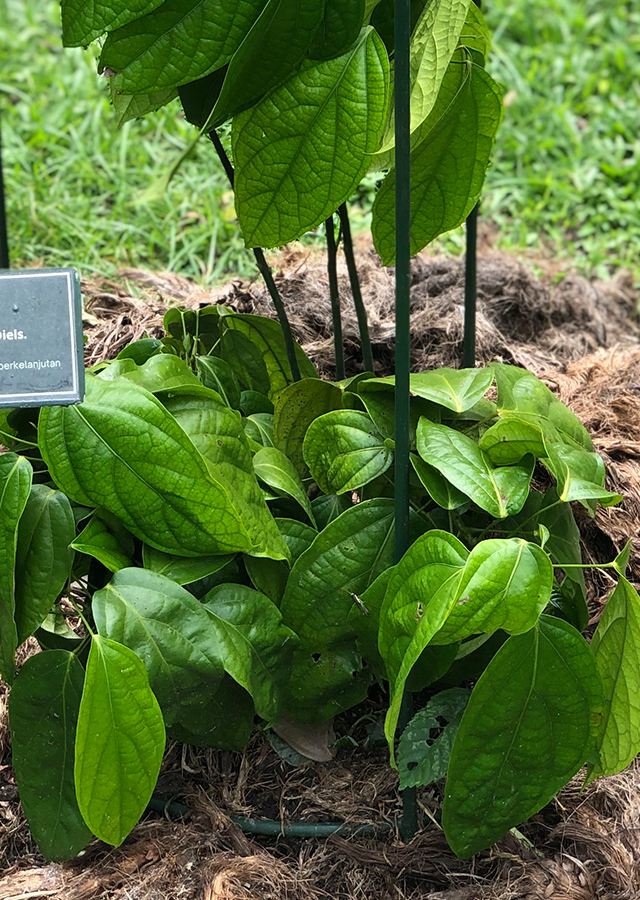
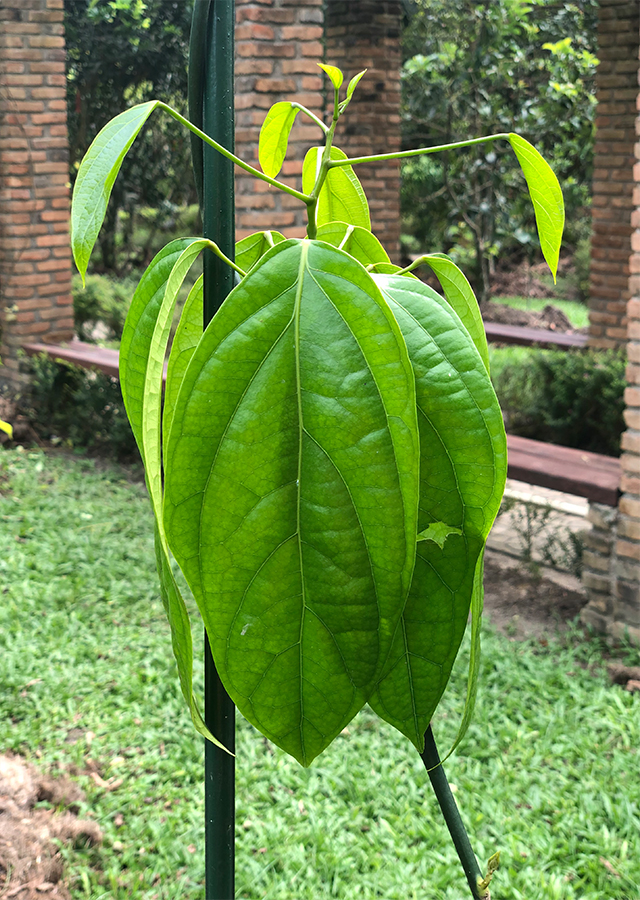
- Leaves arranged in pairs and opposite, green. Oblong shaped, similar to cacao leaves. Tip rounded and base obtuse to rounded. Lateral nerves consisting of 6-8 pairs.
- Flowers small, white or yellowish, star-shaped with five petals.
- Fruit globose, finely tomentose or puberulent.
- Seeds small, black, ovate shaped.
Cultivation
- Plant propagation through seed, cuttings, or from sprouted roots. However, propagating this plant is not easy.
Chemical Content
Steroids, terpenoids, flavonoids, saponins, polyphenols, tannins, alkaloids (obaberine, homoaromoline, aromoline, daphnoline, limacine, krukovine, magnoflorine, and pycnarrhine), acetic acid butyl ester (CAS), sabinene, cis-ocimene, alloaromadendrene (CAS), α-bergamotene (CAS).
Benefits
Treats cholera, headache, tumors, seizures, malaria, bloating, eye irritation, snake bites, postpartum care, reduces fever, prevents skin diseases. Has anticancer, antioxidant, anti-inflammatory, antiseptic, anti-acne, and analgesic activity.
Simplisia
- Pick an adequate amount of sengkubak leaves then clean them.
- Once clean, pound the leaves or cut them into small pieces.
- Then dry them or air-dry them.
- Once dry, store the sengkubak leaf simplisia powder in a closed, airtight container.
Local Names
Kemangi imbo (Jambi), Kemangi hutan, Sangkubak, Sansankng atau Sensen (Kalimantan Barat), Pokok ajinomoto.
Traditional Recipes
The following recipes reflect traditional knowledge passed down through generations, not a substitute for professional medical diagnosis or advice. Consult a healthcare provider before use.
1. Reduces fever and headache
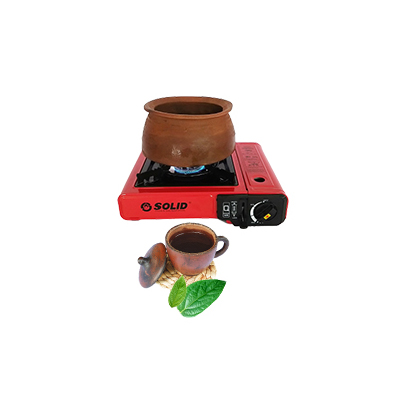
- Take sengkubak leaves and wash until clean.
- Soak the leaves in hot water for 30 minutes.
- Let it cool to warm then drink to reduce fever and headache.
Reference Sources
- Pycnarrhena longifolia (Decne. ex Miq.) Becc. | Plants of the World Online | Kew Science
- Puspita, D. and Wulandari, T.S., 2020. Analisis Senyawa Bioaktif pada Daun Kemangi Imbo (Pycnarrhena cauliflora) yang Digunakan sebagai Penyedap Alami. Jurnal Teknologi Pangan dan Gizi (Journal of Food Technology and Nutrition), 19(1), pp.35-43.
- Azman, M.F.S.N., Zainurin, N.A.Z., Azmi, A.S., Suleiman, M., Yeaw, N.S. and Salim, F., 2022. A Review on the Morphology, Nutritional Value, Traditional Uses, Phytochemistry, and Biological Activities of Pycnarrhena cauliflora and Its Synonyms. ASM Science Journal, 17, pp.1-12.
- Alhawaris, A., 2023. Potency of Borneo Endemic and Typical Plants as Anti-Cancer Medicines. Jurnal Kesehatan Pasak Bumi Kalimantan, 5(1), pp.37-53.
- Puspita, D., Rahardjo, M., Wulandari, T.S., Chiflyy, D. and Wacana, S., 2020. 4. Analisis Aktivitas Antioksidan pada Daun Kemangi Imbo (Pycnarrhena cauliflora). Semin. Dies Natalis…, no.
- Jumilah. 2012. Penyuluh Kehutanan: Sengkubak. https://jumilahalimuddin.blogspot.com/2012/?m=1. 22-02-2024.