Pyrrosia piloselloides (L.) M.G.Price
Summary
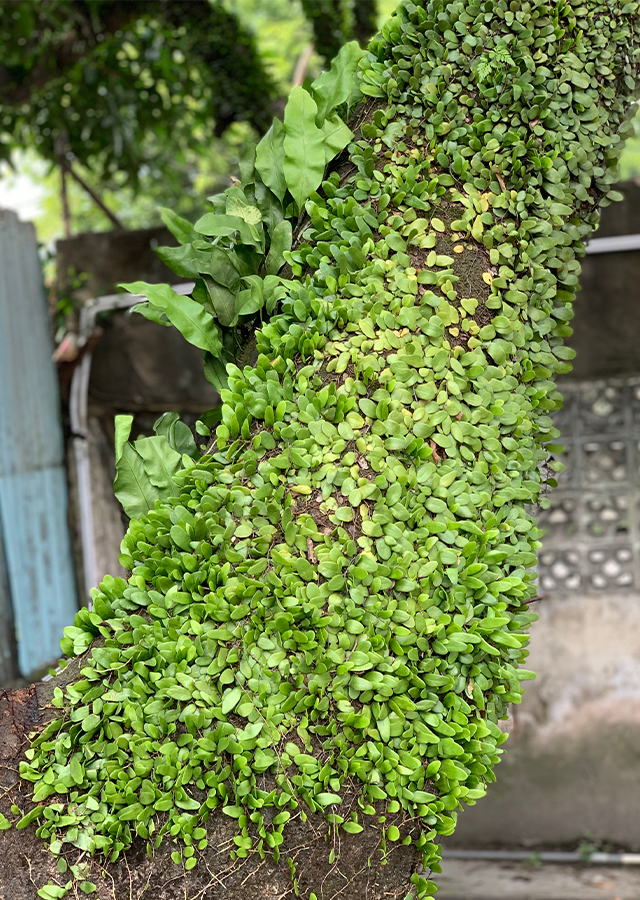
Sisik naga (Pyrrosia piloselloides) is a climbing fern up to 3-5 meters long of the Polypodiaceae family, distributed from India to Papua New Guinea and North Australia, with distribution in Indonesia from Java to Sumatra. This wild plant has long been used as traditional Indonesian medicine. Sisik naga is traditionally believed to stop bleeding and help address breast cancer.
Agroecology
Fern plants are generally found growing wild in lowlands, mangroves, open places, gardens and parks from elevations of 0-1,000 m above sea level. Lives attached to other plants, but does not take nutrients from its host.
Morphology
- Root attaches firmly to the plant it grows on.
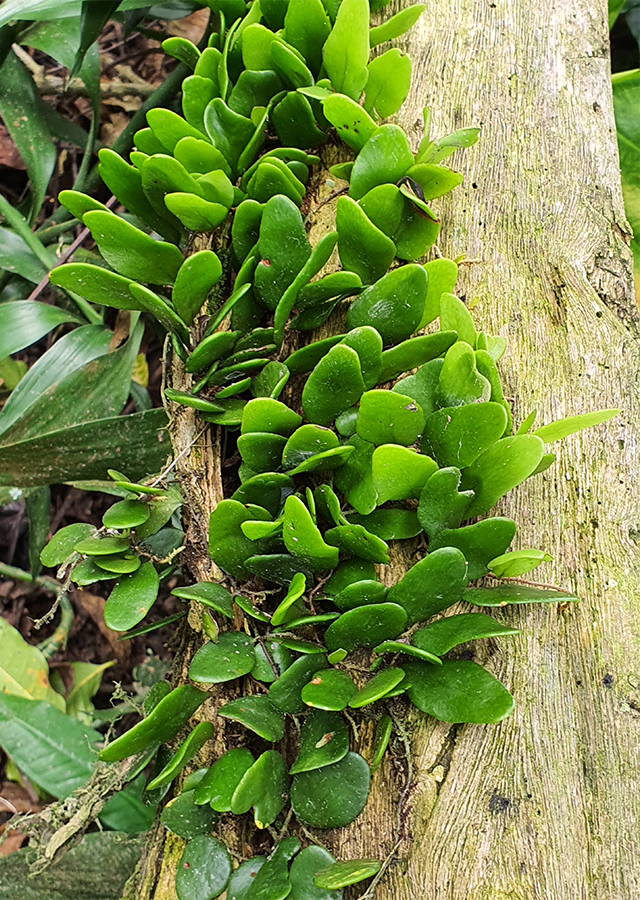
- Leaves short-stalked, thick and fleshy, oblong or round shaped, smooth edges, green even brownish-green in color.
- Stem in the form of roots, creeping, round shaped and small in size, growth position of branches to the side, scaly surface. Young stem light green and mature stem blackish-brown, rhizome not fleshy.
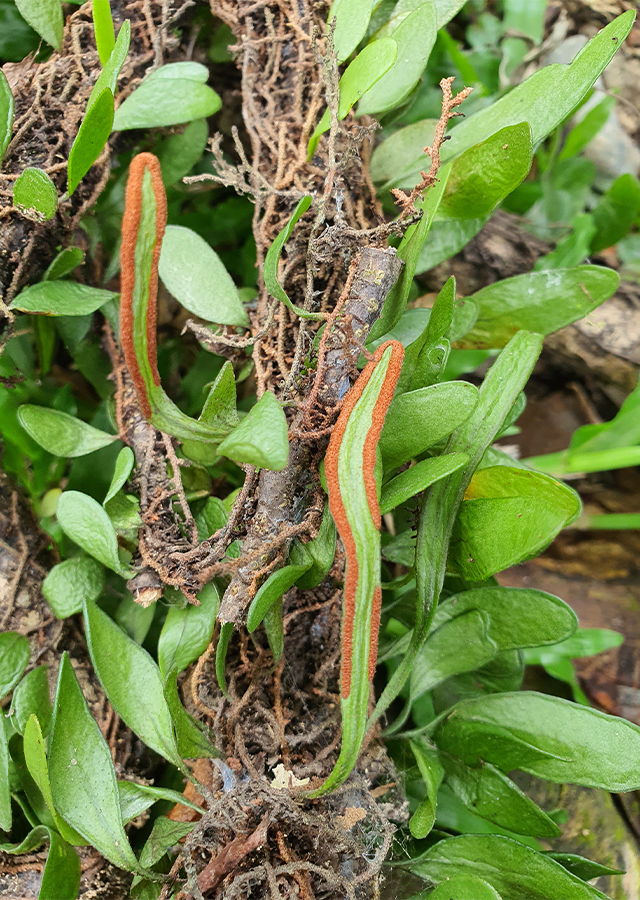
- Spores round shaped, slightly oval, gathered in a sorus located under the leaf on the leaf edge and surrounding to reach the base of both sides.
Cultivation
Propagated by spore, occurring naturally.
Chemical Content
Polyphenol, essential oil, sterol, triterpene, flavonoid, saponin, tannin, allopurinol, n-hexadecanoic acid, triazine-2,4,6-triamine.
Benefits
Lung abscess, pulmonary TB with bloody cough, canker sores (mouth problems), scrofuloderma (lymph nodes), parotitis (mumps), hemostasis (stops bleeding), jaundice, constipation, stomach ache, dysentery, gonorrhea (purulent urine), rheumatism, leukorrhea (vaginal discharge), breast cancer, has anti-inflammatory, analgesic, antitussive activity.
Simplisia
- Pick sisik naga leaves then wash with clean running water and drain.
- Cut the leaves into small pieces and let dry without direct sun exposure.
- Continue drying using an oven at a temperature not exceeding 50°C.
- Once dry, grind the simplisia using a blender and sift into powder.
- Pack in clean, airtight plastic.
Local Names
Sakat ribu-ribu (Sumatra), Daun picisan (Java), Duduitan (Sunda).
Traditional Recipes
The following recipes reflect traditional knowledge passed down through generations, not a substitute for professional medical diagnosis or advice. Consult a healthcare provider before use.
1. Soft tissue rheumatism
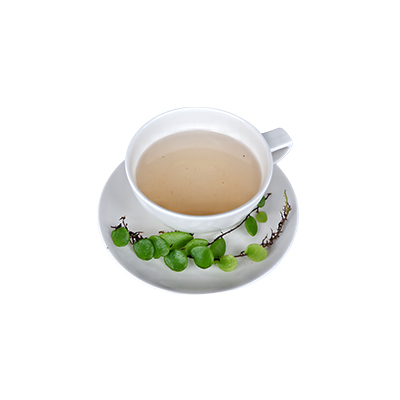
- Prepare 15-30 g fresh sisik naga leaves then wash. Boil with 3 glasses of water until reduced to 1 glass of water, cool and strain.
- Drink 3 times a day, ½ glass each time.
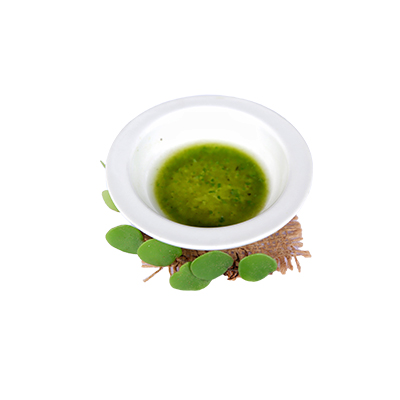
2. Stopping bleeding
- Wash 30 g fresh sisik naga leaves.
- Grind the leaves, squeeze then strain.
- Drink 3 times a day.