Rhaphiolepis bibas (Lour.) Galasso & Banfi
Summary
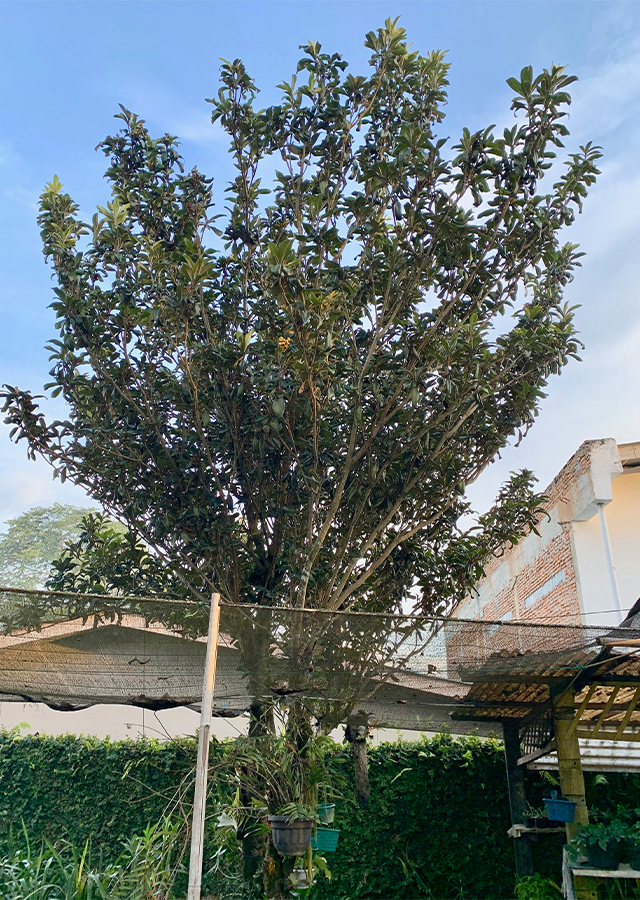
Biwa or loquat (Rhaphiolepis bibas) is a tree 5-10 meters tall of the Rosaceae family, originating from the highlands of southeastern China and widely cultivated in Japan, now also found in North Sumatra and West Java. Its sweet fruit can be eaten fresh or processed, while the Chinese use its leaves in traditional medicine. Biwa is believed to maintain eye and heart health and help regulate blood pressure.
Agroecology
Grows well in tropical highland areas at elevations of 700-2,000 m above sea level, with air temperature of 21-27 °C, rainfall ranging from 600-1,600 mm/year.
Morphology
- Stem woody, rough with a trunk circumference reaching 39–91.5 cm depending on the age of the plant.
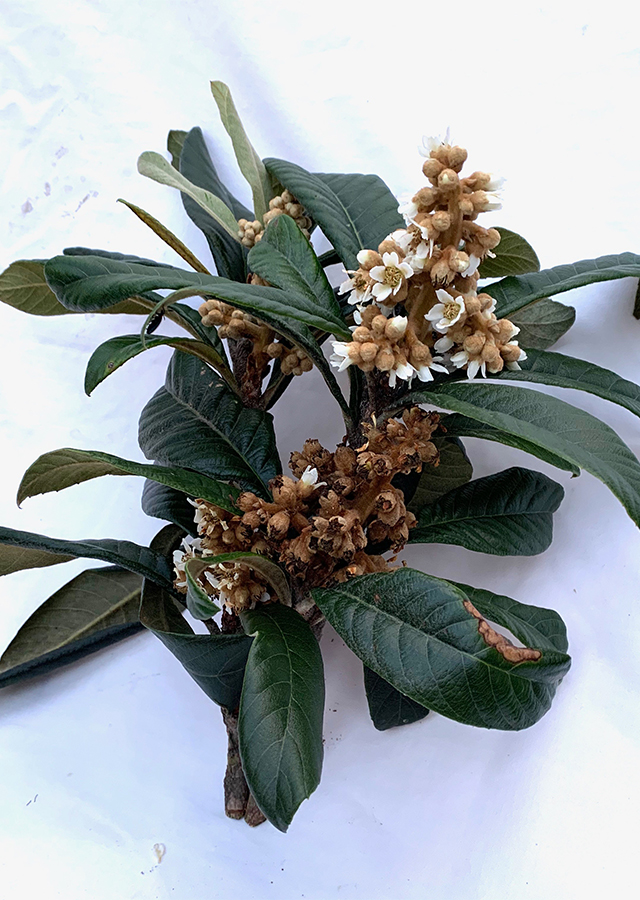
- Leaves lance-shaped, 9-25 cm long, 4-6 cm wide, dark green, glossy on the upper surface, slightly white and rust-colored hairy underneath, thick and stiff, pinnate leaf vein arrangement.
- Flowers panicle-shaped, at the tip of twigs, number of flowers per panicle 57–184 blooms, and fragrant.
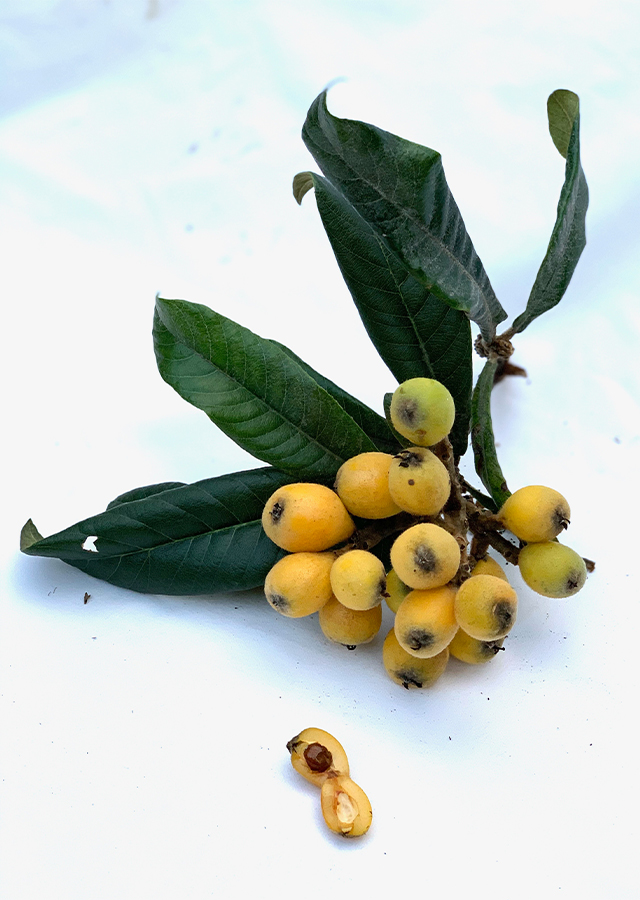
- Fruit clustered, oval, round or oblong shaped. Seed weight 0.24–1.96 g, brown in color.
Cultivation
Propagated generatively (by seed) as well as vegetatively (top-grafting, budding, and air-layering).
Chemical Content
Carotenoids, folate, phenolics, chlorogenic acid, triterpenoids (ursolic acid), tannins, amygdalin, citric acid, tartaric acid, succinic acid, cryptoxanthin, β- carotene, neo-β-carotene, flavonoids.
Benefits
Maintains eye health, immunity, cell growth, improves heart health, regulates blood pressure, reduces inflammation, remedy for diarrhea, wound healing, prevents throat irritation, fever remedy, treats skin irritation or swelling.
Simplisia
- Wash biwa leaves thoroughly to remove soil and other dirt then drain.
- Dry the leaves in a drying cabinet until dry (indicated when the leaves crumble easily when crushed).
- Grind with a blender then sift to obtain a powder form.
- Put into a plastic bag with silica gel and store at room temperature.
Local Names
Lokwat, Papalaan (Sunda), Paginggong (Malay).
Traditional Recipes
The following recipes reflect traditional knowledge passed down through generations, not a substitute for professional medical diagnosis or advice. Consult a healthcare provider before use.
1. Skin Irritation or Swelling
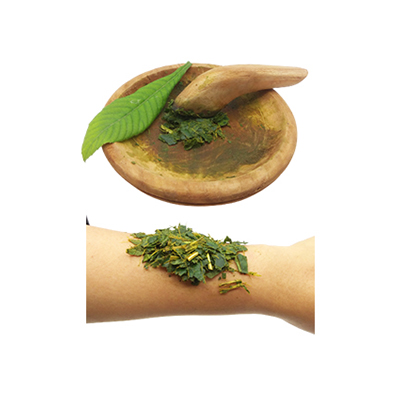
- Pick an adequate amount of fresh biwa leaves.
- Pound until fine or mashed.
- Apply to the affected area.
Reference Sources
- DJaime Ahumada, Claudia Fuentealba. (2017). Bioactive compounds of loquat (Eriobotrya japonica Lindl.) cv.Golden Nugget and analysis of in vitro functionality for hyperglycemia management. Cience e investigaction agraria:277-281. 16-01-2021
- Global Healing. (No date). The Health Benefits of Loquat Leaf. https://globalhealing.com/natural-health/health-benefits-of-loquat-leaf/. 16-01-2021
- Lim. T.K (2012). Edible Medicinal and Non-Medicinal Plants. Volume 4 Fruits. New York. Springer. page 381. 16-01-2021
- Ahumada J, Fuentealba C, Olaeta JA, Undurraga P, Pedreschi R, Shetty K, Chirinos R, Campos D, Ranilla LG. 2017. Bioactive compounds of loquat (Eriobotrya japonica Lindl.) cv. Golden Nugget and analysis of in vitro functionality for hyperglycemia management. Cien. Inc. Agr. 44(3): 272-284.
- Baljinder S, Seema G, Dharmendra K, Vikas G, Parveen B. 2010. Pharmacological potential of Erobotrya japonica – an overview. I.R.J.P. 1(1): 95-99.
- Hasibuan AN, 2018. Efek Relaksasi Ekstrak n-Heksan Daun Biwa (Erobotrya japonica (thunb.) lindl.) terhadap Otot Polos Terisolasi Trakea Marmut dan Pengaruhnya pada Prostaglandin. http://repostori.usu.ac.id.
- Pinem MD, Lailatusysyifa. 2017. Karakterisasi tanaman biwa (Eriobotrya japonica lindl) di sidikalang kabupaten dairi dan kabanjahe, sumatera utara. Prosiding Seminar Nasional III Biologi dan Pembelajarannya. Medan.
- Prosea. 2016. https://uses.plantnet-project.org/en/Eriobotrya_japonica_(PROSEA) 07-06-2019
- Taniguchi S. 2002. Production of bioactive triterpenes by Eriobotrya japonica calli. Phytochemistry. 59:315–323.
- Tropical Plants Database, Ken Fern. tropical.theferns.info. Eriobotrya japonica. http://tropical.theferns.info/viewtropical.php?id=Eriobotrya+japonica 29-01-2021
- healthbenefitstimes. Loquat facts and health benefits. https://www.healthbenefitstimes.com/loquat/ 20-09-2020