Rhodocactus sacharosa (Griseb.) Backep.
Summary
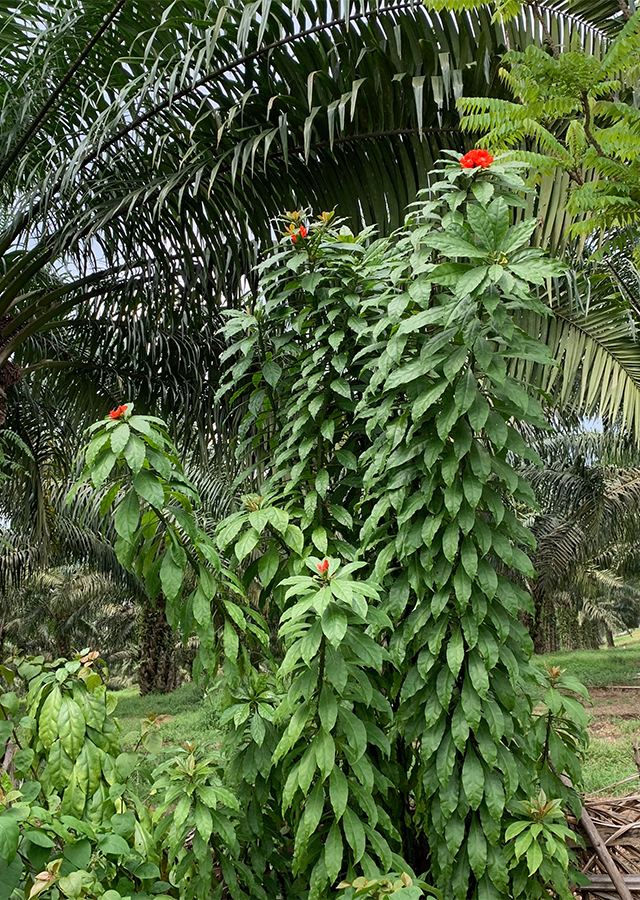
Jarum tujuh bilah (Rhodocactus sacharosa) is a shrub up to 5 meters tall of the Cactaceae family, native to Brazil, named for the seven sharp thorns arranged along its stem as the most primitive genus in the cactus family. This plant is widely cultivated as an ornamental in Indonesia, Thailand, and Malaysia. Jarum tujuh bilah is traditionally believed to help relieve early-stage cancer and address hemorrhoids.
Agroecology
This plant can grow up to 5 m and will grow optimally when planted in tropical climate countries. Cannot grow in shade, prefers dry or moist soil and can tolerate drought.
Morphology
- Root fibrous.
- Stem round, green when young, brown when mature, has 7 fine long needle-like thorns emerging near the leaf petiole.
- Leaves single, spiral arrangement, pore-shaped with a pointed tip and base, young shoots reddish turning green, glossy surface, easily sprouts, 13 cm long and 4 cm wide, pinnate venation.
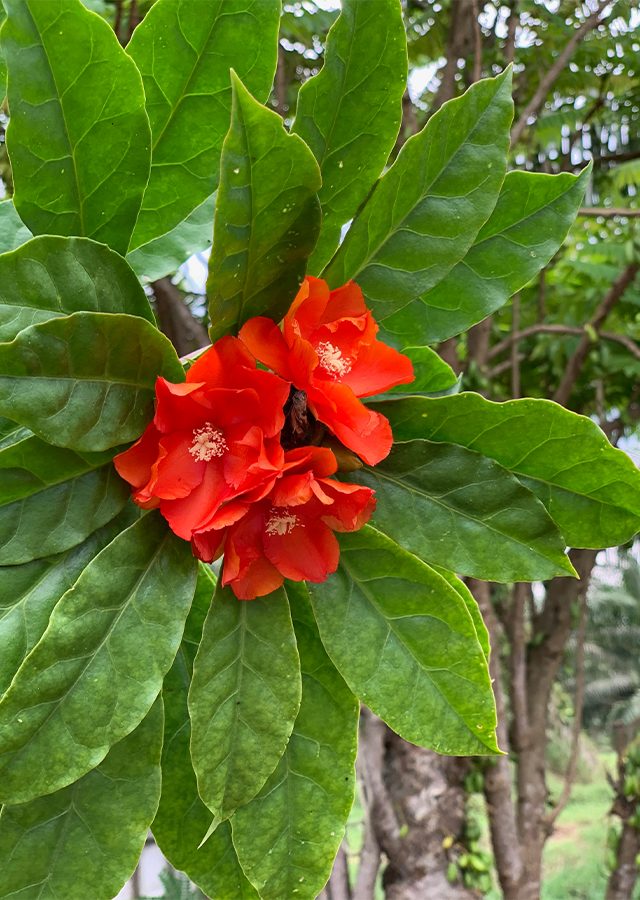
- Flowers single, medium size, protruding at the branch tip, many layered petals, orange, dark red or purple.
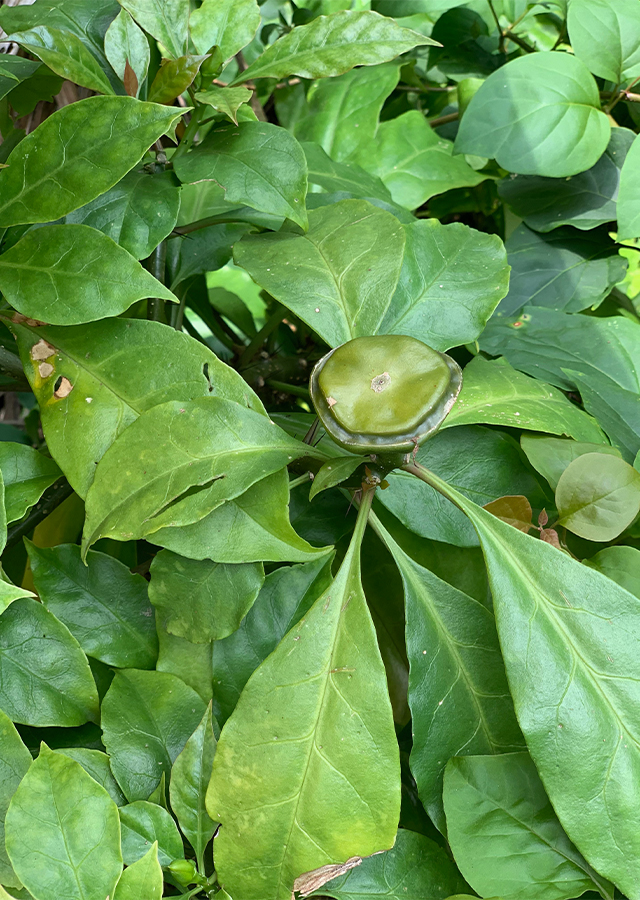
- Fruit medium size, flat round shaped like a lotus flower, green when young.
- Seeds black, medium size.
Cultivation
Propagated using seed and cuttings. Plant seeds in a mixture of peat and perlite, keep the growing medium moist.
Chemical Content
Alkaloid, phenolic, flavonoid, (not yet extensively researched).
Benefits
Treats stage 1-2 cancer whether cysts, colon/large intestine cancer, nasal cancer, addresses mouth, gum or throat problems, addresses bloating, treats high blood pressure, hemorrhoids, kidney issues, infection, burns, rheumatism, post-surgery recovery, and antidote.
Simplisia
- Take fresh jarum tujuh bilah leaves then wash thoroughly.
- Air-dry or use an oven at 40°C until moisture content reaches 10%.
- Store in a closed container.
Traditional Recipes
The following recipes reflect traditional knowledge passed down through generations, not a substitute for professional medical diagnosis or advice. Consult a healthcare provider before use.
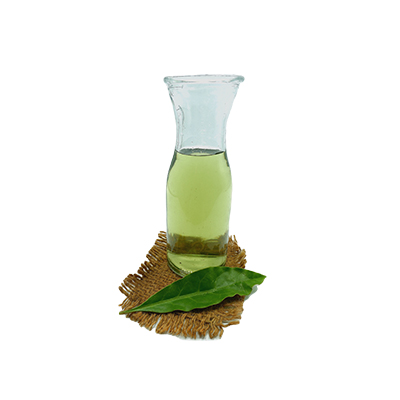
1. Stage 1-2 cancer: cysts, colon (large intestine), nose, kidney
- Cancer prevention: consume 3-5 seven-blade leaves per day (chewed) like eating a vegetable, or put 2 leaves into 1 glass, add hot water, drink the concoction.
- Cancer treatment: boil 10 leaves with 3-4 glasses of water until boiling, cool then strain, drink 3-4 times a day.
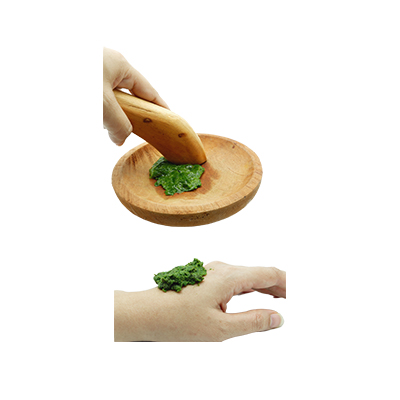
2. Burns
- Take seven-blade leaves as needed, pound finely then apply to the burned area.
Reference Sources
- Dave's Garden. (2020). Pereskia, Sacharosa, Cuguchi, Guyapa. https://davesgarden.com/guides/pf/go/66371/. 16-02-2021.
- John&Jacq-s Garden. (2014). Pereskia sacharosa is a herbal plant with medicinal properties. https://www.jaycjayc.com/pereskia-sacharosa-needle-seven-blade/#.X2DQKGgzbIU. 16-02-2021.
- Jusoh, S.A.M., Seeni, A., and Johan, M.F. ( 2012) ).Anti-proliferative and pro-apoptotic effect of P.sacharosa, e.elatior and P.granatum aqueous extract on human myeloid leukaemia. Asian Journal of Medical Research. Vol.1 (4) (pp.147-151).
- PFAF. (No date). Pereskia sacharosa - Griseb. https://pfaf.org/user/Plant.aspxLatinName=Pereskia+sacharosa. 16-02-2021.