Rhododendron javanicum (Blume) Benn.
Summary
Rhododendron javanicum or cepokogeni is a flowering plant endemic to Java also distributed to the Malay Peninsula, Kalimantan, Sulawesi, and the Philippines, and is one of the icons of the Azalea collection at Cibodas Botanical Garden. Its beautiful flowers, which last up to a week after being cut, make it a favorite as an ornamental and cut flower, while the Sabah community traditionally uses it to address malaise or a general feeling of being unwell.
Agroecology
R. javanicum is found in primary and secondary forests, and even in barren soil near volcanic craters, as well as an epiphyte in mangrove forests, from sea level up to elevations of 2,500 m asl. This species is tolerant of humidity and prefers soil conditions with a slightly acidic pH (6.1-6.5).
Morphology
- Roots a taproot.
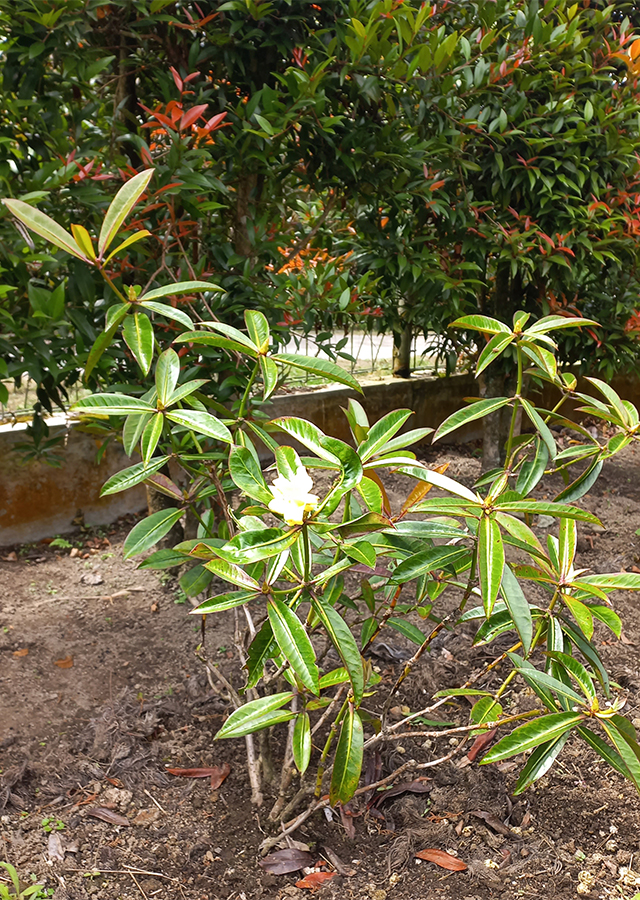
- Stem round shaped, growing upright, surface grooved (sulcate), young stem green, later turning brown at maturity.
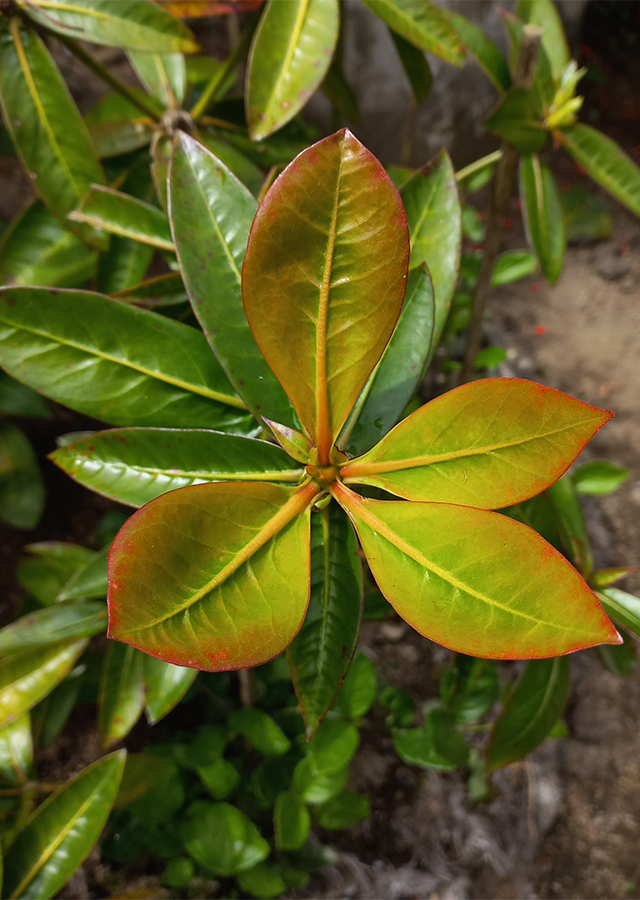
- Leaves single, arranged in whorls of 5, oblong to lanceolate shaped, base wide to narrowly pointed, tip pointed to tapering, margin entire, petiolate, leaf surface smooth, green, veins pinnate, leaves fleshy.
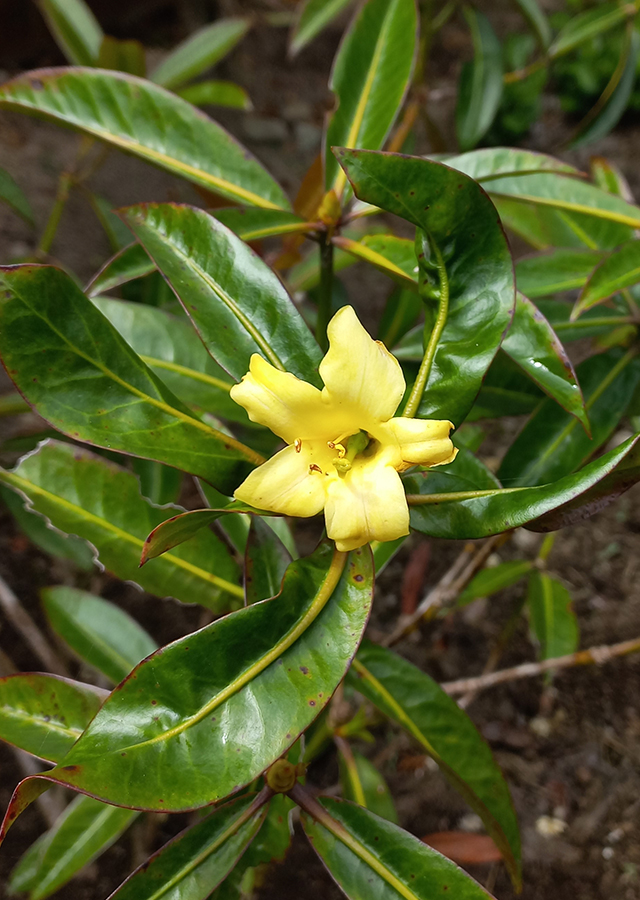
- Flowers compound, with a disc-like calyx. Corolla funnel-shaped, somewhat fleshy, yellow, orange, red, or pink, hairless outside, lobes obovate to subspatulate, 5 petals. Stamens 10 and red, while the pistil is 1 and red.
- Fruit a capsule, elongated-cylindrical, greenish red.
Cultivation
Plant propagation is vegetative through shoot cuttings and tissue culture.
Chemical Content
Phenolic compounds.
Benefits
Treats malaise (a condition of tiredness, discomfort, and feeling unwell with an unknown cause).
Local Names
Cepaka geni, Kembang geni (Jawa), Dener, Congkok (Sunda), Azalea jawa.
Traditional Recipes
The following recipes reflect traditional knowledge passed down through generations, not a substitute for professional medical diagnosis or advice. Consult a healthcare provider before use.
1. Addresses fatigue
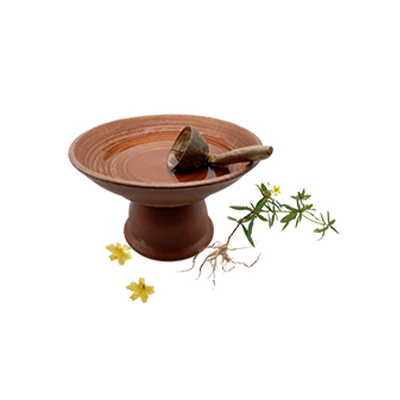
- Take an adequate amount of all parts of the cepokogeni plant and wash until clean.
- Boil all the ingredients until it boils.
- Strain and use for bathing.
Reference Sources
- Royal Botanic Gardens, Kew. Plants of the World Online: Rhododendron javanicum (Blume) Benn.. https://powo.science.kew.org/taxon/urn:lsid:ipni.org:names:332655-1. 21-07-2022.
- Lemmens R.H.M. J., Bunyapraphatsara N. 2003. Plant Resources of South-East Asia No 12(3). Medicinal and poisonous plants 3. Backhuys Publishers, Leiden.
- Lubis F. A. 2020. Identifikasi Famili Ericaceae Di Taman Wisata Alam Danau Sicikeh-Cikeh Desa Lae Hole Kecamatan Parbuluan Parbuluan Kabupaten Dairi Sumatera Utara. Skripsi. Universitas Islam Negeri Sumatera Utara. Medan.
- Rafi et al. 2018. Total Phenolics, Flavonoids, and Anthocyanin Contents of Six Vireya Rhododendron from Indonesia and Evaluation of their Antioxidant Activities. Journal of Applied Pharmaceutical Science 8 (09): 049-054. DOI: 10.7324/JAPS.2018.8908.
- National Gardening Association. Plants Database. 2022. Vireya Rhododendron (Rhododendron javanicum). https://garden.org/plants/view/158506/Vireya-Rhododendron-Rhododendron-javanicum/. 21-07-2022.