Rhodomyrtus tomentosa (Aiton) Hassk.
Summary
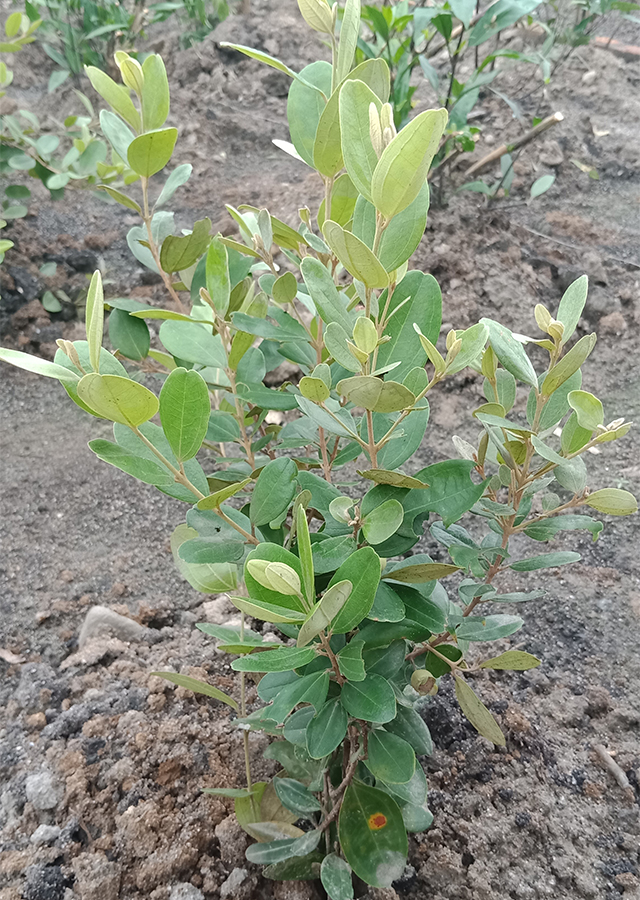
Harimonting, or downy rose myrtle (Rhodomyrtus tomentosa), is a shrub 1-4 meters tall of the Myrtaceae family, native to South and Southeast Asia, distributed from India to Sulawesi in Indonesia. In Malaysia, its root, fruit, and leaves are used to treat diarrhea, while in Indonesia its leaves are more often used to treat wounds. Its sweet fruit is also believed to raise blood hemoglobin levels.
Agroecology
Grows well in tropical and subtropical regions at elevations up to 2,440 m above sea level, requiring annual rainfall of 1,200 mm/year. Favors full sun intensity, sandy soil, adequate moisture, moist soil with a soil pH of 4-6, or slightly acidic soil. Tolerant of flooded or waterlogged conditions.
Morphology
- Leaves green, oppositely arranged with three erect veins. Rough and glossy surface. Leaf tip blunt to pointed.
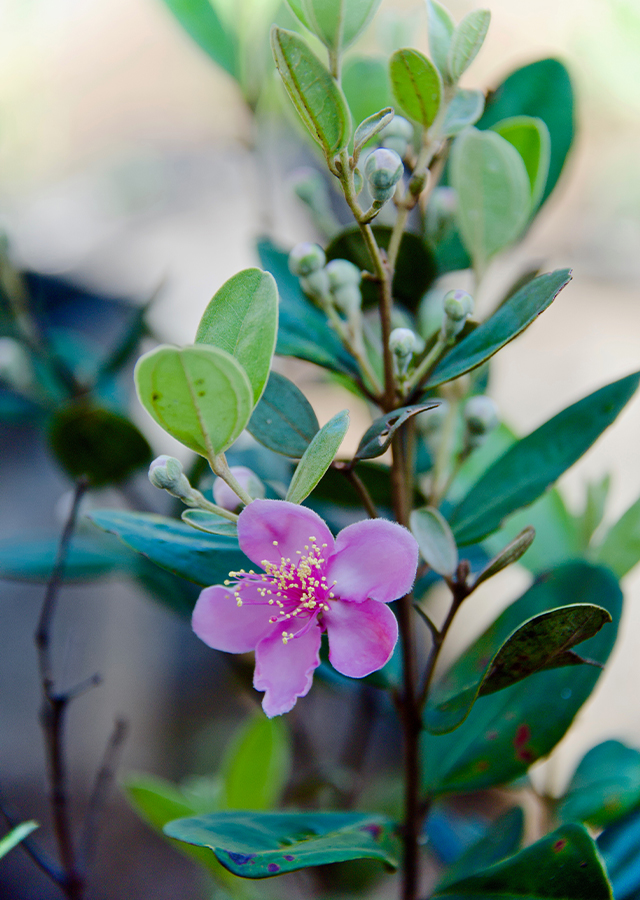
- Flowers solitary or in groups of two or three, with five petals colored white on the outside with purplish-pink, or entirely pink.
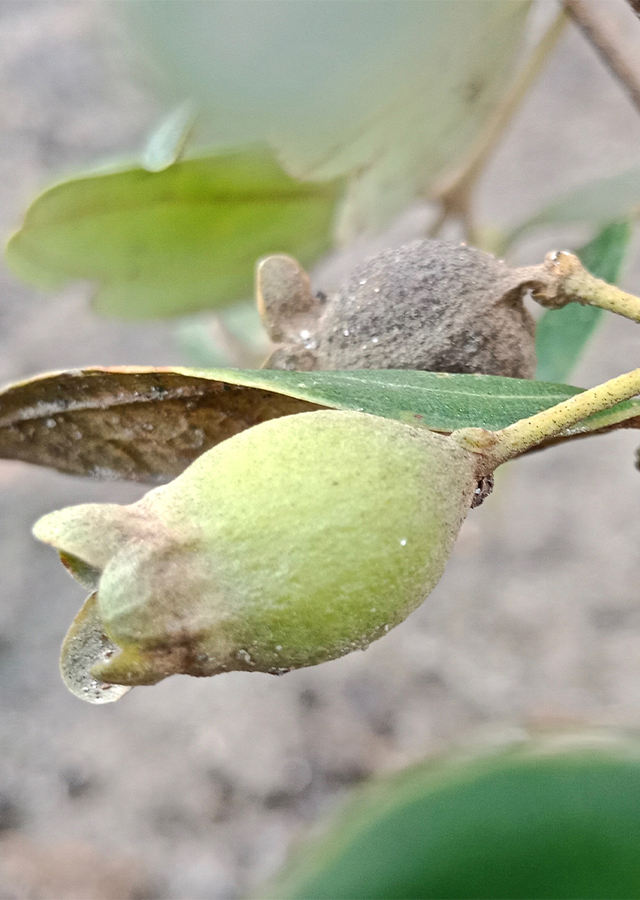
- Fruit edible, purple when ripe, round.
Cultivation
- Propagated by seed, cuttings, and offshoots.
- Seeds should be planted fresh; separate the seed from the fruit flesh before planting.
Chemical Content
Anthocyanins, flavonoids, steroids, triterpenoids, tannins, taraxerol, coumaryl-oleanolic acid, quinones, tomentodione, phloroglucinol, anthracene glycoside, malic acid, gallic acid, caffeic acid, quinic acid, octadecenoic acid.
Benefits
Treats diarrhea and stomach ache; used in postpartum care; used as a wound dressing; antioxidant; raises blood hemoglobin; boosts anti-anoxic activity; treats canker sores, vaginal discharge.
Simplisia
- Collect fresh leaves.
- Wash thoroughly under running water.
- Air-dry the material for several days.
- Once completely dry, grind into a powder.
- Place in a clean, airtight container.
Local Names
Keumiki (Aceh), Karamunting (Banjar), Karamuntiang (Minangkabau), Kalimuntiong (Riau), Kemunting.
Traditional Recipes
The following recipes reflect traditional knowledge passed down through generations, not a substitute for professional medical diagnosis or advice. Consult a healthcare provider before use.
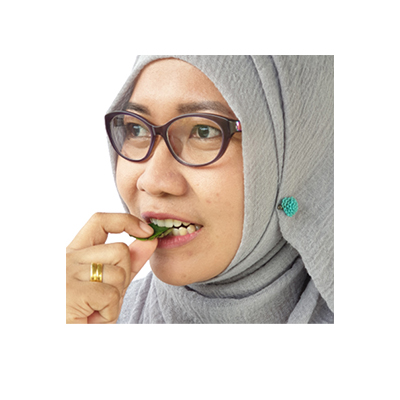
1. Canker Sores
- Take 2 harimonting leaves, wash thoroughly, then rinse with boiled water and chew, holding for a while before discarding the residue.
2. Vaginal Discharge
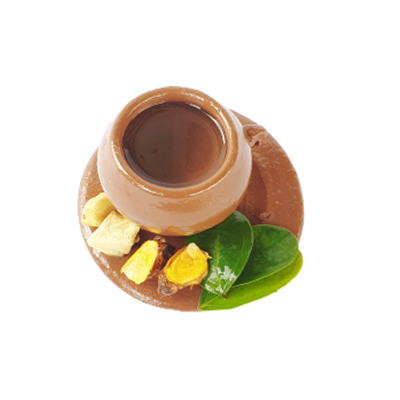
- 2 handfuls of harimonting leaves, ginger and bengle ginger, each thumb-sized.
- Wash all ingredients thoroughly, then cut into pieces.
- Boil in 3 cups of water until reduced to two cups. Once cool, strain and drink twice a day, 1 cup each time.
Reference Sources
- CABI. (2012). Invasive Species Compendium. Rhodomyrtus tomentosa (Downy rose-myrtle). https://www.cabi.org/isc/datasheet/47297#tosummaryOfInvasiveness. 15-08-2020.
- Fern, Ken. (2019). Useful Tropical Plants. Rhodomyrtus tomentosa. http://tropical.theferns.info/viewtropical.php?id=Rhodomyrtus+tomentosa. 15-08-2020.
- Hamid, H.A., Mutazah, R., and Yusoff, M. (2017). Rhodomyrtus tomentosa: A phytochemical and pharmacological review. https://www.researchgate.net/publication/313386254_Rhodomyrtus_tomentosa_A_phytochemical_and_pharmacological_review. 07-12-2020.
- Latiff, A.M. (2016). Pl@nt Use. Rhodomyrtus tomentosa (PROSEA). https://uses.plantnet-project.org/en/Rhodomyrtus_tomentosa_(PROSEA). 15-08-2020.
- Science Direct. (2020). Rhodomyrtus tomentosa (Aiton.): A review of phytochemistry, pharmacology and industrial applications research progress. https://www.sciencedirect.com/science/article/abs/pii/S0308814619318448. 15-08-2020.