Ricinus communis L.
Summary
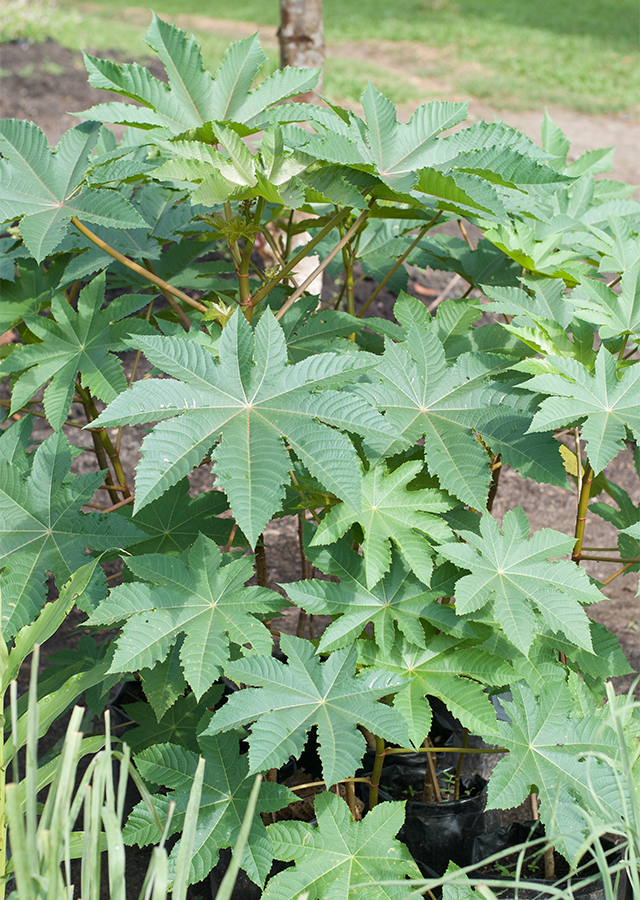
Castor bean (Ricinus communis) is an erect shrub up to 4 meters tall of the Euphorbiaceae family, native to Ethiopia, first cultivated by the Portuguese and Spanish before entering Indonesia alongside the Portuguese arrival in the 16th century. Its seeds are processed into castor oil, a raw material for the paint, textile, and cosmetics industries. Traditionally, this plant is also used to promote hair growth and treat boils and rheumatism.
Agroecology
Grows well in light soils such as sandy loam, containing sufficient organic matter, with good drainage and aeration, soil pH 5-6.5, at an elevation of 450 m above sea level, with low rainfall (300-700 mm/year), tolerant of dry conditions.
Morphology
- Roots a deep taproot, with widely spreading lateral roots and many fine root hairs.
- Stem erect, round, hollow, jointed. Color varies from green to reddish-brown.
- Leaves palmate with 5 to 11 lobes, with shallow to deep indentations.
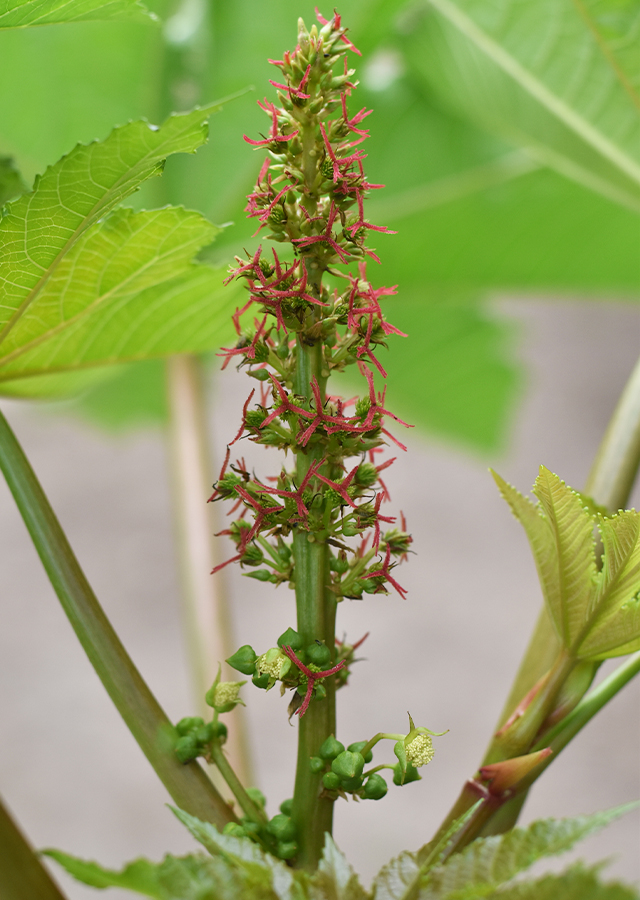
- Flowers compound, orange-yellow.
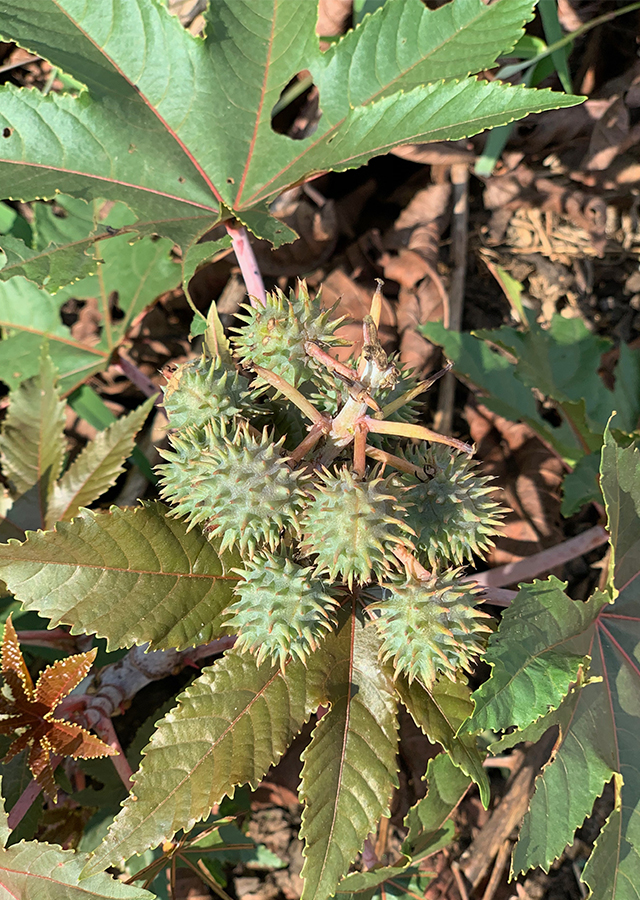
- Fruit round. Young fruit light green to dark green.
Cultivation
- Propagated generatively (by seed).
- Seeds are planted at the start of the rainy season, by dibbling (3 cm deep), with a planting spacing for intercropping of 3-6 x 2 m.
- Fruit is harvested once it begins to dry.
Chemical Content
Flavonoids, saponins, glycosides, the alkaloid ricinine, quercetin, kaempferol, steroids, coumarins, terpenoids, tannins.
Benefits
Has antipyretic, anti-inflammatory, anticancer, and antidiabetic activity; lowers cholesterol; addresses constipation; promotes hair growth; treats boils, fungal infections, earache, rheumatism, hernia, wheezing cough, swelling, and wounds.
Simplisia
- Select good (undamaged) leaves.
- Dry the leaves for 1 week by air-drying in open air protected from direct sunlight.
- Cut into small pieces (0.5-1 cm) and sun-dry for several days until the moisture content is below 10%.
- Grind using a blender.
- Store in a clean, airtight container.
Local Names
Lulang (Karo), Jarag (Lampung), Gloah (Gayo), Kaleke (Madura), Tangang-tangang jara (Makasar), Pelung kaliki (Bugis), Paku perunai (Timor).
Traditional Recipes
The following recipes reflect traditional knowledge passed down through generations, not a substitute for professional medical diagnosis or advice. Consult a healthcare provider before use.
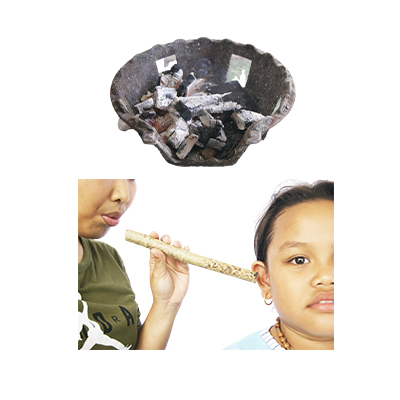
1. Earache
- Insert a 20 cm castor bean stem into hot ashes for about 25 seconds.
- Gently blow air into the ear until it feels warm and comfortable.
- Do this when the ear hurts. It's best done 3 times a day during the healing period.
Reference Sources
- CABI. (2014). Invasive Species Compendium. Ricinus communis (castor bean). https://www.cabi.org/isc/datasheet/47618. 16-09-2020.
- Fern, Ken. (2019). Useful Tropical Plants Database. Ricinus communis. http://tropical.theferns.info/viewtropical.php?id=Ricinus+communis. 20-07-2020.
- Lim, T.K. (2012). Edible Medicinal And Non-Medicinal Plants:Vol. 2, Fruits. Springer.DOI 10.1007/978-94-007-1764-0_1. (pp.484-502).
- Ling, K. H., Kian, C. T., and Hoon, T. C. (2009). A Guide to Medicinal Plants, An Illustrated, Scientific and Medicinal Approach. World Scientific Publishing Co. Pte. Ltd.(pp.132-134).
- Stuartxchange. (2018). Philippines Medicinal Plants. Ricinus communis Linn. http://www.stuartxchange.com/TanganTangan.html. 16-09-2020.