Rivina humilis L.
Summary
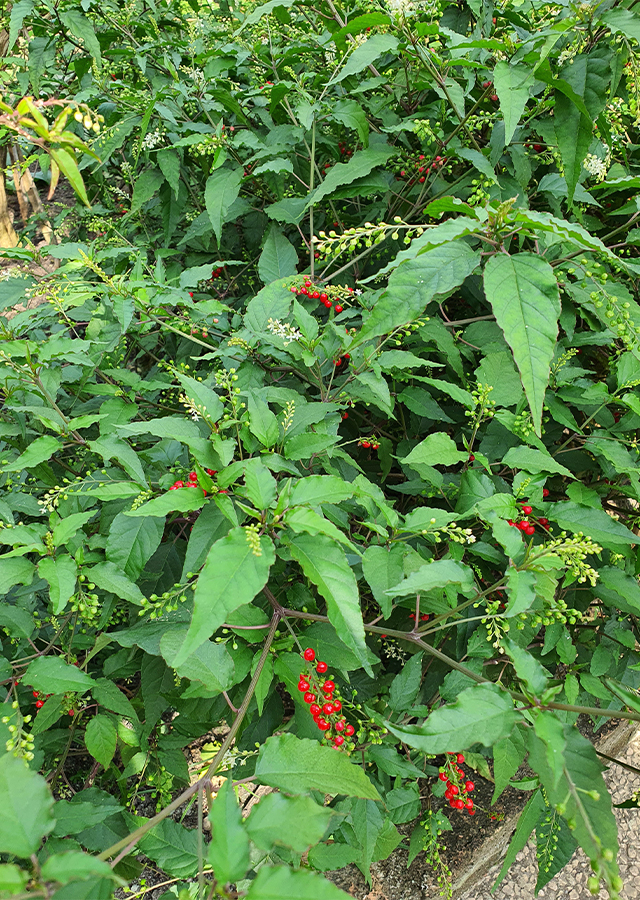
Getih-getihan (Rivina humilis) is a herb up to 0.4-2 meters tall of the Petiveriaceae family, native to tropical America, from the southern United States to South America. Its bright red fruit is commonly used as a natural fabric dye. Traditionally, getih-getihan is also believed to treat colds, diarrhea, and help improve fertility.
Agroecology
Rivina humilis is found in forests, thickets, roadsides, and disturbed areas at elevations from sea level up to 1,800 m above sea level (5,600 feet). This plant requires partial sunlight and does not tolerate full shade. Tolerant of salt spray and saline soil.
Morphology
- Stem upright, dichotomously branched.
- Leaves elliptical to ovate, pointed tip, 9-15 cm wide, with a petiole length of 1-11 cm.
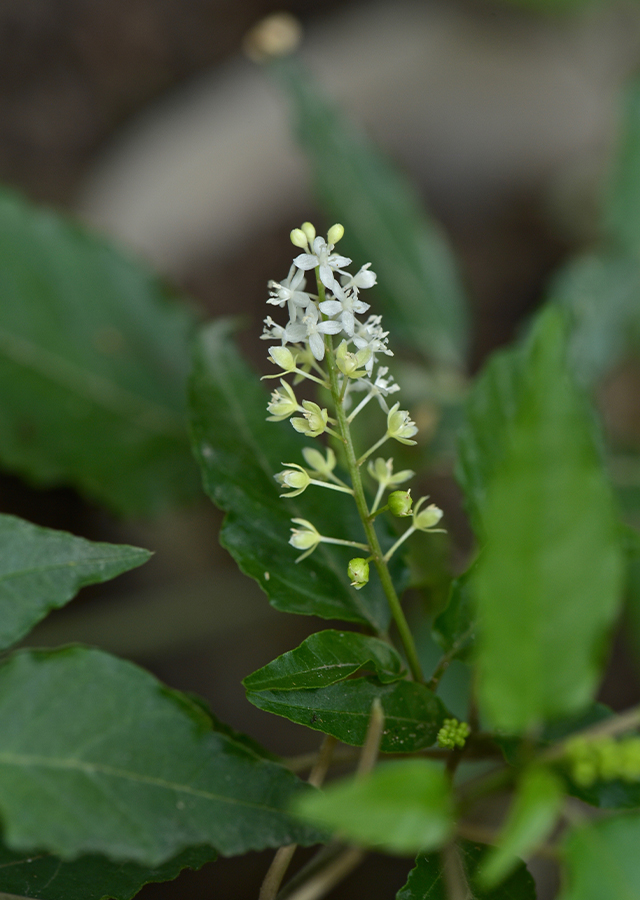
- Flowers with an inflorescence axis length of 4-15 cm with a stalk 1-5 cm long and stalk branches of 2-8 mm. Sepals 1.5-3.5 mm long and white or green turning pink or purplish.
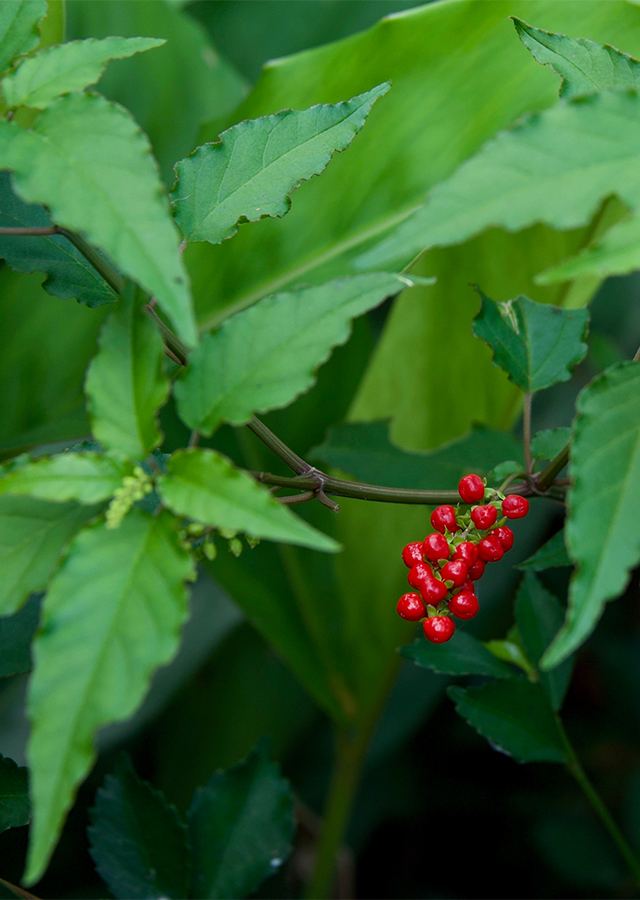
- Fruit bright red, glossy, 3-4 mm in diameter.
- Seeds hairy, 3 mm in diameter.
Cultivation
- Rivina humilis can be propagated by seed from mature fruit. Vegetatively it can be propagated by stem cuttings.
- Its spread is aided by birds that eat the fruit.
Chemical Content
Leaves: phenolic compounds, flavonoid, saponin, alkaloid, triterpenoid, steroid, tannin. Fruit: pigment rivianin or rivinianin (IUPAC 5-O-β-D-glucopyranoside, 3-sulfate, betaxanthin humilixanthin.
Benefits
Treats colds, diarrhea, addresses difficulty urinating, bloating, gonorrhea, jaundice and ovarian pain, heals wounds, and helps improve fertility.
Simplisia
- Prepare getih-getihan leaves, wet-sort out dirt or unwanted material. Wash with running water.
- Dry by air-drying until fully dry.
- Grind using a blender to obtain simplisia powder. Pack in a clean, airtight container.
Local Names
Empedu beruang
Traditional Recipes
The following recipes reflect traditional knowledge passed down through generations, not a substitute for professional medical diagnosis or advice. Consult a healthcare provider before use.
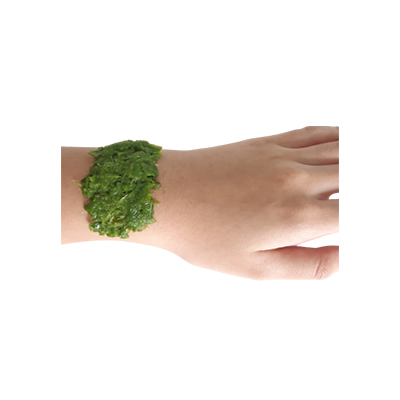
1. Healing wounds
- Wash leaves as needed thoroughly with running water.
- Pound into a paste.
- Apply to the wound.
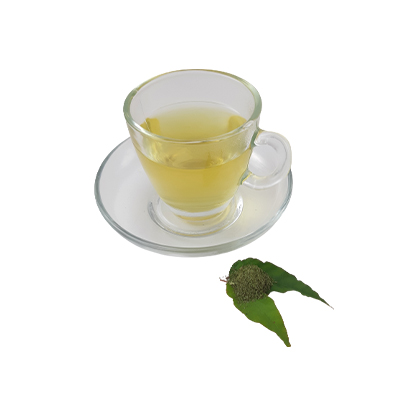
2. Helping improve fertility
- Take leaf powder as needed.
- Boil until boiling and the water reduces.
- Drink 1-2 cups a day. Do this regularly for 1 month.
Reference Sources
- CABI. (2013). Invasive Species Compendium. Rivina humilis (bloodberry). https://www.cabi.org/isc/datasheet/116742#tosummaryOfInvasiveness.30-03-2021.
- Fern, Ken. (2014). Useful Tropical Plants. Rivina humilis. http://tropical.theferns.info/viewtropical.php?id=Rivina+humilis. 30-03-2021.
- Flowers of India. (No date). Blood Berry. http://www.flowersofindia.net/catalog/slides/Blood%20Berry.html. 20-02-2021.
- GBIF. (2019). Rivina humilis L. https://www.gbif.org/species/101400468 . 20-02-2021.
- Pl@nt Net. (No date). Plantinvasivekruger - Phytolaccaceae - Rivina humilis L. http://publish.plantnet-project.org/project/plantinvasivekruger/collection/collection/synthese/details/RIVHU 20-02-2021.
- Research Gate. (2013). Rivina humilis L: A Potential Antimicrobial and Antioxidant Source. https://www.researchgate.net/publication/287702221_Rivina_humilis_L_A_Potential_Antimicrobial_and_Antioxidant_Source. 20-02-2021.
- Herbpathy. (No date). Rivina humilis herb uses benefits, cures, side effects, nutrients. https://herbpathy.com/Uses-and-Benefits-of-Rivina-Humilis-Cid6128. 20-02-2021.
- Ayurvedic Medicinal Plants of Sri Lanka. (No date). Rivina_humilis. http://www.instituteofayurveda.org/plants/plants_detail.php?i=984&s=Family_name 20-02-2021.
- Bioedukasi Jurnal Biologi dan Pembelajarannya. (2018). The Effect of Extract of Getih-Getihan (Rivina humilis L.) on Armyworm (Spodoptera litura F.) Mortality. https://jurnal.unej.ac.id/index.php/BIOED/search/authors/view?firstName=Dewi&middleName=&lastName=Nurhayati&affiliation=&country=ID. 20-02-2021.