Rosa L.
Summary
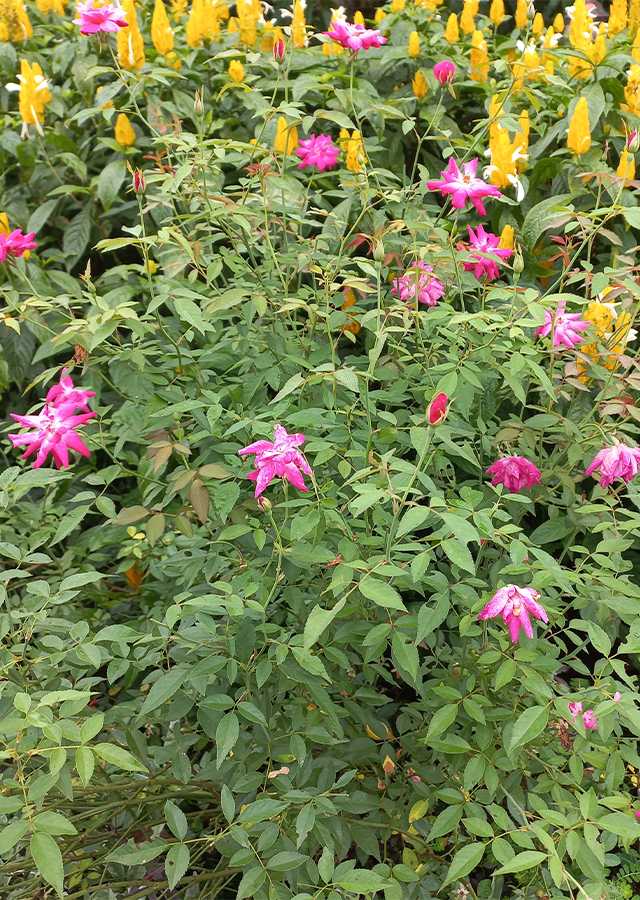
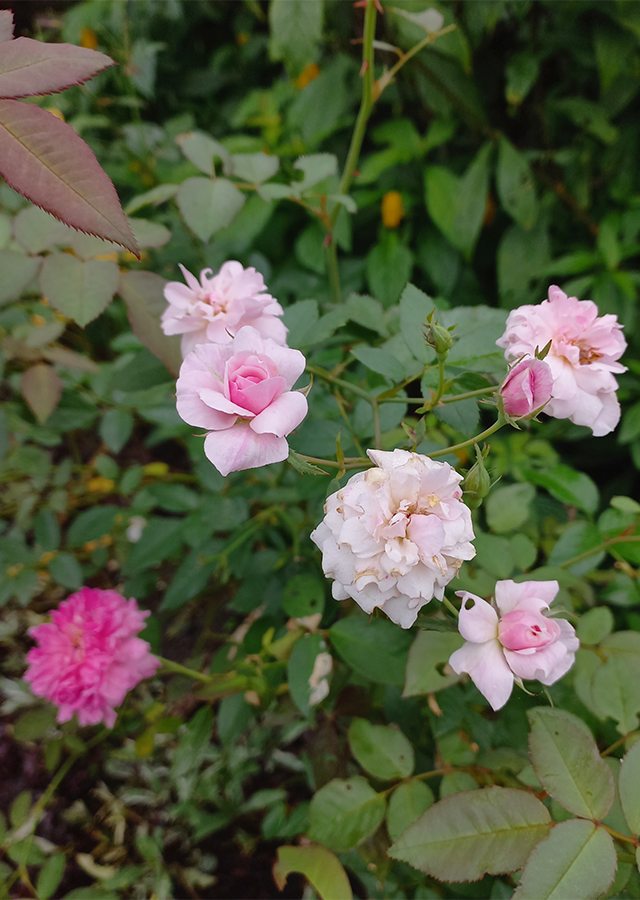
Rose (Rosa sp.) is an upright or climbing shrub 2-5 meters tall of the Rosaceae family with more than three hundred species, mostly native to Asia. Its petals are rich in vitamin C and processed into jam, syrup, and rose water essential to Middle Eastern and Persian cuisine. Rosa chinensis has long been used in traditional Chinese medicine and by North American Indian tribes to relieve cough.
Agroecology
In tropical regions such as Indonesia, roses can grow and flower productively in lowlands to highlands (mountains), on average at elevations of 1,500 m above sea level. Rainfall for good rose growth is 1,500-3,000 mm/year. Its growth requires cool air temperatures ranging between 18-26°C and humidity of 70-80%, as well as loose, humus-rich soil with a soil acidity degree (pH) between 5.5-6.8. Prefers areas with sufficient sunlight conditions (5-6 hours per day) and does not like waterlogged water.
Morphology
- Root a taproot that grows elongated downward, round and long root shape.
- Stem hard woody, sharp thorns, many-branched, grayish-green. Round shaped, long, and relatively small diameter.
- Leaves compound pinnately trifoliate, alternate leaf position. Leaf blade elliptical or oblong shaped, rounded base, pinnate veins, has stipules, green in color, flat-serrated edges, wingless petiole.
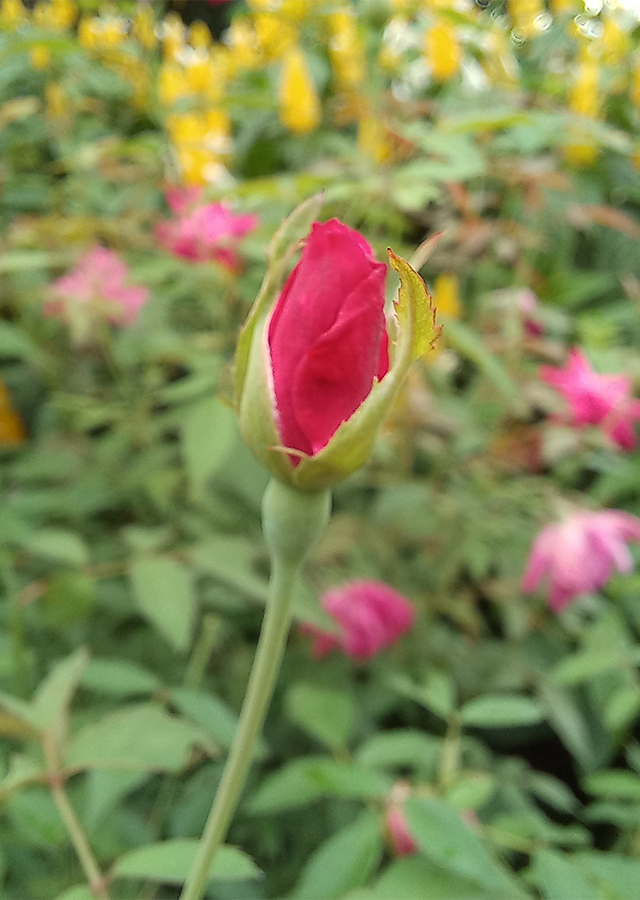
- Flowers solitary, varying in size and shape, fragrant, has 4-5 petals and 4-5 sepals, stalked. Sepal (calyx) triangular shaped.
- Fruit fleshy, berry-like structure, round and oblong round shaped.
- Seeds oval shaped and very small in size, whitish and brownish on the inside. This seed is located inside the flower.
Cultivation
- Propagated generatively (seed) as well as vegetatively (stem or branch cuttings, air layering, budding).
- Budding is most commonly done especially for commercial purposes. Best results when the rootstock bark can be peeled easily, namely after 3-4 months of age. Woody bud budding can be done at 4 weeks of age thus saving 2-3 months compared to regular budding. Try to ensure the cambium of the upper and lower stems can meet.
- The best time for air layering is during the rainy season.
Chemical Content
Tannin, geraniol, nerol, geranic acid, terpene, flavonoid, pectin polyphenol, vanillin, carotenoid, stearoptene, farnesol, phenylethyl alcohol, β-damascenone, quercitrin, and essential oil (citronellol, eugenol, gallic acid, and linalool).
Benefits
Skin wash to stop bleeding from scratches and wounds, wound healer, mouthwash for sore throat, treats cough, phthisis (lung disease), hemoptysis (coughing blood), diarrhea, dysentery, joint inflammation, gout, fever, colds, excessive menstruation, migraine, allergies, acne, has diuretic properties.
Simplisia
- Pick fresh rose flowers. Wash thoroughly with running water.
- Air-dry in the shade for several days or dry using an oven at 40°C until evenly dry.
- Store the simplisia in a closed, light-proof container at room temperature.
Local Names
Kembang ros (Sunda).
Traditional Recipes
The following recipes reflect traditional knowledge passed down through generations, not a substitute for professional medical diagnosis or advice. Consult a healthcare provider before use.
1. Irregular menstruation
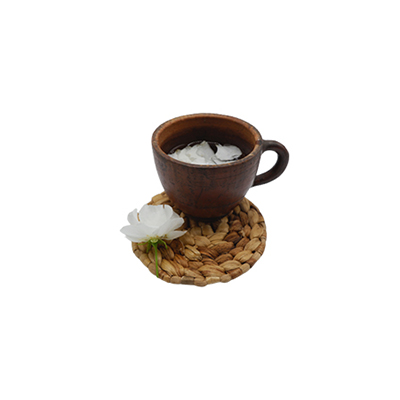
- Prepare 15-21 g fresh rose flowers then wash thoroughly.
- Steep the rose flowers with hot water as needed.
- Drink several times a day.
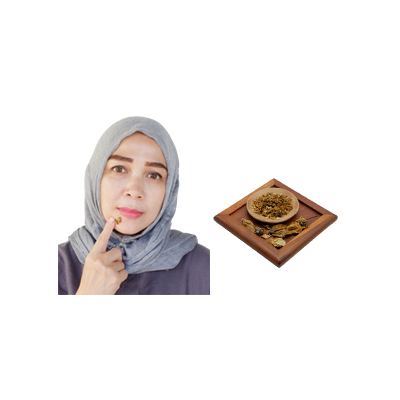
2. Acne
- Dry rose flowers as needed by air-drying.
- Grind into powder.
- Mix the powder with a little water.
- Apply to the acne-affected face.
Reference Sources
- Balai Penelitian Tanaman Hias. Budidaya Mawar Bunga Potong. http://balithi.litbang.pertanian.go.id/berita-832-budidaya-mawar-potong.html. 10-09-2021.
- Stuartxchange. 2016. Philippine Medicinal Plants: Rosas. http://www.stuartxchange.org/Rose.html. 10-09-2021.
- Global Biodiversity Information Facility. 2021. Rosa L. https://www.gbif.org/species/113651705. 10-09-2021.
- Royal Botanic Gardens. 2017. Plants of the World Online: Rosa L. http://powo.science.kew.org/taxon/urn:lsid:ipni.org:names:30002432-2. 10-09-2021.
- Florabase. 2021. Rosa L. https://florabase.dpaw.wa.gov.au/browse/profile/21507. 10-09-2021.