Rotheca serrata (L.) Steane & Mabb.
Summary
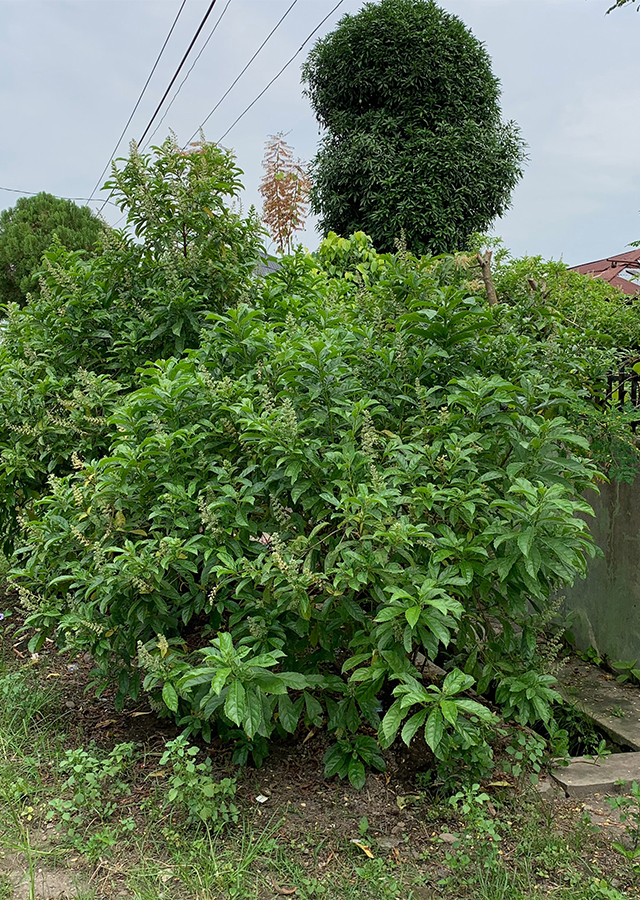
Senggugu (Rotheca serrata) is an upright shrub 1-4 meters tall of the Lamiaceae family, distributed from Africa to Southeast Asia, with a specific distribution in the Himalayas and Western Ghats of India. In Ayurvedic and Unani medicine, this plant has long been used to address respiratory problems, while its young leaves can be eaten as a fresh vegetable. Senggugu is also believed to help relieve asthma, cough, and bronchitis.
Agroecology
Generally found in secondary forests, alang-alang grasslands, village edges, roadsides or near water where the soil is somewhat moist, from lowlands up to elevations of 1,700 m above sea level. This plant grows wild in open or somewhat sheltered places.
Morphology
- Roots taproot and blackish-gray.
- Stem hollow, large-nodded, slightly branched, blunt quadrangular stem, young parts usually glabrous.
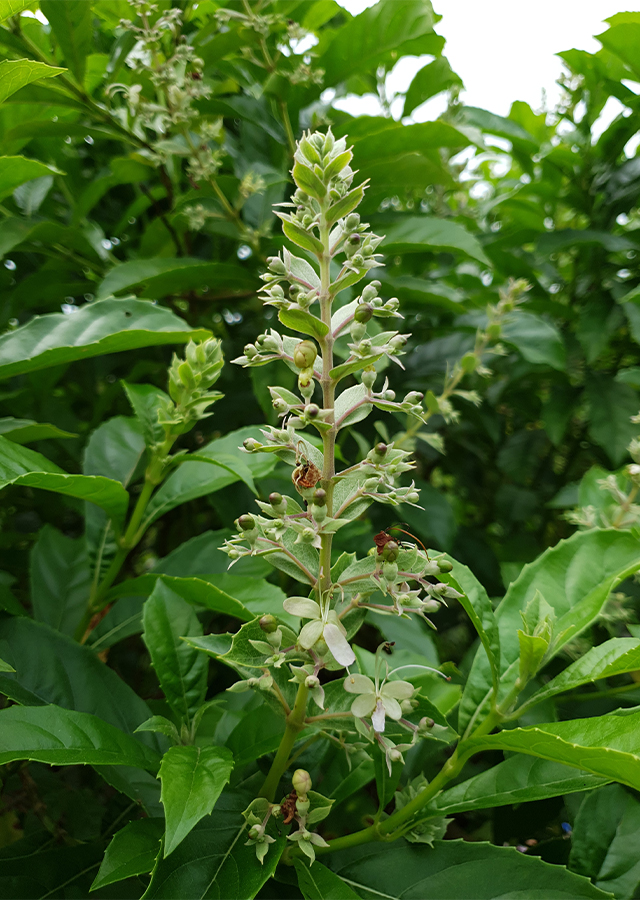
- Leaves single, green, alternating, oblong or elliptic, serrated edges, tapering base and tip, short petiole, finely hairy surface, pinnate venation,
- Flowers compound, has bracts, long twisted panicle forming a large crown at the bottom, purplish-white.
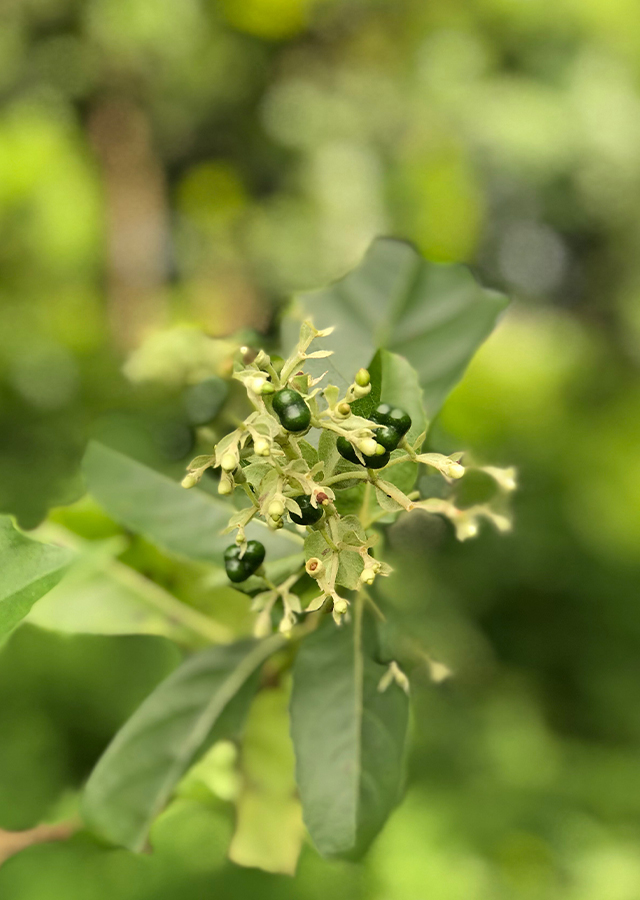
- Fruit a berry, egg-shaped, green when young, black when mature.
Cultivation
- Propagated generatively (by seed).
- Germination usually takes 20-60 days at 20°C. Once large enough, separate the seedlings, plant each in a pot until large enough to be transplanted to the field.
Chemical Content
D-mannitol, terpenoids (betulin, oleanolic acid, clerodermic acid, betulinic acid, friedelin, monomelittoside), steroids, polyphenolates, tannins, alkaloids, flavonoids (apigenin, 7-hydroxy flavanone, scutellarein, pectolinarigenin).
Benefits
Treats asthma, wounds, cholera, cough, rheumatism, fever, bronchitis, tuberculosis, malaria, edematous abdomen, worm infections, and clears the eyes.
Simplisia
- Pick fresh, undamaged senggugu leaves, wash thoroughly using running water and drain.
- Arrange the leaves on a tray, cover the leaves with a black colored cloth. Dry in the sun until completely dry (leaves crumble easily when crushed).
- Dry-sort the material by separating it from other unwanted material.
- Pack in clean, airtight plastic.
Local Names
Simar baungkudu (Batak), Tanjau handak (Lampung), Singgugu (Sunda), and Kutase (Madura).
Traditional Recipes
The following recipes reflect traditional knowledge passed down through generations, not a substitute for professional medical diagnosis or advice. Consult a healthcare provider before use.
1. Wounds
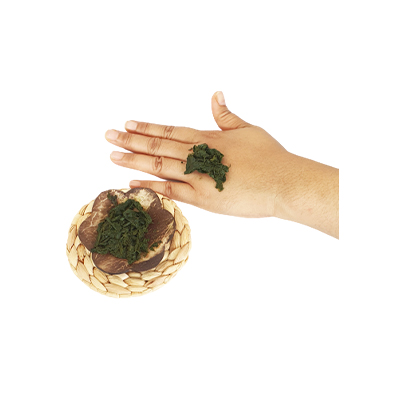
- For external use: pound fresh leaves until mashed
- Apply to the affected area or boil the leaves, use the water to wash the wound.
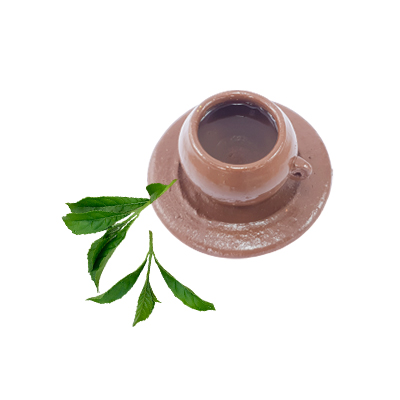
2. Edematous Abdomen and Worm Infections
- Prepare an adequate amount of senggugu leaves and temulawak, steep with 1 cup of hot water. Add a little salt then strain.
- Drink all at once.
Reference Sources
- Asosiasi herbalisnusantara (pusat pelatihan dan pengobatan herbal indonesia), download 699 ebook tanaman obat indonesia; Perut Busung dan Cacingan, herbalisnusantara.com https://herbalisnusantara.com/obatherbal/view1f0f.html?mnu=2&id=157 31-08-2020
- Asosiasi herbalisnusantara (pusat pelatihan dan pengobatan herbal indonesia), download 699 ebook tanaman obat indonesia; luka, https://herbalisnusantara.com/obatherbal/view1f0f.html?mnu=2&id=157 31-08-2020
- Tropical Plants Database, Ken Fern. tropical.theferns.info. Rotheca serrata. http://tropical.theferns.info/viewtropical.php?id=Rotheca+serrata 03-02-2021