Rubus moluccanus L.
Summary
Rosberi hutan (Rubus moluccanus) is a climbing shrub up to 6 meters tall from the Rosaceae family spread from the Himalayas to Eastern Australia, spreading through seeds sown by birds. Its fruit can be eaten raw or processed into pies. Rosberi hutan is traditionally used to address dysentery, speed wound healing, and as a blood tonic.
Agroecology
Rosberi hutan plants can grow at elevations up to 3,000 m asl. Commonly found in forests, forest borders, thickets along rivers. Easily grown in well-drained loamy soil in sun or partial shade, and moist soil.
Morphology
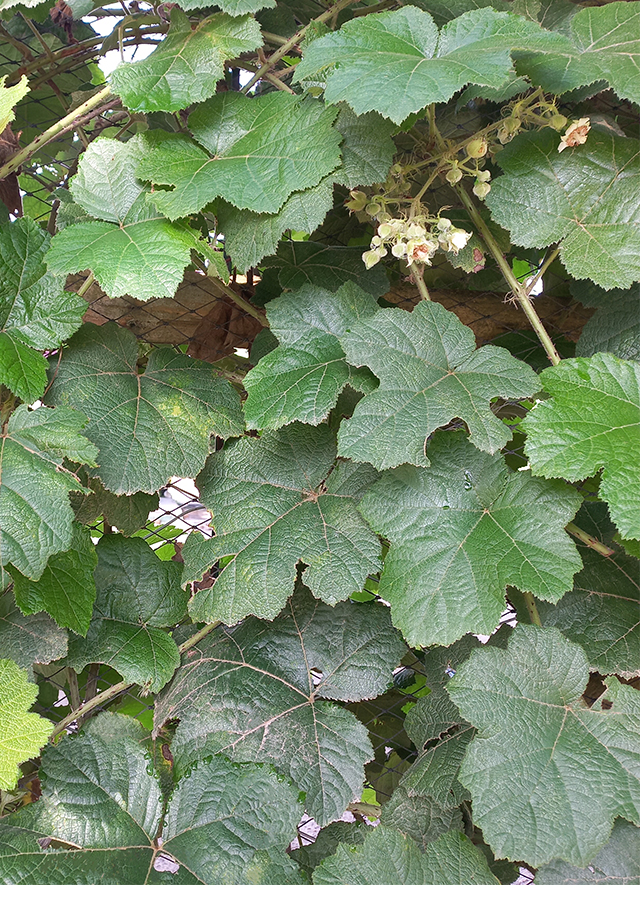
- Stem climbing, woody, hard, brownish-green, thorny, reaching a height of 2-3 m, with branches covered by hairy fuzz. Stem, buds, petiole, and lower leaf surface velvety.
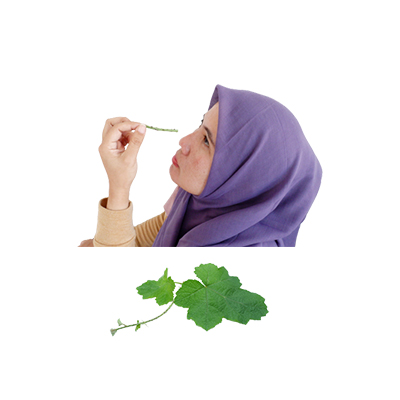
- Leaves thin, flat, usually 3 to 5 lobed, deeply heart-shaped at the base, broadly ovate, and 5-15 cm wide. Upper surface hairy and appears reticulate when dry.
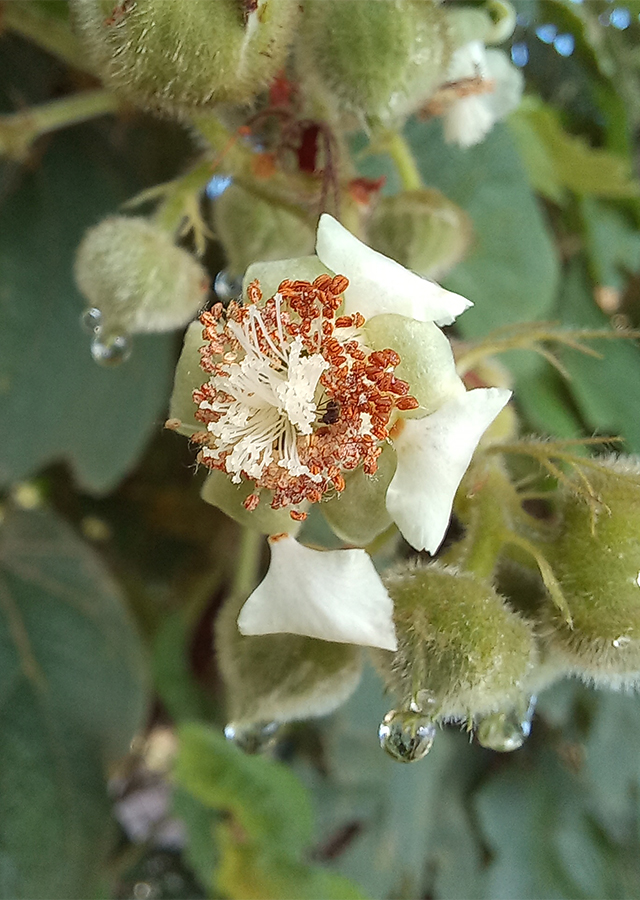
- Flowers about 2 cm in size, usually in small clusters, and arranged in a raceme form in the leaf axils and at branch tips. Calyx lobes ovate to lanceolate, entire or pectinate. Petals oblong, white, and shorter than the calyx segments.
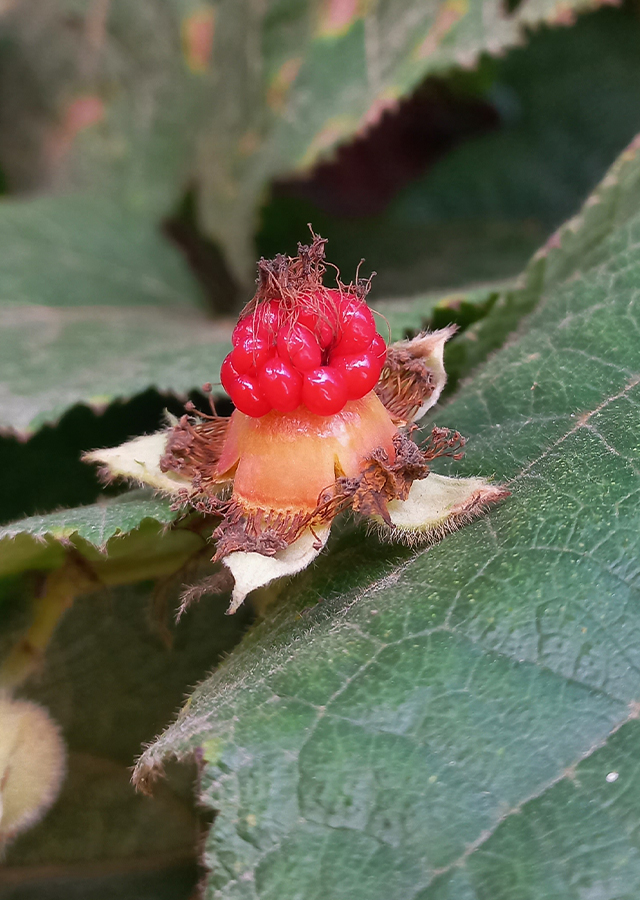
- Fruit a bright red berry, about 1 cm in diameter, juicy, slightly sour, with many carpels, and a hairy receptacle.
Cultivation
- Propagation generatively with seeds. Seeds germinate best if given a period of cold stratification before sowing in containers. Stored seed requires one month stratification at a temperature around 3 °C and is best sown as early as possible in the growing season. Transplant when large enough to plant out.
- Vegetative propagation uses semi-mature wood cuttings.
Chemical Content
Tannin, malic acid, citric acid, pectin, albumin, flavonoid, anthocyanin, hydroxy methyl furfural; 1,1,2,-triacetoxyethane; 2,4-dihydroxy-2,5-dimethyl-3(2H)-furan-3-one; 2-hydroxy-3-methyl-4-pyrone, alkaloid, amino acid, phenolic compound, glycoside, pentacyclic triterpene, rubonic acid, saponin.
Benefits
Treats dysentery, induces labor, treats stomach ache, speeds wound healing, treats eye diseases, a remedy useful for nighttime urination in children (bedwetting), as a blood tonic, treats dysentery and other internal complaints, provides energy, and increases fertility in women, used for peptic ulcer disease. Has antihypertensive, abortifacient, astringent, and emmenagogue activity.
Simplisia
- Prepare rosberi hutan leaves, wash clean with running water then drain.
- Dry under sunlight or using an oven at 40 °C until moisture content reaches 10%.
- Blend into powder and sieve with a 60-mesh sieve.
- Store in a clean, airtight place.
Local Names
Brebet, Berete (Java), Hereneus, Hereneus bodas (Sunda), Kemerang ni langkow, Kerembang ni langkow, Kunet kamerang, Merang in tua (Minahasa), Tundung (Lampung).
Traditional Recipes
The following recipes reflect traditional knowledge passed down through generations, not a substitute for professional medical diagnosis or advice. Consult a healthcare provider before use.
1. Wounds
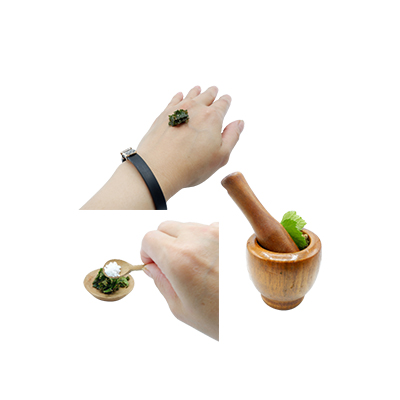
- Prepare rosberi hutan leaves then wash until clean.
- Mash with salt into a paste.
- Apply to the wound.
2. Eye pain
- Take sap from rosberi hutan leaves or stem.
- Drip the sap into the eye to address eye pain or eye disease.
Reference Sources
- Useful Tropical Plants Database. 2021. Rubus moluccanus. https://tropical.theferns.info/viewtropical.php?id=Rubus+moluccanus. 06-10-2021.
- Royal Botanic Gardens. 2017. Plants of the World Online: Rubus moluccanus L.. https://powo.science.kew.org/taxon/urn:lsid:ipni.org:names:738460-1. 06-10-2021.
- Stuartxchange. 2018. Philippine Medicinal Plants: Sapinit. http://www.stuartxchange.org/Sapinit. 06-10-2021.