Rubus rosifolius Sm.
Summary
Rosberi (Rubus rosifolius) is a shrub up to 3 meters tall of the Rosaceae family, originating from the subtropical regions of northern India and China, spreading to Southeast Asia, Australia, and the Pacific. Its fruit and leaves can be processed as food as well as traditional medicine. Rosberi is believed to help strengthen the uterus and relieve morning sickness.
Agroecology
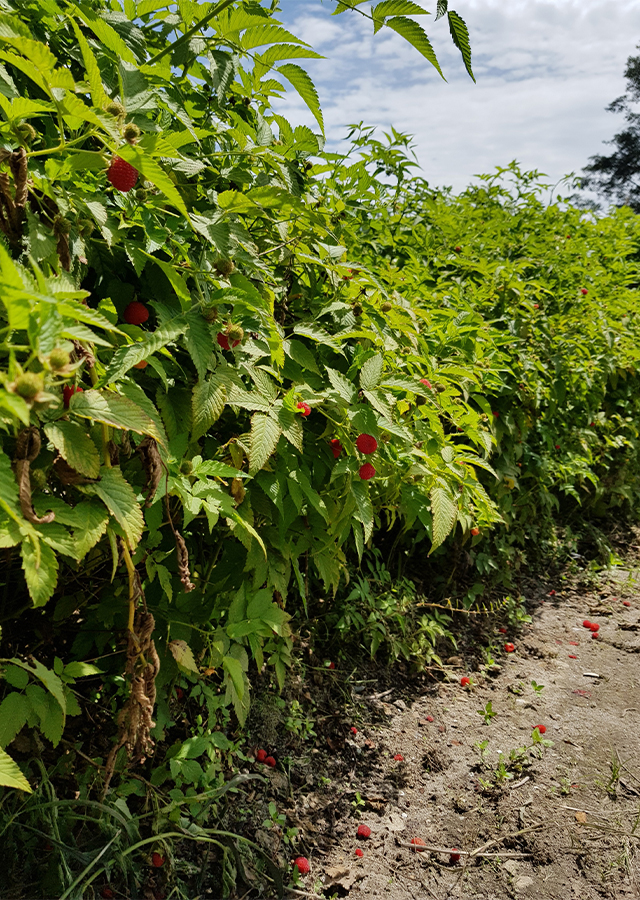
Rosberi can be found in open, moist areas up to elevations of 2,200 m above sea level. Grows in various well-drained, fertile and moist soil types, high rainfall (>1,800 mm/year) in tropical and subtropical habitats, not shade-tolerant. Commonly found at forest edges, disturbed land, and roadsides.
Morphology
- Roots taproot, white.
- Stem hairy and slightly thorny.
- Leaves compound alternating, pinnate. 5-9 leaflets, elongated egg-shaped, hairless or slightly hairy leaf surface, heart-shaped or rounded base, tapering tip, serrated edges, green in color
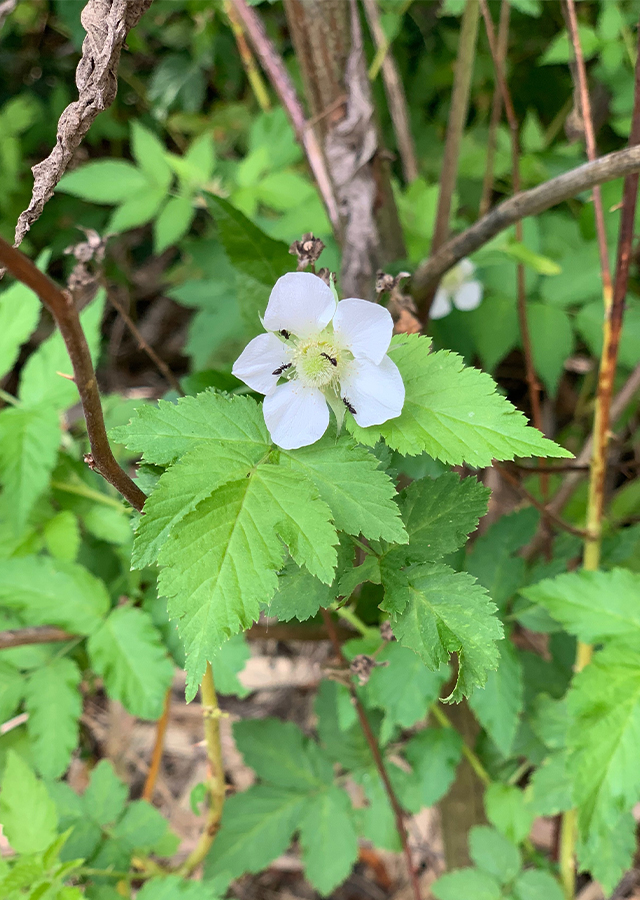
- Flowers bowl-shaped. Calyx numbering 5, oblong, tapering tip, bright green. Petals numbering 5, white or greenish-white, egg-round shaped petals, numerous stamens.
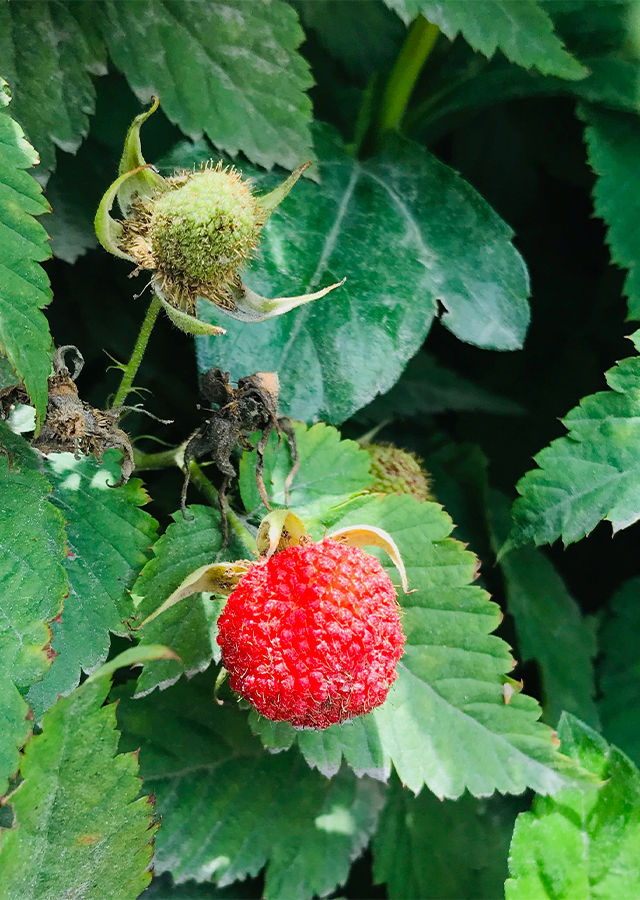
- Fruit an aggregate, red in color, egg-round or somewhat conical, hollow center of the aggregate.
Cultivation
Propagated generatively (by seed), vegetatively (offshoots).
Chemical Content
Fragrine, alkaloid, ellagic acid, phenolic compounds, anthocyanin, ursolic acid, anthocyanins, ellagitannin, flavonoid, tannin and polyphenol.
Benefits
Anticarcinogenic and antimutagenic, morning sickness, strengthens the uterus, prevents heart disease, treats diarrhea, fever, canker sores.
Simplisia
- Pick fresh and healthy rosberi leaves that are undamaged.
- Wash with running water then air-dry away from direct sunlight until evenly dry (leaves are easily damaged if crushed).
- Pack in clean, airtight (vacuum) plastic. Store in a room at room temperature and well-ventilated.
Local Names
Arbei, Beberetean (Sunda), Kecalingan (Java), Jalanggara (Maluku), Kupi-kupi, and Pingat (Sumatra).
Traditional Recipes
The following recipes reflect traditional knowledge passed down through generations, not a substitute for professional medical diagnosis or advice. Consult a healthcare provider before use.
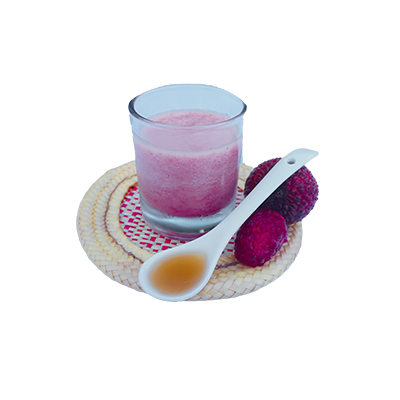
1. Juice for Preventing Heart Disease
- Take 60 g rosberi, 50 g lychee, 100 ml water, 3 blocks of ice cubes and 1 tbsp honey.
- Cut the rosberi and lychee into pieces.
- Put all ingredients into a blender then blend.
- Pour the juice into a serving glass. Drink all at once.
Reference Sources
- Bobinaite R, Viškelis P, Venskutonis PR. 2012. Variation of total phenolics, anthocyanins, ellagic acid and radical scavenging capacity in various raspberry (Rubus spp.) cultivars. Food Chemistry 132: 1495-1501. 2012.
- Huang JY, Hu JM. 2009. Revision of Rubus (Rosaceae) in Taiwan. Taiwania 54(4): 285-310.
- Prosea. 2016. Rubus. https://uses.plantnet-project.org/en/Rubus_(PROSEA_Fruits) 07-06-2019
- Rahayu SSB. 2002. Physalis angulata (L.) Willd. dalam Van Valkenburg, JLCH, Bunyapraphatsara N. (Editor): Plant Resource of South-East Asia 12(2). Medicinal and poisonous plants 2. Prosea Foundation, Bogor, Indonesia 425.
- Ratri WS, Darini MT. 2016. Peluang ekonomi tanaman ciplukan sebagai abate alami. Jurnal Sciencetech 2(1).
- Surya MM, Rahman W. 2011.The of planting media and compound fertilizer on the growth of Rubus pyrifolius JE smith seeling.Agrivita. 33(2): 154-160.
- Sundarini R. 2016. Keragaman Rubus di Gunung Kembang Kabupaten Wonosobo Jawa Tengah dan potensi pemanfaatannya. Journal of Tropical Biodiversity and Biotechnology 9-13.
- Teng H, Lee WY, Choi YH. 2014. Erratum to: Optimization of Ultrasonic-Assisted Extraction of Polyphenols, Anthocyanins, and Antioxidants from Raspberry (Rubus coreanus Miq.) Using Response Surface Methodology. Food Anal. Methods.