Ruellia simplex C.Wright
Summary
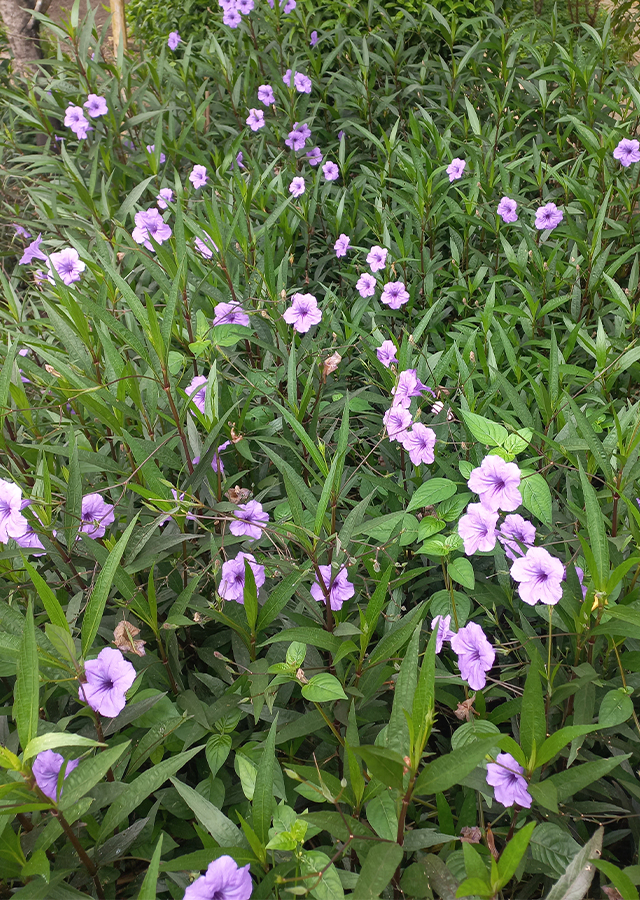
Ruellia simplex or Mexican petunia is native to Mexico, the West Indies, and parts of South America such as Bolivia and Argentina, then widely introduced as an ornamental to various continents—though in some regions such as Florida and Hawaii it is now considered invasive. Its flowers have potential to be formulated as a skin-moisturizing lotion, while traditionally this plant is used to address excessive diuresis, diabetes, and fever, besides its unique function as an acid-base indicator and shrimp freshness indicator.
Agroecology
Ruellia simplex is generally found growing in wet places, areas around streams, and disturbed areas including drainage ditches, pond or lake edges, and wet forested areas, as well as roadsides, grasslands, and marginal lands. In Florida (US), R. simplex is found growing in pine flatwoods, grasslands, freshwater marshes, rivers, springs, and prairies. In Hawaii, it often grows in dry habitats such as sidewalk cracks and shaded, disturbed ravine bottoms. Meanwhile, in Australia, R. simplex grows as a weed in waterways, riparian vegetation, dams, ponds, wetlands, and drainage ditches. R. simplex is able to grow in various environmental conditions, from waterlogged land to nearly dry habitats. Its high adaptability means this species can grow in various soil types, such as clay, acidic, sandy, loam, and wet soil. R. simplex is tolerant of both full sun exposure and low sunlight (shade) conditions. The number of flower petals will increase in habitats exposed to sunlight. Meanwhile, the number of flower petals will decrease when growing in shaded places. Besides being tolerant of sunlight, R. simplex is also tolerant of salt (salinity), drought, heat, and high humidity. In poor conditions (-9.4°C) this species will freeze but can regrow from its roots.
Morphology
- Roots fibrous.
- Stem branched, herbaceous, often woody at the base, rhizomatous, square-stemmed, ribbed, hairless, green with a purplish brown tinge, lenticellate, stem nodes swollen, adventitious roots at the stem nodes.
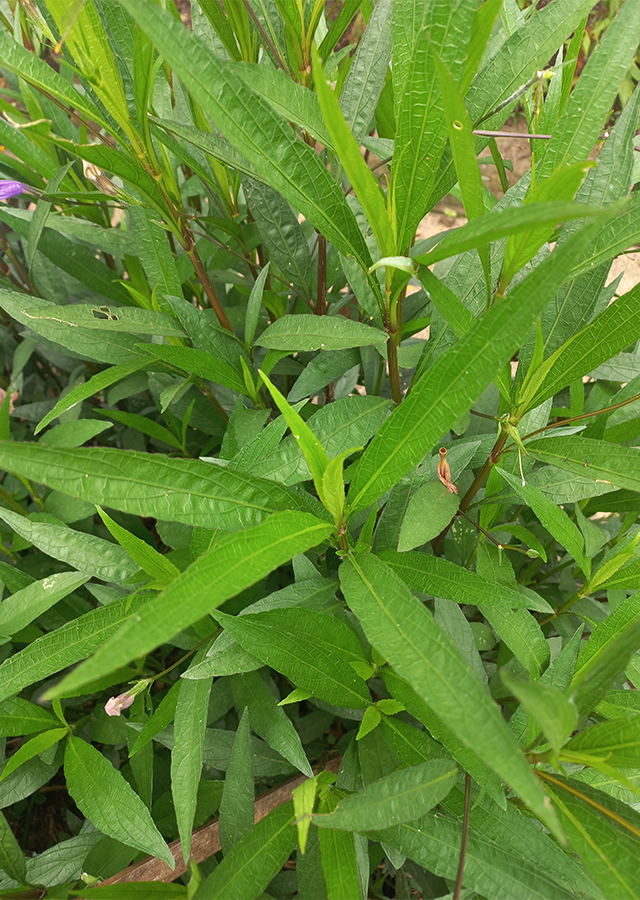
- Leaves simple, opposite, blade oblong, lanceolate-linear to linear elliptic (up to about 25 cm long and 2 cm wide). Veins pinnate, leaf veins curving toward the tip and nearly parallel to the leaf margin, raised below. Leaf base tapering or attenuate, margin entire-toothed, tip acuminate, adaxial leaf surface green to dark green, abaxial surface paler in color. Petiole very short, about 0.5-1.6 cm long, margin hairless or ciliate, often purplish or red in color.
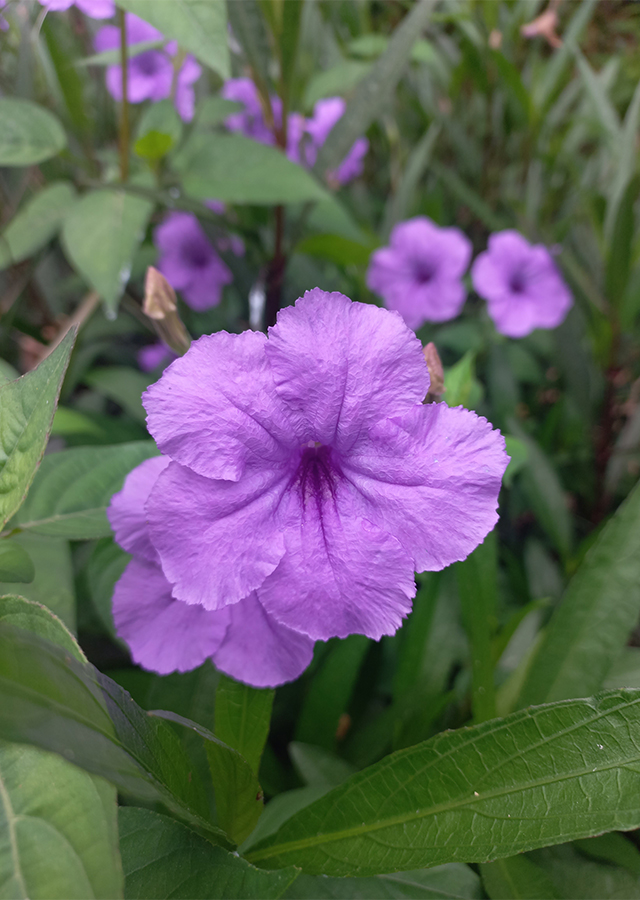
- Inflorescence limited, clustered or solitary, axillary, forking. Inflorescence stalk channeled, about 2.3-85 cm long, dark green in color. Bracts linear, tip acuminate. Calyx fused at the base, 5-lobed, lobes narrowly triangular-linear, hairless or with glandular hairs. Corolla trumpet-shaped with a dark purple throat, corolla lobes numbering 5, lobes rounded, fused to each other, purple, pale pink, or white in color. Stamens numbering 4, unequal in size. Filaments attached to the corolla tube, curved, white. Anthers oblong, about 4-5 mm long, brownish in color. Floral disc ring-shaped, white. Ovary superior, green. Pistil 1, style filiform, protruding from the corolla throat, white or greenish. Stigma ovate, flattened, about 1.5-2 mm long, purple to pink in color.
- Fruit a cylindrical capsule, oblong with a pointed tip, about 2.0-2.2 × 0.5-0.6 cm, flattened, light brown, containing many seeds (about 4-20 small seeds). When ripe, the fruit dries and releases its seeds explosively.
- Seeds rounded, about 3-4 × 2-3 mm, flattened, sticky. When exposed to water, the seeds become mucilaginous.
Cultivation
- Plant propagation can be done generatively through seed or vegetatively through stem cuttings, rhizomes, or stem fragmentation.
- Seed dispersal is aided by water flow or by attaching to animal body surfaces.
Chemical Content
Alkaloids, flavonoids, saponins, steroids, terpenoids, tannins, 5,2,3-trihydroxy-7-O-glucoflavone; 5,7,4-trimethoxy-3-O-rhamnoflavone and 2,2,4,6-tetrahydroxychalcone.
Benefits
Addresses diuresis (very high urine production increasing urination frequency), diabetes, reduces fever (antipyretic), lowers blood pressure from hypertension (antihypertensive), an antidote. Has anti-inflammatory and antioxidant activity.
Simplisia
- Prepare fresh Mexican petunia leaves and wash clean with running water.
- Dry under the sun or with an oven at 40°C until the moisture content reaches 10%.
- Store in a clean, airtight container.
Local Names
Information not found. Further research is needed.
Traditional Recipes
The following recipes reflect traditional knowledge passed down through generations, not a substitute for professional medical diagnosis or advice. Consult a healthcare provider before use.
1. Addresses diabetes
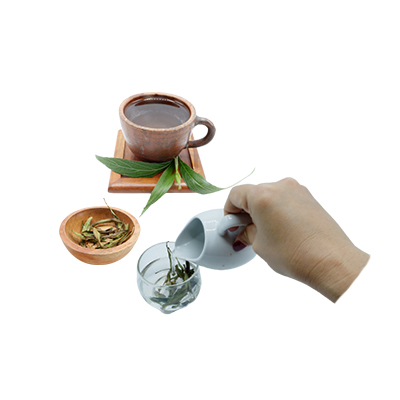
- Take an adequate amount of fresh Mexican petunia leaves and wash until clean.
- Dry the leaves.
- Steep the dried leaves like brewing tea.
- Let it cool to warm/cold.
- Strain then drink.
Reference Sources
- Royal Botanic Gardens. Plants of the World Online: Ruellia simplex C.Wright. https://powo.science.kew.org/taxon/urn:lsid:ipni.org:names:54585-1. 10-09-2022.
- Irsyam A. S. D. et al. 2021. Keberadaan Ruellia simplex (Acanthaceae) Ternaturalisasi di Pulau Jawa. AL-KAUNIYAH: Jurnal Biologi, 15(1), 2022, 140-150.
- CAB International. 2022. Invasive Species Compendium: Ruellia simplex (Mexican petunia). https://www.cabi.org/isc/datasheet/110307#toPictures. 10-09-2022.
- Flora Fauna Web. 2019. Ruellia simplex C.Wright. https://www.nparks.gov.sg/florafaunaweb/flora/2/3/2397. 10-09-2022.
- Hepni, Lestari M. D., Erika L. 2021. Purple Ruellia Flower (Ruellia Simplex Wright) Ethanol Extract Lotion as Skin Moisturizer. Science Midwifery, 10(1), October 2021.
- Khan I., Jan S. A., Shinwari Z. K., Ali M., Khan Y., Kumar T. 2017. Ethnobotany and medicinal uses of folklore medicinal plants belonging to family acanthaceae: An updated review. MOJ Biology and Medicine, 1(2):34‒38.