Salacca zalacca (Gaertn.) Voss.
Summary
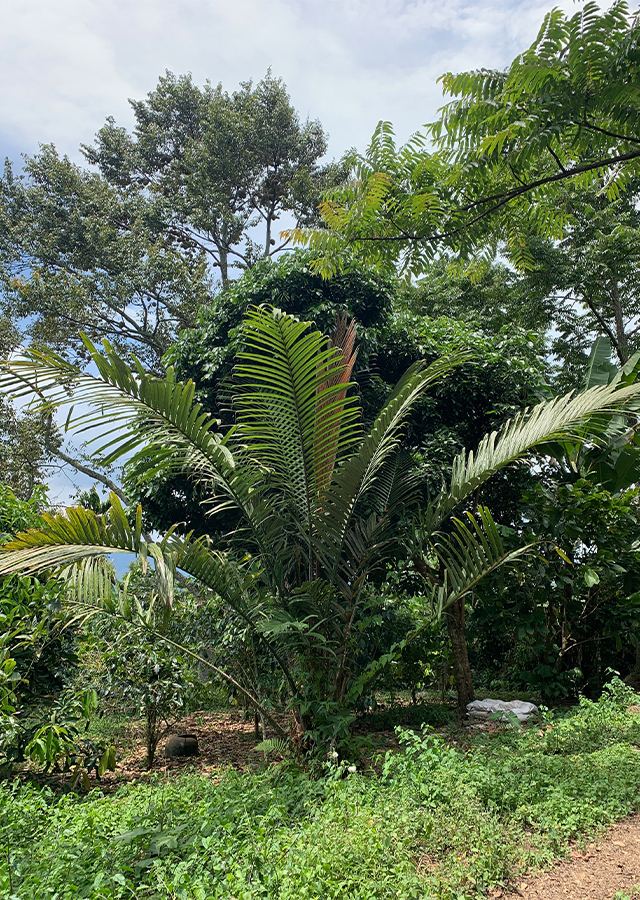
Salak or snake fruit (Salacca zalacca) is a palm up to 1.5-7 meters tall of the Arecaceae family, native to Java and Sumatra, now cultivated as far as Thailand and Malaysia. Indonesia has about 20 popular varieties named after their region of origin, such as salak pondoh from Yogyakarta and salak sidempuan from North Sumatra. Its crisp fruit is rich in antioxidants and is believed to help control blood sugar and lower cholesterol.
Agroecology
Thrives in tropical lowlands under moist conditions, at elevations of 1-400 m above sea level. In production centers, average annual rainfall is between 1,700-3,100 mm/year. Salak prefers fertile, loose soil with pH 4.5-7.5. Not tolerant of full sunlight (100%), but sufficient at 50-70%, hence the need for shade plants.
Morphology
- Roots fibrous.
- Stem creeps below or above ground, forms a rhizome, branching.
- Leaves compound pinnate, 3-7 m long. Stalk, sheath and leaflets thorny. Leaflets lance-shaped, tapering tip, sized 8 x 85 cm, underside has a waxy layer.
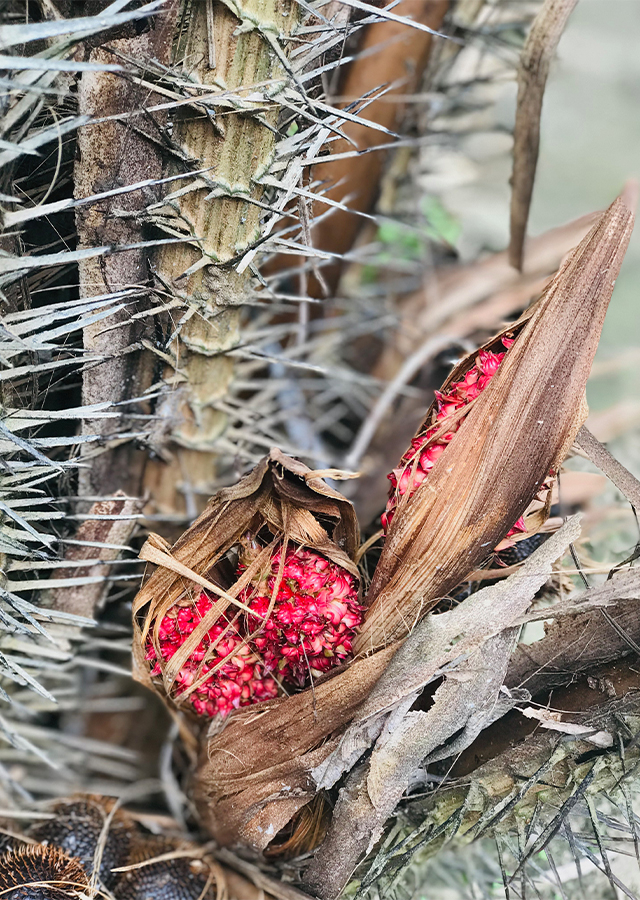
- Flowers in a spadix, compound, emerging at leaf axils, stalked.
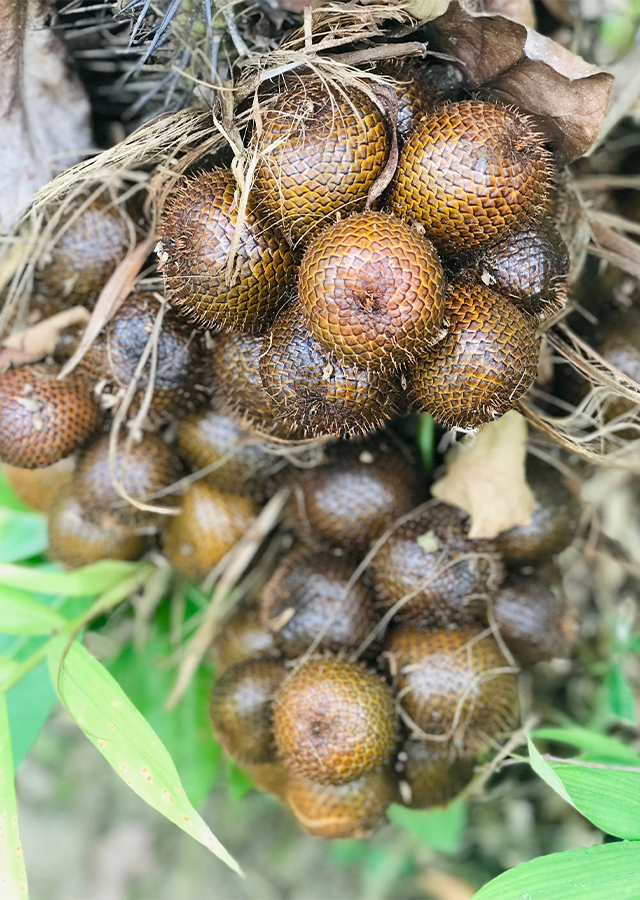
- Fruit somewhat round/inverted egg-shaped, tapering at the base rounded at the tip, wrapped in glossy yellowish-brown to reddish-brown scales, with small thorns at the tip of the scales. Fruit flesh thick, creamy yellow to whitish.
- Seeds 1-3, brown to blackish, hard.
Cultivation
Propagated vegetatively (offshoot separation) as well as generatively (seed).
Chemical Content
Flavonoids, polyphenols, quinones, tannins, gallic acid, ferulic acid, arginine, alkaloids, proline, pterostilbene.
Benefits
Antioxidant, treats diabetes, controls blood sugar, lowers cholesterol, addresses heart disease, improves eye health, diarrhea, hemorrhoids, aids weight loss.
Simplisia
- Select an adequate amount of salak fruit. Wash the fruit thoroughly, discard the seeds then drain.
- Slice the fruit then dry for ± 7 days or until dry.
- Store in an airtight container.
Local Names
Sala (Minangkabau).
Traditional Recipes
The following recipes reflect traditional knowledge passed down through generations, not a substitute for professional medical diagnosis or advice. Consult a healthcare provider before use.
1. Diarrhea
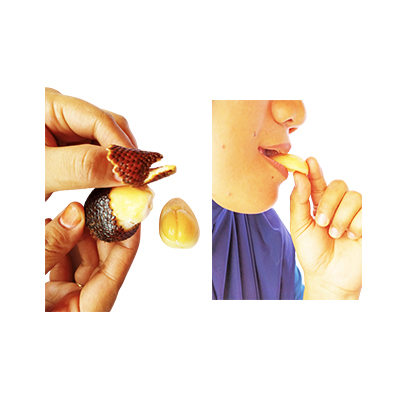
- Prepare 20 g young salak fruit flesh.
- Peel and consume the fruit.
Reference Sources
- Anjani PP, Andrianty A, Widyaningsih TD. 2015. Pengaruh penambahan pandan wangi dan kayu manis pada teh herbal kulit salak bagi penderita diabetes. Jurnal Pangan dan Agroindustri 3(1): 203-214.
- Ariviani S, Parnanto NHR. 2013. Kapasitas antioksidan buah salak (Salacca edulis Reinw) kultivar Pondoh, nglumut dan bali serta korelasinya dengan kadar fenolik total dan vitamin C. Agritech 33(3): 324-333.
- Dhaneswari P, Sula CG, Ulima Z, Andriana P. 2015. Pemanfaatan pektin yang diisolasi dari kulit dan buah sa lak (Salacca zalacca) dalam uji in vivo penurunan kadar kolesterol dan glukosa darah pada tikus jantan galur wistar. Khazanah: Jurnal Mahasiswa 7(2)
- Dhyanaputri IGAS, Karta IY, Krisna LAW. 2016. Analisis kandungan gizi ekstrak kulit salak produksi kelompok tani abian salak desa sibetan sebagai upaya pengembangan potensi produk pangan lokal. Meditory 4(2): 93-100.
- Hardjana T, Pertiwi KR, Rahayu T. 2016. Potensi buah salak (Salacca edulis R.) sebagai suplemen hipolipidemik ditinjau dari gambaran histopatologi jantung dan hepar mencit yang diberi diet rendah lemak. J. Sains Dasar 5(2): 94 - 106.
- Prosea. 2016. Salacca zalacca. https://uses.plantnet-project.org/en/Salacca_zalacca_(PROSEA) 08-05-2020
- Ridho A, Wathoni N, Subarnas A, Levita J. 2019. Insights of phytoconstituents and pharmacology activities of Salacca plants. Journal of Applied Pharmaceutical Science 9(10): 120-124.
- Sahputra FM. 2008. Potensi Ekstrak Kulit dan Daging Buah Salak Sebagai Antidiabetes. Skripsi. Fakultas Kedokteran Hewan. Institut Pertanian Bogor. Bogor.
- Saleh MSM, Siddiqui MJ, Mediani A, Ismail NH, Ahmed QU, So'ad SZM, Besbes SS. 2020. Salacca zalacca: a short review of the palm botany, pharmacologicaluses and phytochemistry. Asian Pac. J. Trop. Med. 11(12): 645-652.
- Van Valkenburg JLCH. 2002. Rubus L. dalam Van Valkenburg JLCH, Bunyapraphatsara N. (Editor): Plant Resource of South-East Asia 12(2). Medicinal and poisonous plants 2. Prosea Foundation, Bogor. Indonesia 477.
- Pihatman, kemal. 2000. Sistim Informasi Manajemen Pembangunan di Perdesaan, BAPPENAS. Salak ( Salacca Edulis ) https://distan.jogjaprov.go.id/wp-content/download/buah/salak.pdf 09-09-2021