Salvia leucantha Cav.
Summary
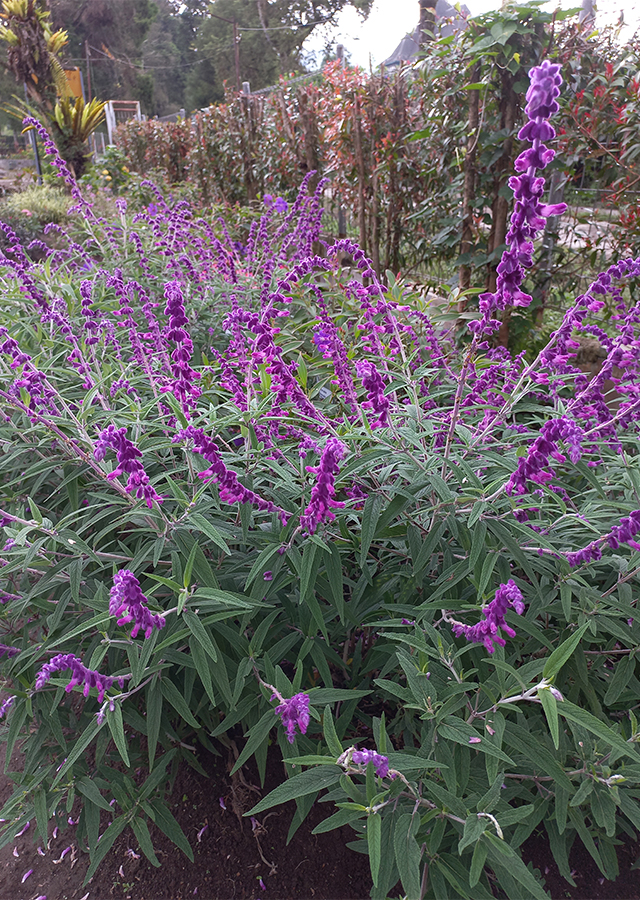
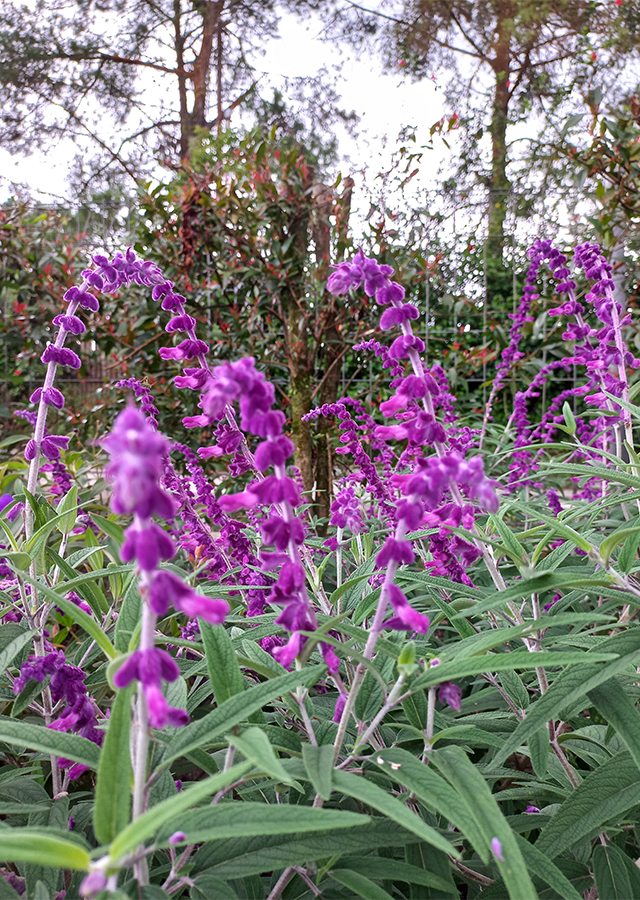
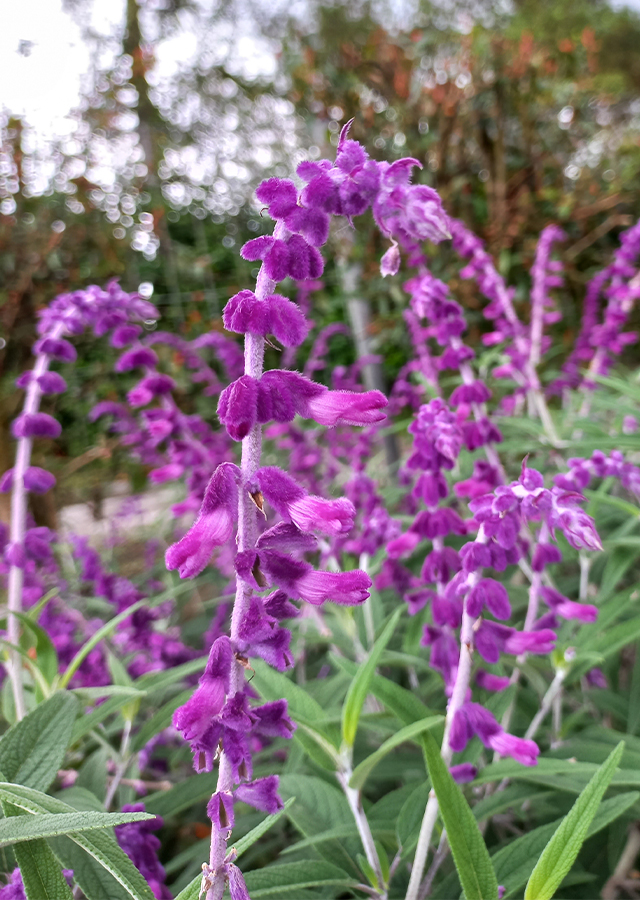
Salvia ungu (Salvia leucantha) is a herb up to 120 cm tall from the Lamiaceae family native to Mexico through Central America. Its velvety-soft flowers make it a favorite ornamental yard plant. Salvia ungu is traditionally believed to treat cough and stomach ache, with its essential oil proven to have neuroprotective and anticancer activity.
Agroecology
Salvia ungu can be found growing at elevations between 700-3,400 m asl. This species grows well in fertile, sandy, evenly moist, and well-drained soil with a soil pH degree ranging between 5.8-6.2. Although this species can tolerate some bright afternoon shade, it grows best in full sun (6 hours per day). Salvia ungu requires regular watering and is drought-tolerant. However, although this species can tolerate drought, it grows best with regular moisture. This species is also not very frost-hardy and grows best at temperatures of 16-19°C.
Morphology
- Stem 4-angled, conspicuously white and hairy, branched, upright and often curving at the tips.
- Leaves lanceolate-linear shaped, 10-20 cm long, tip pointed, margins serrate, surface wrinkled (rugose), veins pinnate, grayish green, velvety in texture, puberulent (short, soft hairs) above, tomentose (wool-like hairs) below.
- Flowers corolla purple or white covered with thin velvet-like hairs, swollen at the throat, without a hairy ring inside. Calyx funnel-shaped, purple in color. Flower bracts ovate, pointed, shorter than the calyx. Arranged in whorls at each node.
- Fruit small, reddish brown in color.
Cultivation
- Propagation is done generatively using seed, and vegetatively using stem cuttings and clump division.
- For generative propagation, sow the seeds first. Seedlings will emerge within 15-21 days at an ambient temperature of around 21-24°C.
- For vegetative propagation (stem cuttings), cut a vegetative (non-flowering) branch about 8 cm long. Then remove the lower leaves and cut each section just below a node. The cut stem can be placed in a water or soil medium. Once the stem cutting has rooted (about three weeks), the cutting can be planted directly in the field.
Chemical Content
Sesquiterpene hydrocarbons (6,9-guaiadiene, (E)-caryophyllene, bornyl acetate, germacrene D, (E)-β-farnesene, and bicyclogermacrene), flavonoid (quercetin-3-O-α-L-rhamnopyranosyl-(1→6)-β-D-glucopyranoside).
Benefits
Relieves cough, chest pain, lung ailments, stomach ache, heals wounds. Has activity as an antioxidant, antimicrobial, antibacterial, antispasmodic, neuroprotective (protects against or reduces nerve damage), anticancer, anti-Alzheimer's.
Local Names
Informasi tidak ditemukan. Butuh penelusuran lebih lanjut.
Traditional Recipes
The following recipes reflect traditional knowledge passed down through generations, not a substitute for professional medical diagnosis or advice. Consult a healthcare provider before use.
1. Wounds
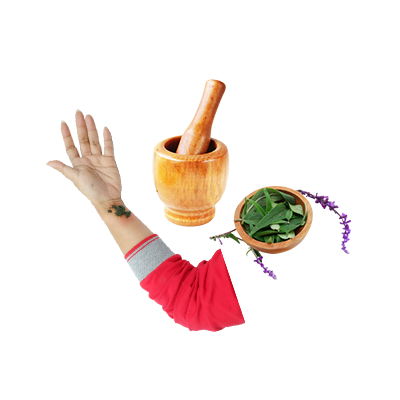
- Wash fresh salvia ungu leaves until clean.
- Grind until it becomes a paste.
- Apply to the wound.
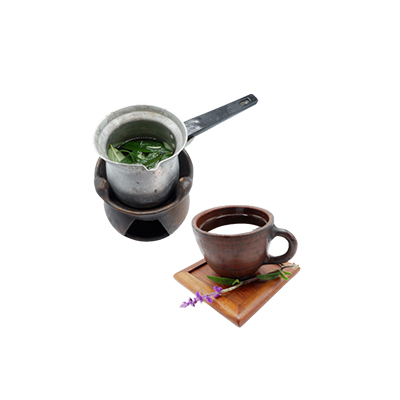
2. Cough
- Take an adequate amount of fresh salvia ungu leaves and wash until clean.
- Boil the leaves until it boils.
- Let it cool to warm/cold.
- Strain then drink.
Reference Sources
- Royal Botanic Gardens. 2021. Plants of the World Online: Salvia leucantha Cav. http://powo.science.kew.org/taxon/226705-2. 20-11-2021.
- Useful Temperate Plants Database. 2021. Salvia leucantha. http://temperate.theferns.info/plant/Salvia+leucantha. 20-11-2021.
- Villalta G. et. al. 2021. Selective BuChE Inhibitory Activity, Chemical Composition, and Enantiomeric Content of the Essential Oil from Salvia leucantha Cav. Collected in Ecuador. Plants 10, 1169. https://doi.org/10.3390/plants10061169.
- Rajamanickam M., Kalaivanan P., Sivagnanam P. 2013. Antibacterial and Wound Healing Activities of Quercetin-3-O-Α-L-Rhamnopyranosyl-(16)-β-D-Glucopyranoside Isolated from Salvia leucantha. Int. J. Pharm. Sci. Rev. Res., 22(1): 264-268.
- Gilman E. F., Marshall E. 1999. Salvia leucantha. Cooperative Extension Service. Insdtitute of Food and Agricultural Sciences. University of Florida.