Salvia rosmarinus Spenn.
Summary
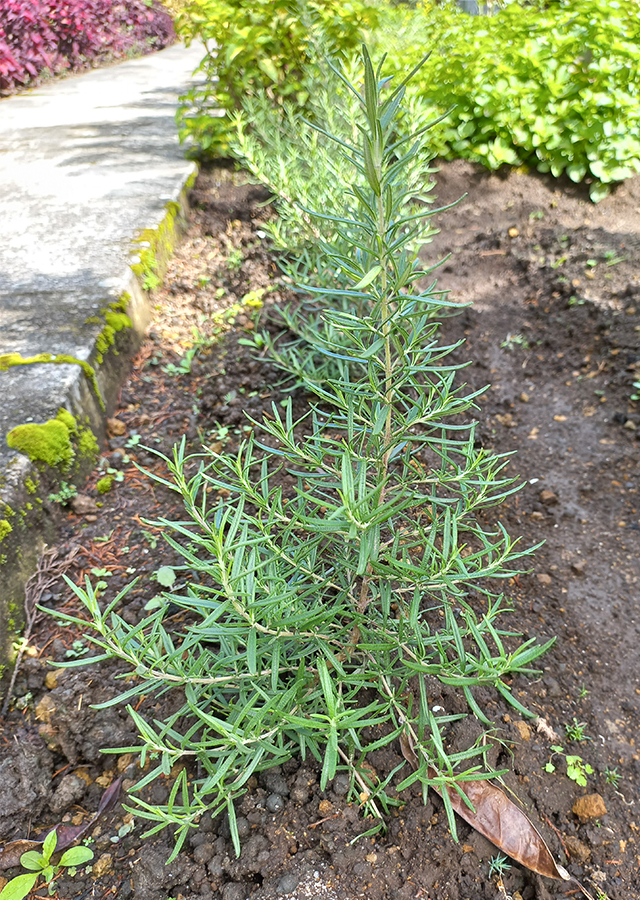
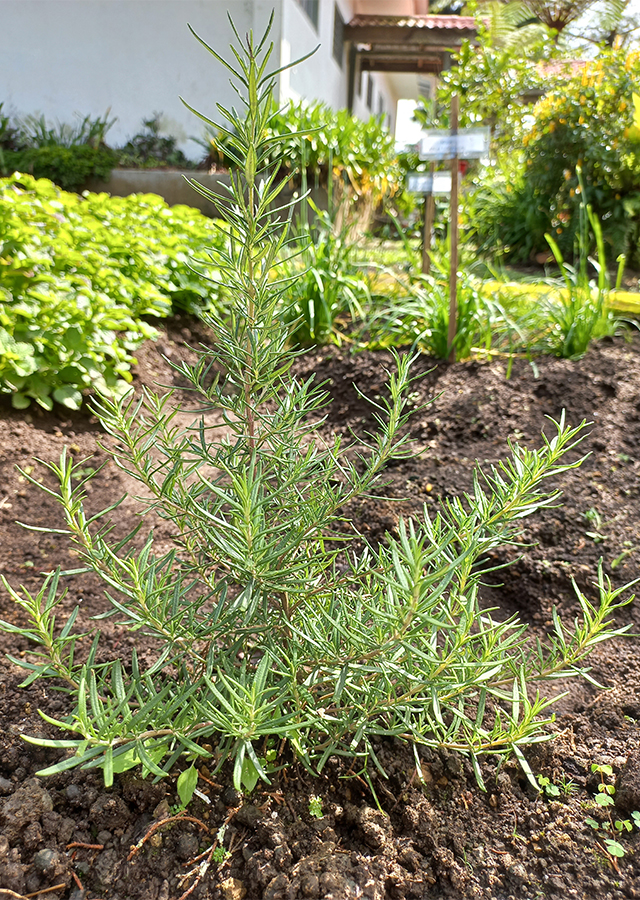
Rosemary (Salvia rosmarinus) is a shrub up to 1.5 meters tall from the Lamiaceae family native to the Mediterranean region, considered sacred by the ancient Egyptians, Romans, and Greeks. Its leaves are an essential seasoning in various roasted dishes, while its oil is used in fragrances and shampoos. Rosemary is traditionally used to relieve renal colic, dysmenorrhea, and muscle spasms.
Agroecology
Rosemary is considered an easy-to-grow, pest-resistant plant. Rosemary can grow quite large and retain its appeal for years, can be pruned into formal shapes and low hedges, and has been used for topiary. This plant is easy to grow in pots. Ground-cover cultivars are widespread, with a dense and long-lasting texture. Rosemary grows in well-drained loamy soil in open, sunny locations. It will not tolerate waterlogging, and some varieties are susceptible to frost. Grows best in neutral to alkaline conditions (pH 7-7.8) with average fertility.
Morphology
- Roots has a fibrous root system.
- Stem new growth is herbaceous, while older stems become woody over time.
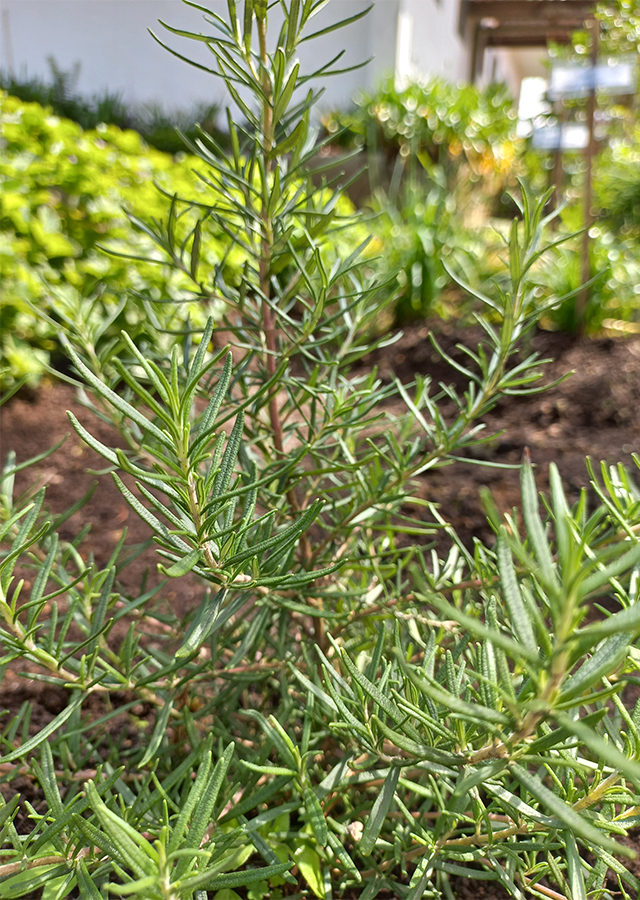
- Leaves simple green, sessile to short-stalked, needle-like with a strong aroma, 1-2.5 cm long and 1-2 mm wide, green above, white below, with dense, short, hairy pubescence.
- Flowers located in the leaf axils along the upper part of new stems. Flowers are whitish, bluish, or bluish-purple and 2-lipped and tube-shaped, the lower lip 3-lobed while the upper lip is 2-lobed.
- Fruit consists of 4 small 1-seeded segments known as nutlets.
Cultivation
Rosemary can be propagated from an existing plant by taking cuttings (from soft new growth) about 10 cm long, stripping some leaves from the bottom, and planting it directly into the soil. Propagation by seed is not recommended due to the slow germination rate.
Chemical Content
Essential oil (pinene, camphor, 1,8-cineole, camphene, ß-pinene, bornyl acetate, limonene, borneol, α-terpineol, cymene), alpha-pinene, cineole, borneol, camphene, rosmarine, terpenoids, monoterpenes, tannins, cardiac glycosides, flavonoids, saponins.
Benefits
Rosemary has therapeutic properties and has been used in traditional medicine as an oral preparation to relieve renal colic, dysmenorrhea, and muscle spasms. Treats disorders related to the nervous, cardiovascular, gastrointestinal, genitourinary, menstrual, and hepatic systems, the reproductive system, respiratory and skin conditions, eliminates bad breath, cleanses the eyes, prevents cataracts. Rosemary has antifungal, antiviral, antibacterial, anti-inflammatory, antitumor, antithrombotic, antinociceptive, antidepressant, antiulcerogenic, and antioxidant activity.
Simplisia
- Prepare rosemary leaves, wash clean with running water then drain.
- Sun-dry directly for several days or use an oven at 40°C until the moisture content reaches 10%.
- Store the simplicia in a clean, airtight plastic or container.
Local Names
Informasi tidak ditemukan. Butuh penelusuran lebih lanjut.
Traditional Recipes
The following recipes reflect traditional knowledge passed down through generations, not a substitute for professional medical diagnosis or advice. Consult a healthcare provider before use.
1. Bad breath
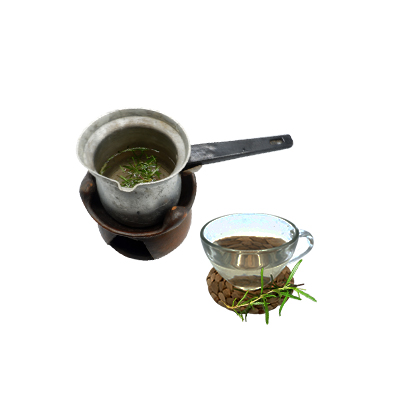
- Prepare rosemary leaves and wash until clean.
- Boil the leaves until it boils.
- Strain the decoction then gargle to reduce bad breath.
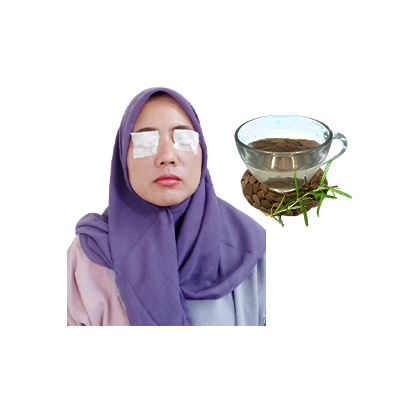
2. Cleansing the eyes
- Prepare fresh rosemary leaves and wash until clean.
- Soak the leaves in water and wait for a few hours.
- Use the soaking water as an eyewash.
- Use 4-5 times a day.
Reference Sources
- Global Biodiversity Information Facility. 2021. Salvia rosmarinus Spenn. https://www.gbif.org/species/113618606. 12-11-2021.
- Royal Botanic Gardens. 2017. Plants of the World Online. Salvia rosmarinus Spenn.
https://powo.science.kew.org/taxon/urn:lsid:ipni.org:names:457138-1. 12-11-2021. - Flora Fauna Web. 2021. Salvia rosmarinus Schleid.https://www.nparks.gov.sg/florafaunaweb/flora/3/3/3338. 12-11-2021.
- Lucas Malvezzi de Macedo, dkk. 2020. Rosemary (Rosmarinus officinalis L., syn Salvia rosmarinus Spenn.) and Its Topical Applications:A Review. Plants 2020,9, 651; doi:10.3390/plants9050651. https://www.researchgate.net/publication/341586698_Rosemary_Rosmarinus_officinalis_L_syn_Salvia_rosmarinus_Spenn_and_Its_Topical_Applications_A_Review. 12-11-2021.