Salvia splendens Sellow ex Schult.
Summary
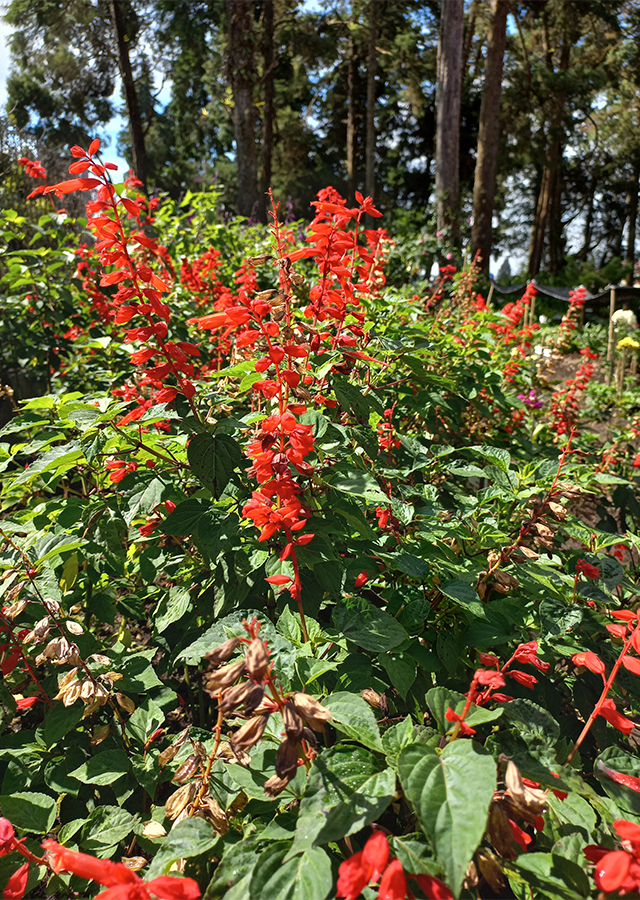
Scarlet sage (Salvia splendens) is a herb up to 90 cm tall from the Lamiaceae family native to Brazil, now popular as an ornamental plant with bright red flowers throughout the tropical world. This plant is believed to help cure diarrhea and is beneficial for drying up breast milk in mothers who are weaning. Scarlet sage is also traditionally used to treat diabetes and wounds.
Agroecology
Scarlet sage is fairly drought-tolerant and can grow in various soil types ranging from clay and sand to acidic and loamy. This species thrives in full sun in cooler climates but tolerates shade, especially in areas with very hot summers. It prefers average to slightly dry, well-drained soil. This species generally grows in highlands and lowlands, between 0 and 3000 m asl.
Morphology
- Roots taproot, pale brown.
- Stem upright, square-shaped, branched and green hairy.
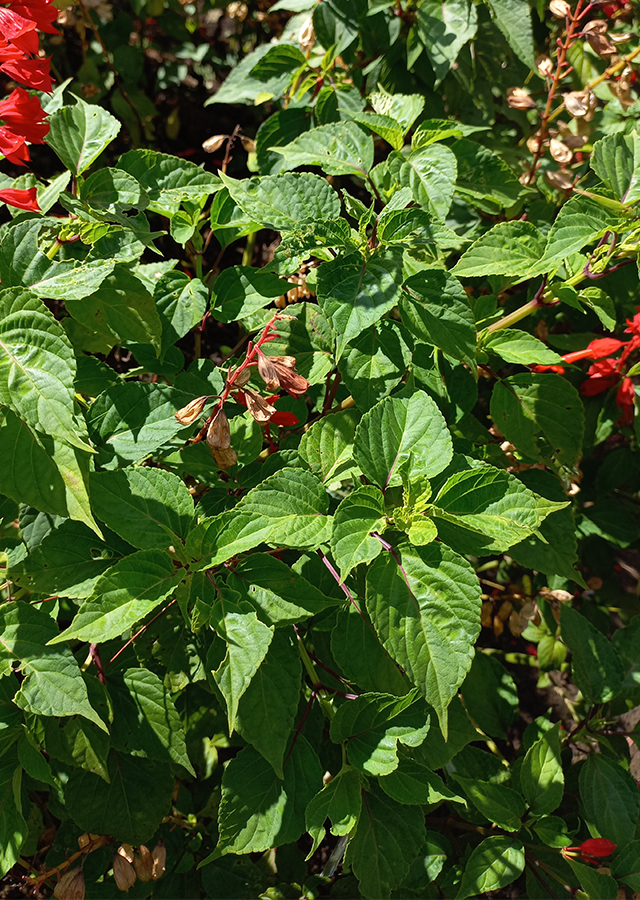
- Leaves petiole 3-4.5 cm, hairless, leaf blade ovate to triangular-ovate, 2.5-7 × 2-4.5 cm, hairless, abaxial glandular, base truncate or ± rounded, margins serrate, apex acuminate.
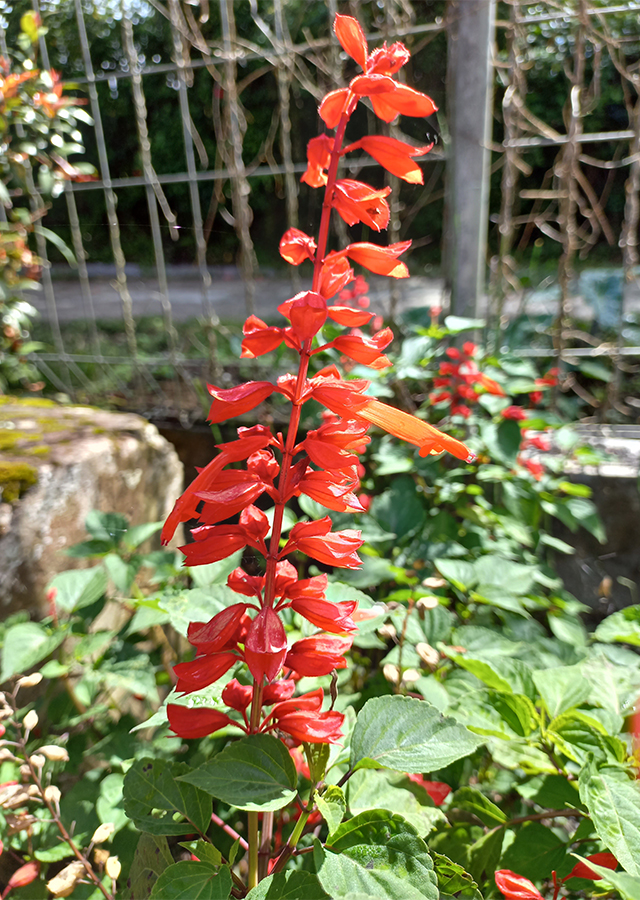
- Flowers 2-6, in racemes up to 20 cm long; bracts ovate, red, enclosing the flower in bud, tip caudate-acuminate. Pedicel 4-7 mm, red glandular villous. Calyx red, campanulate, flower size 1.6 cm, widening to 2 cm after the flower blooms, red glandular, veins villous, 2-lipped to about 1/3 of its length; upper lip triangular-ovate, 5-6 × 10 mm, apex mucronate; lower lip slightly longer than the upper, 2-toothed, teeth triangular. Corolla deep red, 4-4.2 cm, puberulent; tube slightly widened at the throat; upper lip straight, somewhat concave, oblong, 8-9 × ca. 4mm; lower lip shorter than the upper. Filaments 5mm; connective 1.3 cm. Nutlets dark brown, ellipsoid 3.5 mm, apex irregularly folded, margin (or midvein) narrowly winged.
- Fruit round, green.
- Seeds kidney-shaped, small, black.
Cultivation
Propagation is done generatively with seed. Seeds can be sown directly into the soil.
Chemical Content
Alkaloids, anthocyanins, flavonoids, phenols, glycosides, reducing sugars, saponins, sterols, terpenoids, tannins, and essential oil (phytol, cyclooctasulfur, and 2,2'-methylene-bis[6(1,1-dimethylethyl]-phenol).
Benefits
Used in the treatment of diabetes mellitus, for dressing wounds, treating colds, cough, as an emetic, dysentery, colic, hemorrhoids, sprains, swelling, boils, fever, bleeding, nosebleeds.
Local Names
Salfia (Java).
Traditional Recipes
The following recipes reflect traditional knowledge passed down through generations, not a substitute for professional medical diagnosis or advice. Consult a healthcare provider before use.
1. Wounds
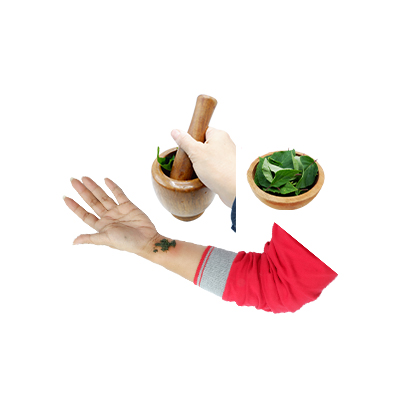
- Wash fresh scarlet sage leaves until clean.
- Grind until it becomes a paste.
- Apply to the injured skin.
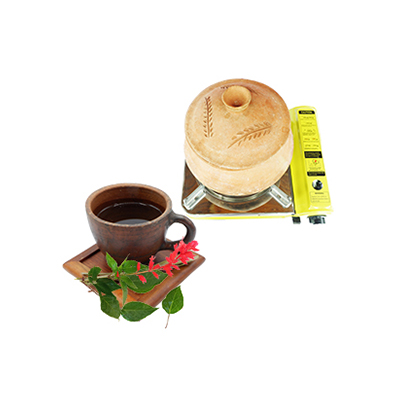
2. Soothing the stomach and relieving cramps
- Take 5 g of fresh scarlet sage root and wash until clean.
- Boil with 2 glasses of water for 25 minutes.
- Let it cool then strain and drink all at once.
Reference Sources
- The Plant List. 2013. Salvia splendens Sellow ex Schult. http://www.theplantlist.org/tpl1.1/record/kew-183912. 16-1-2022.
- Stuartxchange. 2019. Philiphine Medicinal Plants: Salvia. http://www.stuartxchange.org/Salvia. 16-1-2022.
- Flora Fauna Web. 2021. Salvia splendens.https://www.nparks.gov.sg/florafaunaweb/flora/2/4/2414. 16-1-2022.
- CAB International. 2022. Salvia splendens (scarlet sage).https://www.cabi.org/isc/datasheet/48213. 16-1-2022.
- Tanaman Herbal. 2015. Salvia [Salvia splendens Ker-Gawl.] - Khasiat & Manfaat. http://kesehatantanamanherbal.blogspot.com/2015/12/salvia-salvia-splendens-ker-gawl.html. 16-1-2022.
- Herlina Widyaningrum. 2011. Kitab Tanaman Obat Nusantara. MediaPressindoGroup. Yogyakarta.