Salvinia molesta D. Mitch
Summary
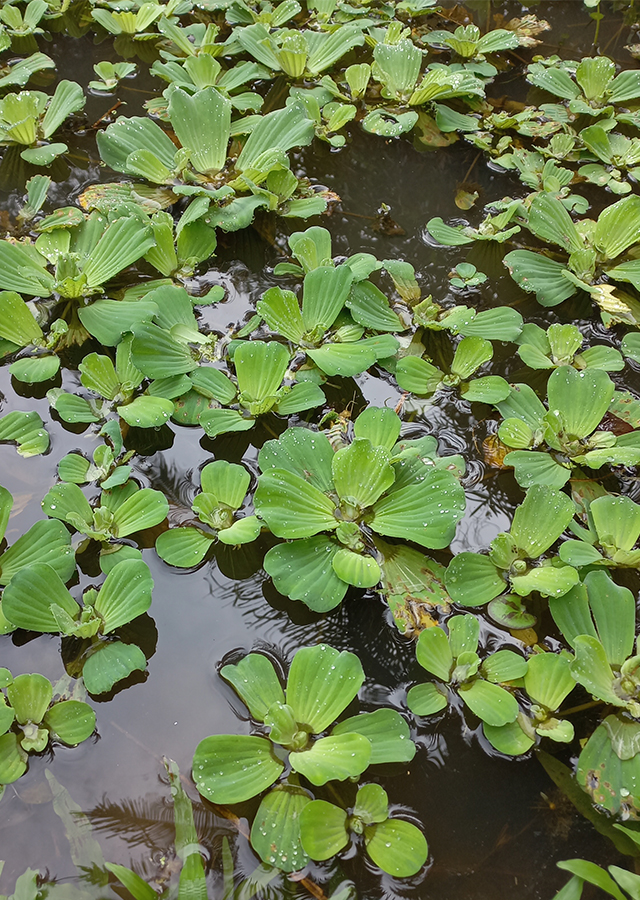
Giant salvinia (Salvinia molesta) is a floating aquatic plant 30 cm long from the Salviniaceae family native to southeastern Brazil and northern Argentina, now widespread throughout the world over the past 50 years. This water weed is used as mulch, compost, livestock feed, and even biogas material. The flavonoid and tannin content in giant salvinia leaves is traditionally used to reduce fever and treat rheumatism.
Agroecology
Salvinia molesta prefers tropical, subtropical, or warm-climate regions of the world and grows best in still or slow-moving bodies of water including ditches, ponds, lakes, rivers, and sluggish canals. In such still water, Salvinia forms a stable floating mat. Giant salvinia grows at air temperatures of 10-40°C. Optimal growth occurs in nutrient-rich situations, pH 6-7.5, with water temperatures between 20 and 30°C, especially when the nitrogen source is ammonium ions (NH4+) rather than nitrate ions (NO3-). S. molesta growth is enhanced by high light intensity, relatively high water temperature, and abundant available nutrients.
Morphology
- Roots no true roots present, but its submerged leaves function as roots.
- Stem irregularly branched, puberulent. Has a horizontal rhizome (situated below the water surface) and two types of leaves (floating and submerged).
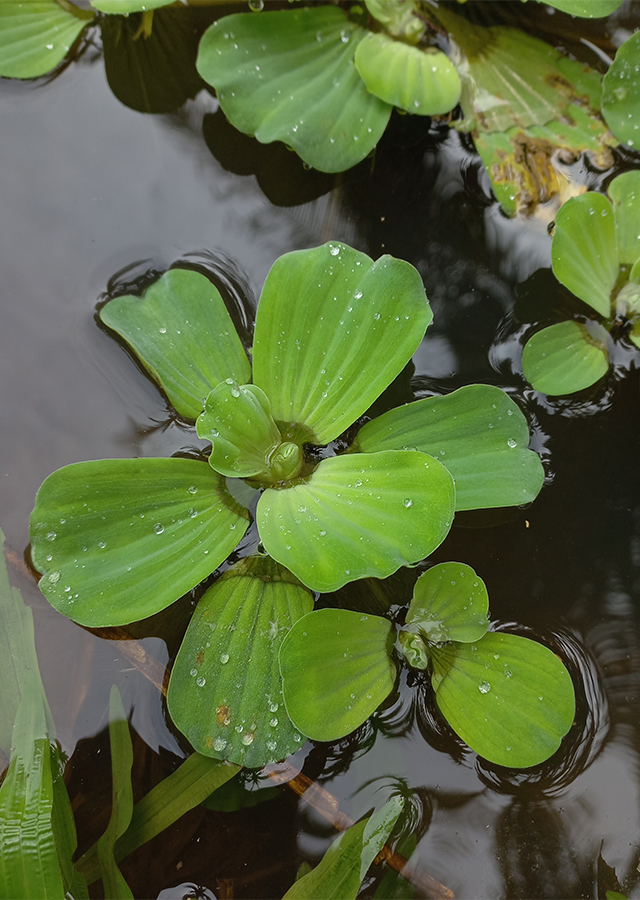
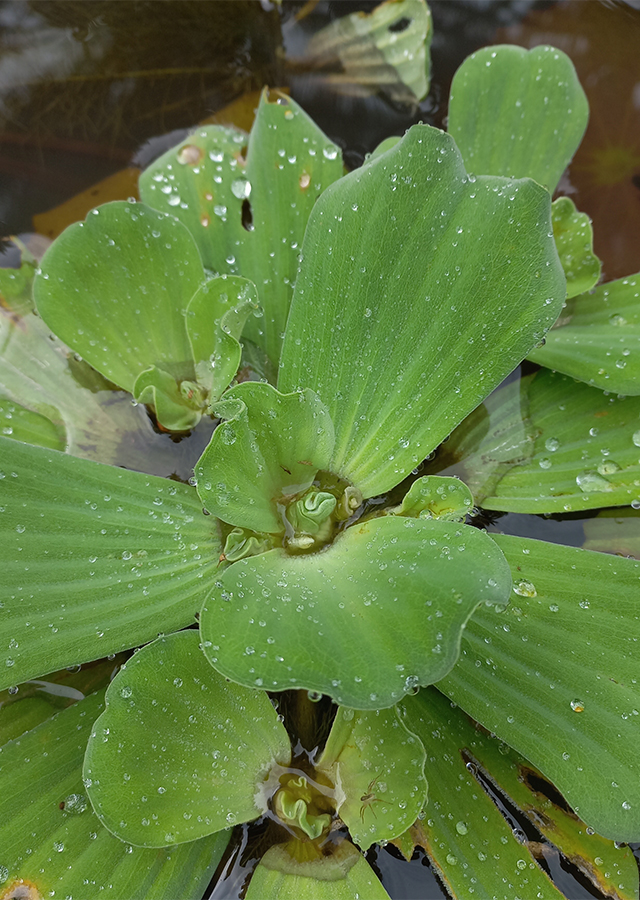
- Leaves arranged in three whorls (two floating and one submerged). Floating leaves are positioned opposite each other, round to oblong in shape. On the upper surface, these leaves have rows of cylindrical papillae. Each papilla has four hairs at its distal tip (each consisting of a single row of cells). The cage-like structure at the tip of the hairs is an effective air trap that provides buoyancy in water. The papillae at the hair tips and on the upper surface of the plant are water-repellent, while those on the lower leaf surface attract water. This difference in water repellency and attraction is what keeps the plant positioned on the water surface. Salvinia leaves are light green, often with a brownish edge on mature plants, and with a characteristic fold in the middle. This plant shows great morphological variation depending on habitat conditions (such as space and nutrient availability), ranging from slender floating specimens with leaves less than 1.5 cm to leaves as thick as 6 cm.
- Spore sacs egg-shaped, containing infertile spores. Microsporangia: stalked, with one mass (group of microspores); massulae with 64 microspores. Megasporangia: sessile, with one megaspore; megaspore up to 2 mm.
Cultivation
This plant reproduces vegetatively, with floating branches easily breaking apart and forming new plants. Individual plants (ramets) can consist of a piece of stem with two floating 'leaves' (fronds) and a third 'leaf,' modified into hairy, permanently submerged 'roots.' Dispersal of this plant occurs during floods and also during water movement caused by currents or wind and through pond effluent discharge. It can also be dispersed by animals (over long distances by waterfowl), vehicles, and boats.
Chemical Content
Tannins, lignin, saponins, quinones, terpenoids, steroids, alkaloid flavonoids, phenolic compounds, glycosides (6'-O-(3,4-dihydroxybenzoyl)-beta-D-glucopyranosyl ester, 4-O-beta-D-glucopyranoside-3-hydroxy methyl benzoate), methyl benzoate, hypogallic acid, caffeic acid, paeoniflorin, and picroside.
Benefits
Reduces fever, helps cure flu, whooping cough, aches and pains (rheumatism), impact swelling (bruises), swelling (edema), painful urination (dysuria), gonorrhea, allergic itching (urticaria), itching (pruritus), dysentery, skin diseases such as boils and eczema.
Local Names
Kayuapu, Apu-apu.
Traditional Recipes
The following recipes reflect traditional knowledge passed down through generations, not a substitute for professional medical diagnosis or advice. Consult a healthcare provider before use.
1. Aches and pains
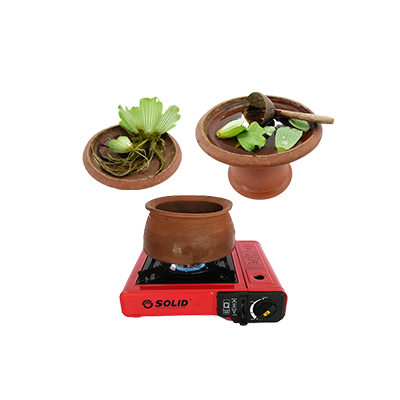
- Prepare an adequate amount of fresh giant salvinia leaves.
- Boil the fresh leaves until it boils.
- Let it cool, wash the decoction over the affected area.
Reference Sources
- Taman Nasional Bromo Tengger Semeru. 2017. Mengenal Salvinia molesta. https://bromotenggersemeru.org/article/mengenal-salvinia-molesta. 15-1-2022.
- Royal Botanic Gardens. 2019. Plants of the World Online: Salvinia molesta D.Mitch. http://powo.science.kew.org/taxon/urn:lsid:ipni.org:names:17453700-1. 15-1-2022.
- CAB International. 2021. Salvinia molesta (kariba weed). https://www.cabi.org/isc/datasheet/4844. 15-1-2022.
- Choudhary, M. I.; Naheed, N.; Abbaskhan, A.; Musharraf, S. G.; Siddiqui, H.; Atta-Ur-Rahman. 2008. Phenolic and other constituents of fresh water fern Salvinia molesta. Phytochemistry. 69 (4): 1018–1023. doi:10.1016/j.phytochem.2007.10.028. PMID 18177906. https://keys.lucidcentral.org/keys/v3/eafrinet/weeds/key/weeds/Media/Html/Salvinia_molesta_(Kariba_Weed).htm. 15-1-2022.
- Anggraini Amelia. 2018. Uji Antibakteri Ekstrak Kiambang (Salvinia molesta) Terhadap Bakteri Patogen dan Pembusukan Makanan. Skripsi. Program Studi Teknologi Hasil Pertanian. Universitas Sriwijaya. Sumatra Selatan.
- Himpunan Manajemen Sumber Daya Perairan Indonesia (HIMASUPERINDO). 2017. Manfaat Kayu Apu. https://himasuperindoblog.wordpress.com/2017/11/06/manfaat-kayu-apu/. 15-1-2022.
- Adi, L.T.2008. Tanaman Obat dan Jus Untuk Mengatsi Penyakit Jatung, Kolestrol, Hipertensi, dan Stroke. Jakarta : PT Agromedia Pustaka.