Sambucus javanica Reinw. ex Blume
Summary
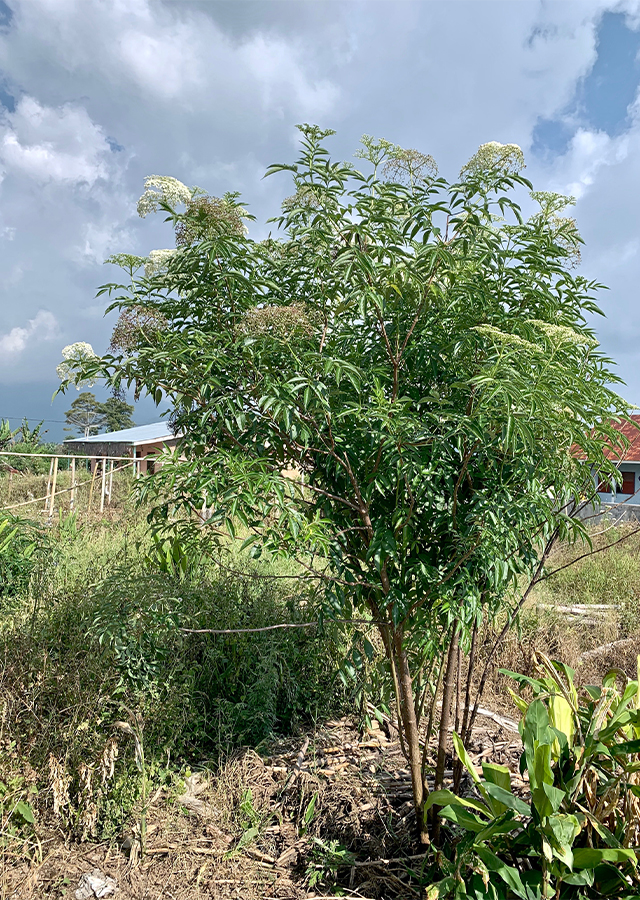
Sangitan (Sambucus javanica) is an upright shrub 3-5 meters tall of the Viburnaceae family, widely distributed from India and Indo-China to Japan and the Philippines. Although often considered a weed, in China this plant is well known as an ingredient for treating hepatitis, while its flowers and fruit can be eaten raw or cooked. Sangitan is also traditionally believed to speed up bone fracture healing and relieve rheumatism.
Agroecology
Natural habitat is in humid primary and secondary forests at elevations of 300-2,600 m above sea level, generally above 1,000 m above sea level in Southeast Asia. Sangitan can live in various soil types, including limestone soil. However, it prefers moist soil with bright sunlight and tolerates some shade
Morphology
- Stem round in shape, many branches.
- Leaves compound, 5-11 leaflets, lance-shaped, serrated edges, pointed tip, dark green upper surface and light green lower surface.
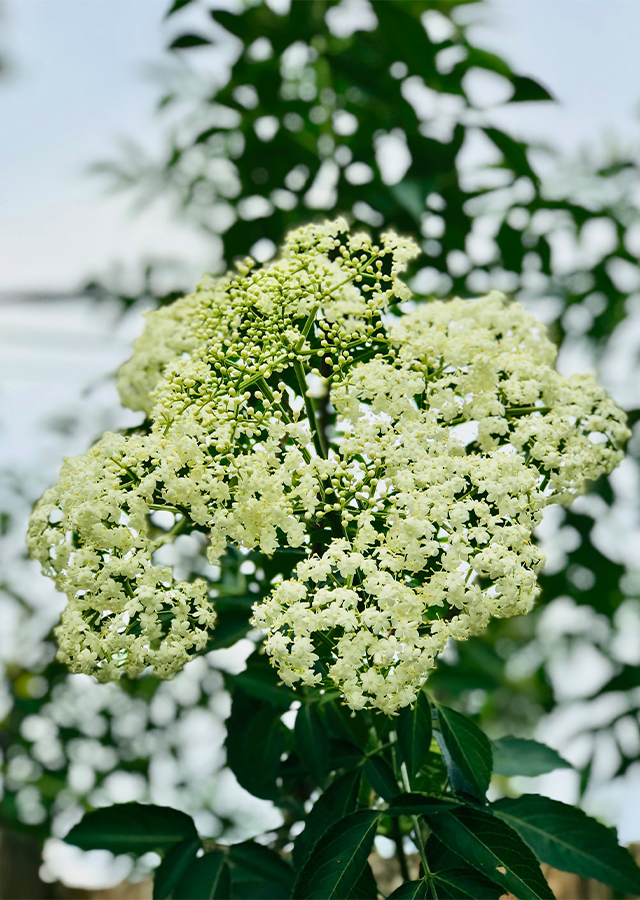
- Flowers compound with yellow calyx, umbrella-shaped, growing from leaf axils.
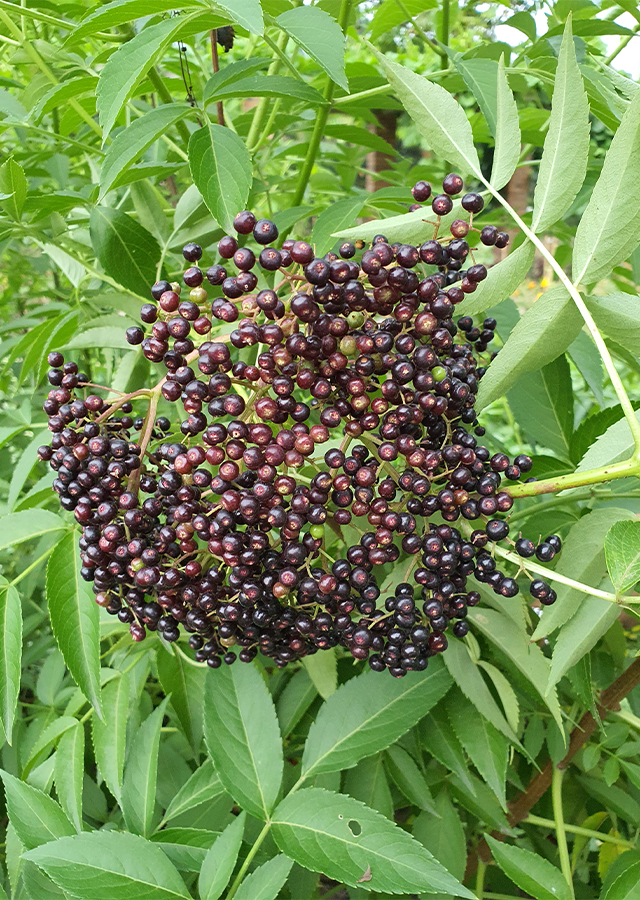
- Fruit berry-shaped, round, black in color
Cultivation
- Propagated by seed and cuttings.
- Seeds are best planted when ripe, sow the seeds, after germinating place in individual pots. Transfer to soil once large enough.
- Stem cuttings by cutting a semi-mature stem 7-10 cm long or from an old stem during the flowering season, 15-20 cm long
Chemical Content
Flavonoids, glycosides, anthraquinone glycosides, saponins, steroids/triterpenoids, and tannins
Benefits
Treats wounds, bone fractures, rheumatism, jaundice, dysentery, bronchitis, edema, cramps, aches and pains, fever reducer, laxative, beriberi, diarrhea, and smoothing the skin
Simplisia
- Fresh sangitan leaves, washed thoroughly with running water then drained.
- Dry the leaves with the help of sunlight. If the leaves are brittle (crumble when crushed), that indicates they are dry.
- Store in a well-closed container, protected from sunlight
Local Names
Javanese elder, Chinese elder, Kerak nasi (Sunda), Abur (Aceh), Babalat (Bengkulu), Brobos kebo (Central Java), Sanitan (Maluku), Halemaniri (Tidore).
Traditional Recipes
The following recipes reflect traditional knowledge passed down through generations, not a substitute for professional medical diagnosis or advice. Consult a healthcare provider before use.
1. Aches and Pains
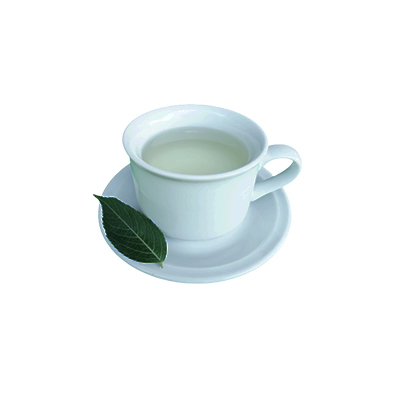
- Wash 15 g fresh sangitan leaves thoroughly.
- Boil the leaves with 2 glasses of water for 15 minutes, strain once cool.
- Drink twice a day, equal amounts in the morning and evening
Reference Sources
- Tropical Plants Database, Ken Fern. tropical.theferns.info. Sambucus javanica. http://tropical.theferns.info/viewtropical.php?id=Sambucus+javanica 20-01-2021
- Pegal Linu hutapea Johnny ria, dkk. 1994. Inventaris tanaman obat indonesia (III): Pegal linu. Badan penelitian dan pengembangan kesehatan DEPKES RI. Jakarta.