Satureja hortensis L.
Summary
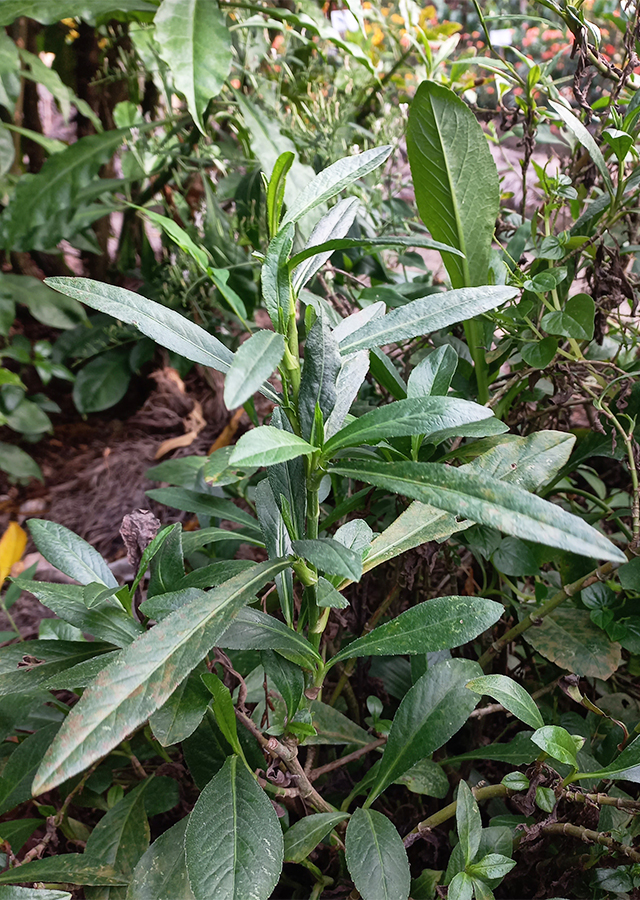
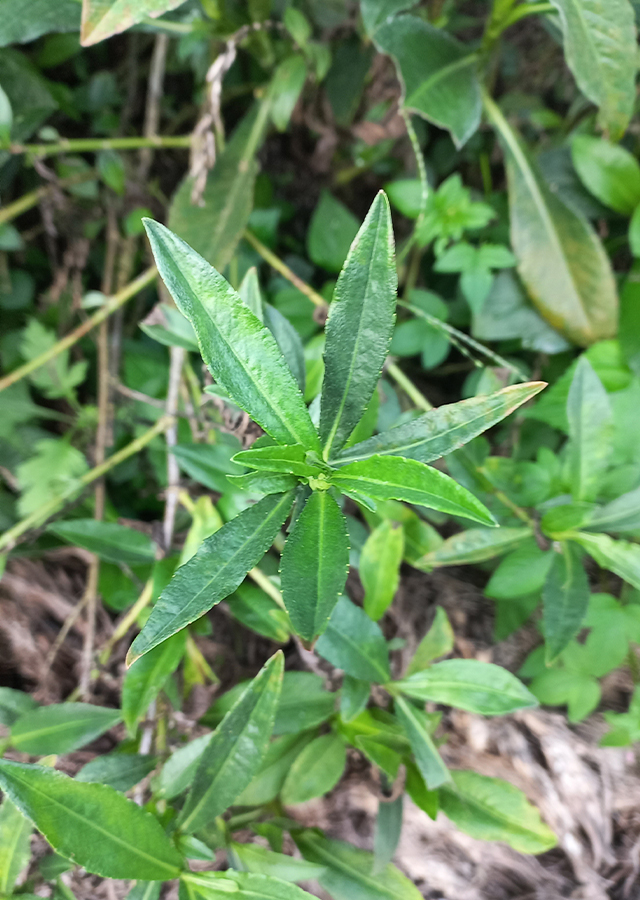
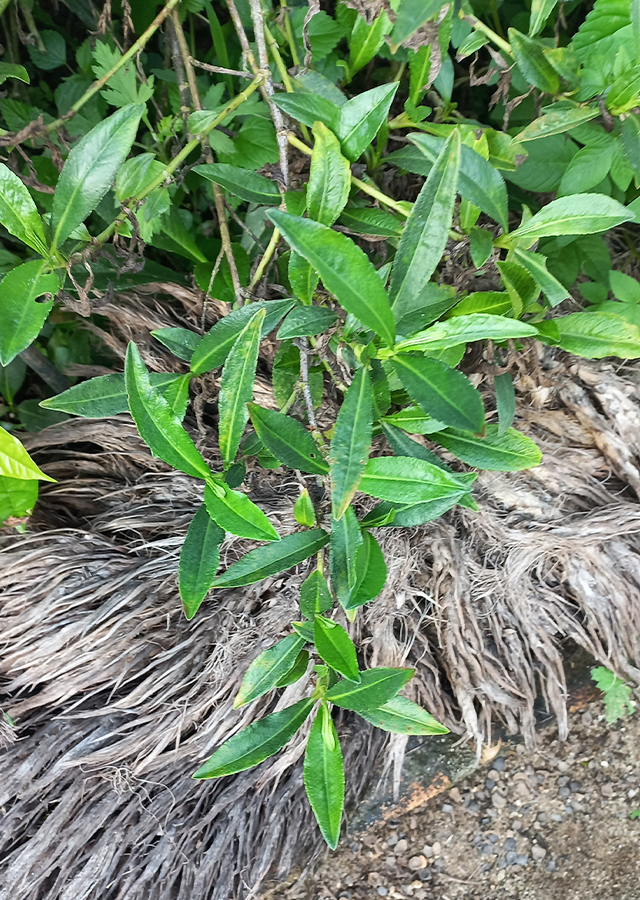
Satureja hortensis or summer savory is an aromatic herb native to Southern Europe and the Mediterranean region, now cultivated across various continents, including on a small scale in the mountains of Java. Since ancient times, this plant has been used as a cooking spice and sausage aroma enhancer, as well as traditional medicine thanks to its thymol-rich essential oil and antimicrobial, antioxidant, and anti-inflammatory activity—though it is not recommended for pregnant women due to limited safety data.
Agroecology
Satureja hortensis usually grows well in most temperate and subtropical regions, in full sun, with high temperatures, in light, rich, well-drained soil. The species' growth especially prefers arid, dry places, on walls, sandy or gravelly soil. The preferred substrate is chalky soil but also containing silica with a neutral pH, high nutrient value from soil that must be sufficiently moist. Satureja hortensis does not require much water, and prefers dry conditions over excessive watering. However, proper watering improves growth. Its elevation distribution reaches 1,300 m asl.
Morphology
- Roots thin, straight, almost cylindrical.
- Stem upright, much-branched, bluntly angled to smooth, without grooves, with short hairs.
- Leaves opposite, subsessile, small, linear to lanceolate or obovate shaped, base gradually tapering into a very short petiole, margin entire, tip blunt to somewhat pointed. Leaves bronze to nearly black-green.
- Flowers hermaphroditic, small in size. Calyx tubular and 2-lipped, 10-veined, glabrous inside, thinly pilose outside, with 5 subequal triangular teeth (longer than the tube) or upper lip 3-toothed and lower lip 2-toothed. Corolla tubular and 2-lipped, 4-10 mm long, tube broadly funnel-shaped, lower lip 3-fid, upper lip emarginate, light purple to white, sometimes with red dots in the throat, thinly puberulent outside. Stamens 4, curved, inserted in the upper part of the corolla tube below the upper lip, shorter than the corolla, pistil with a 4-lobed ovary, style with 2 equal branches ending in a small stigma. Inflorescence consisting of loose to dense verticillasters each with 2-20 bisexual flowers, pedicel very short, bracteoles usually longer than the calyx, with long thin cilia.
- Fruit oblong to ovoid shaped, about 1 to 1.4 mm, pale brown, consisting of 4 nutlets, enclosed within the persistent calyx. Nutlet subglobose, about 1 mm long, hairless, smooth, blackish brown.
Cultivation
- Plant propagation is usually through seed. Seeds should be sown at a depth of 0.5-1.5 cm at a row spacing of 25-30 cm. When cultivated mechanically, rows can be spaced 45-50 cm apart. Too narrow a spacing can increase the risk of fungal diseases such as gray mold (Botrytis cinerea) and mint rust (Puccinia menthae).
- Three main developmental phases can be distinguished in the summer savory plant cycle, namely the vegetative phase, the flowering phase, and senescence. The vegetative phase ends when flower buds appear. The flowering phase can be further divided into early flowering and full flowering, the latter beginning when the first flower is fully open. The rate of dry matter production increases progressively until the start of the flowering phase, after which the rate remains constant until maximum biomass is reached and senescence begins.
Chemical Content
Essential oil (thymol, γ-terpinene, α-terpinene, myrcene, carvacrol, p-cymene, α-phellandrene, α- and β-pinene, sabinene, terpineol, α-thujene), linalool, limonene, phenolic compounds, tannins, steroids, linolenic acid, linoleic acid, oleic acid, palmitic acid, stearic acid, rosmarinic acid, caffeic acid, naringenin, isoferulic acid, apigenin, pyrocatechols, flavonoids (luteolin, quercetin), glycosides (apigetrin and vitexin), flavonol glycosides (isoquercitrin, astragalin, quercitrin), coumarin derivatives (aesculin and aesculetin).
Benefits
Treats digestive disorders (bloating, nausea, cramps, dyspepsia, diarrhea), relieves sore throat, relieves stress, relieves pain, a natural mouthwash, treats insect bites (such as bee stings), helps address diabetes, cardiovascular disease, cancer, Alzheimer's, treatment of rhinosinusitis (inflammation of the sinus area and nasal cavity), is an aphrodisiac. Has antioxidant, antimicrobial, antibacterial, antirheumatic, anti-inflammatory, analgesic, carminative (stimulates release of intestinal gas), hepatoprotective, and anticancer activity.
Simplisia
- Prepare summer savory leaves, wash clean with running water.
- Dry under the sun or with an oven at 40°C until the moisture content reaches 10%.
- Grind using a blender until it becomes powder.
- Store in a clean, airtight container.
Local Names
Informasi tidak ditemukan. Butuh penelusuran lebih lanjut.
Traditional Recipes
The following recipes reflect traditional knowledge passed down through generations, not a substitute for professional medical diagnosis or advice. Consult a healthcare provider before use.
1. Treats insect bites
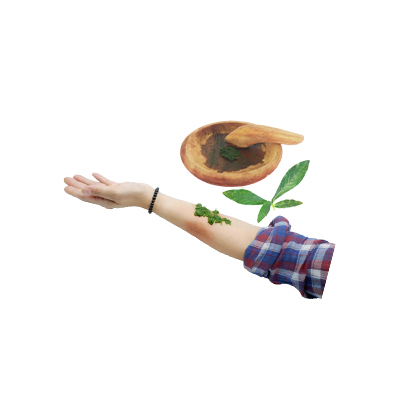
- Take fresh summer savory leaves and wash until clean.
- Grind until it becomes a paste.
- Apply the paste to the insect bite.
2. Treats insect bites
- Take fresh summer savory leaves and wash until clean.
- Grind until it becomes a paste.
- Apply the paste to the insect bite.
Reference Sources
- Royal Botanic Gardens, Kew. Plants of the World Online: Satureja hortensis L. https://powo.science.kew.org/taxon/urn:lsid:ipni.org:names:457680-1. 21-07-2022.
- Fierascu et al. 2018. Phytochemical Profile and Biological Activities of Satureja hortensis L.: A Review of the Last Decade. Molecules, 23(10): 2458. doi: 10.3390/molecules23102458.
- IDN Medis. 2022. Satureja Hortensis: Manfaat – Efek Samping dan Tips Penggunaan. https://idnmedis.com/satureja-hortensis. 21-07-2022.
- Plant Resources of South-East Asia. 2016. Satureja hortensis (PROSEA). https://uses.plantnet-project.org/en/Satureja_hortensis_(PROSEA). 21-07-2022.
- Antropocene. 2017. Satureja hortensis. https://antropocene.it/en/2017/05/21/satureja-hortensis/. 21-07-2022.