Scindapsus officinalis (Roxb.) Schott
Summary
Scindapsus officinalis is a climbing plant up to 0.8 meters tall from the Araceae family distributed from the Indian Subcontinent through Indo-China. This plant has long been used in Ayurveda, including as an ingredient in Kunch Pak preparations believed to be an aphrodisiac. In Guizhou and Yunnan Provinces, China, the whole plant is traditionally used to treat broken bones.
Agroecology
Scindapsus officinalis is a large epiphytic climbing plant, found along the sub-Himalayan range at elevations between 330-1000 m asl in West Bengal, Orissa, Andhra Pradesh, Burma, and the Andaman Islands. It is usually found in dry mixed lowlands or dry deciduous forest to hill forest, and can also grow on granite, sandstone, and limestone, at elevations of around 600 m asl. This plant climbs trees and rocks using the aerial roots on its stem. It can grow well in both shaded conditions and full sun, but prefers shaded conditions or indirect sunlight and a humid environment. Open conditions will make the leaf color paler. In terms of care, this plant requires moderate watering.
Morphology
- Roots has aerial adventitious roots.
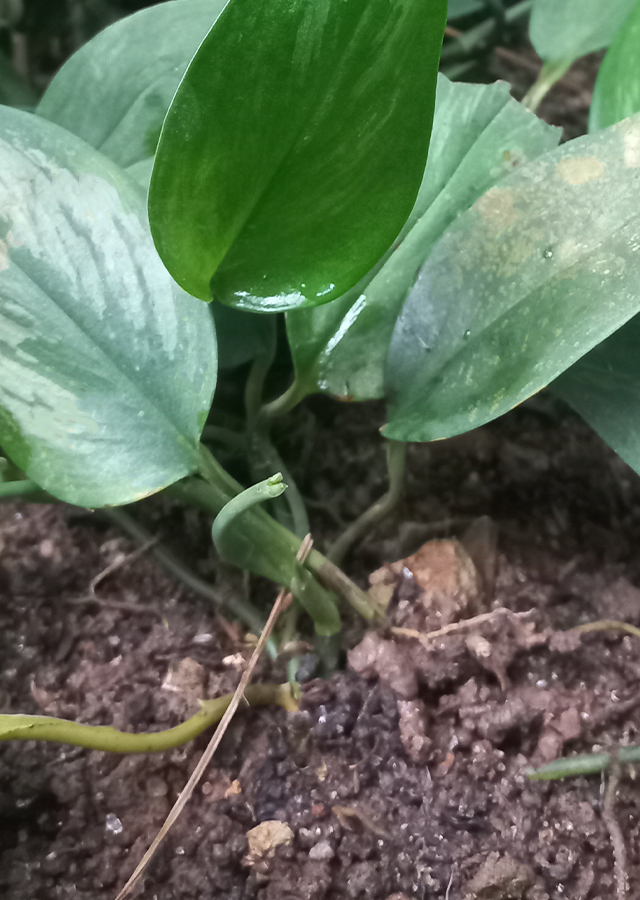
- Stem round, growing perpendicular, not exuding sap, smooth surface, light green. Underground stem in the form of a rhizome, light brown on the outside, purplish brown on the inside.
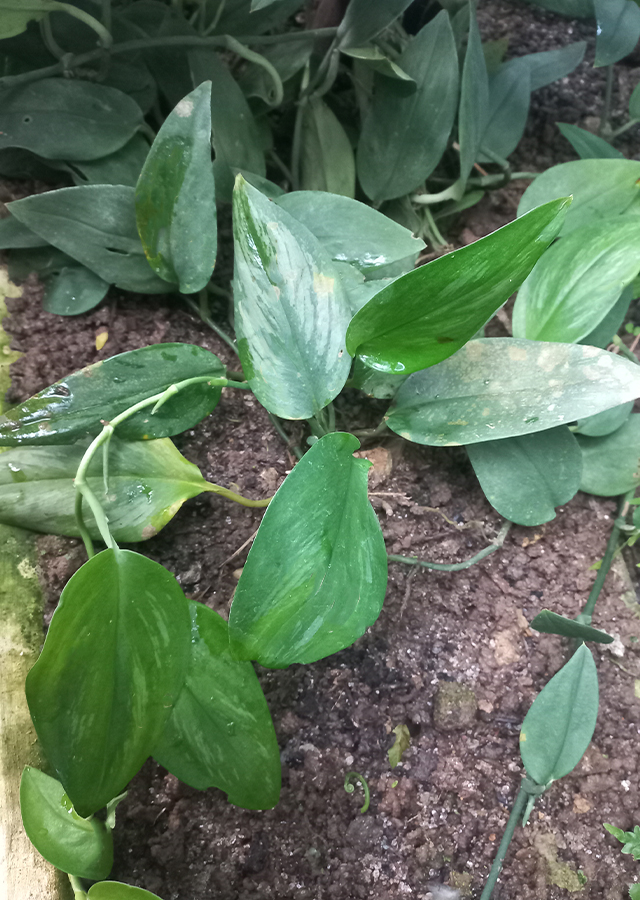
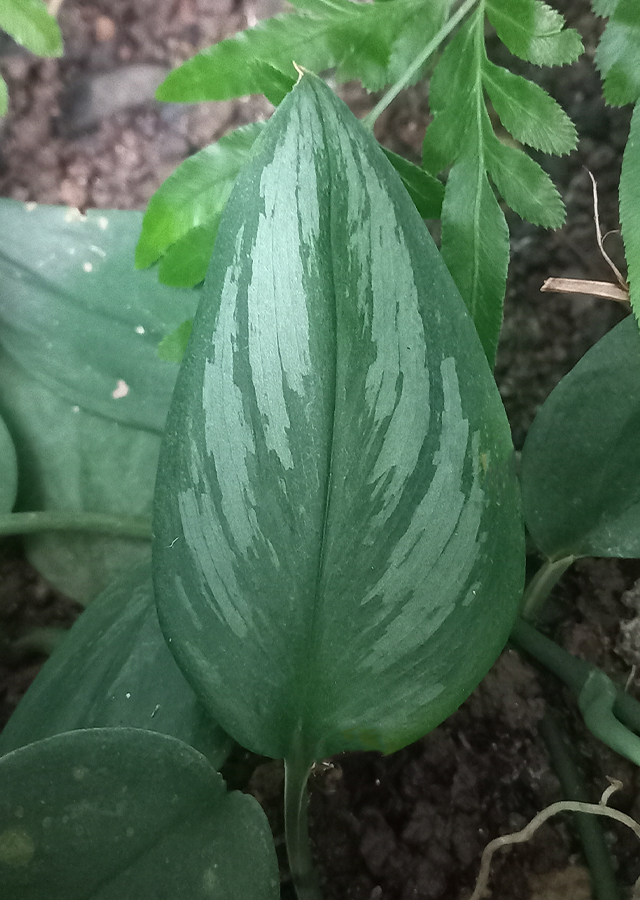
- Leaves simple, ovate, elliptic-ovate, or nearly orbicular shaped, apex tapering, base rounded or heart-shaped (cordate), margins entire, veins pinnate (pinnenervis), opposite arrangement, smooth surface. Leaves dark green, sometimes marked with cream-colored spots and veins on the upper surface and grayish green underneath. Petiole green, with a widened or winged petiolar sheath.
- Flowers arranged neatly in a spadix, cylindrical shaped, yellowish green, covered with filiform hairs from base to tip. Spathe long, oblong, funnel-shaped, with a slender beak, green outside, and yellow inside. Stigma elongated.
- Fruit grayish brown, rough and scaly. Seeds present in each fruit.
- Seeds kidney-shaped, grayish brown, smooth, glossy.
Cultivation
Propagation is done vegetatively with stem cuttings (choose a stem section that has roots at a node or joint).
Chemical Content
Monoterpene glycoside, phenyl glycoside, caffeoyl derivatives, alkaloids, scindapsin A, scindapsin B, ll-hydroxy-cis, cis-5,8-tetracosadienoic acid, cyclopropenoid fatty acids, piperine, ascorbic acid, steroids, flavonoids, and terpenoids.
Benefits
Treats diarrhea, respiratory diseases (cough, bronchitis, pharyngitis, asthma, ozaena), worm infestations, erectile dysfunction, dysentery, throat disorders, broken bones, sprains and/or bone dislocations, wounds and cancerous sores, rheumatism, gout, fever, pain, increases appetite, improves breast milk quality. Has anti-inflammatory, carminative, aphrodisiac, anthelmintic, cardiotonic (strengthens heart performance), diaphoretic (induces sweating), antiprotozoal (fruit), hypoglycemic (stem and fruit), anticancer, analgesic (pain relief), cytostatic (inhibits cell growth), hepatoprotective (liver-protecting), and antidiabetic activity.
Simplisia
- Prepare an adequate amount of Scindapsus officinalis leaves, wash clean with running water.
- Dry under the sun or with an oven at 40°C until the moisture content reaches 10%.
- Grind using a blender until it becomes powder.
- Store in a clean, airtight container.
Local Names
Informasi tidak ditemukan. Butuh penelusuran lebih lanjut.
Traditional Recipes
The following recipes reflect traditional knowledge passed down through generations, not a substitute for professional medical diagnosis or advice. Consult a healthcare provider before use.
1. Rheumatism
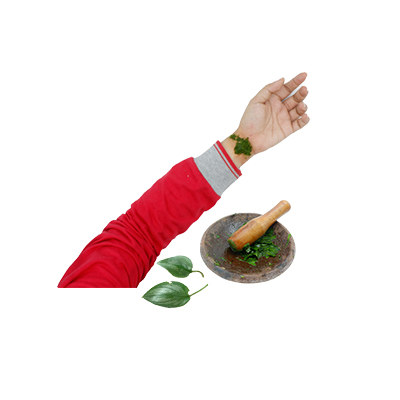
- Take an adequate amount of fresh Scindapsus officinalis leaves and wash until clean.
- Grind until it becomes a paste.
- Apply to the area affected by rheumatism.
Reference Sources
- Royal Botanic Gardens. 2021. Plants of the World Online: Scindapsus officinalis (Roxb.) Schott. http://www.plantsoftheworldonline.org/taxon/urn:lsid:ipni.org:names:88899-1. 18-11-2021.
- Tiwari P., Goyal A. 2018. Phytochemistry and pharmacological activity of Scindapsus officinalis: A review. International Journal of Green Pharmacy, 12(4): 237.
- Dhirender K., Pawan K., Ruby T., Balram C. 2012. Scindapsus officinalis: A Comprehensive Review. International Journal of Pharmaceutical Erudition, 2(2): 18-27.
- Easy Ayurveda. 2021. GajaPippali- Scindapsus officinalis Uses, Research, Medicines, Side Effect. https://www.easyayurveda.com/2018/05/03/gajapippali-scindapsus-officinalis/#adverse_effect.18-11-2021.