Scleria sumatrensis Retz.
Summary
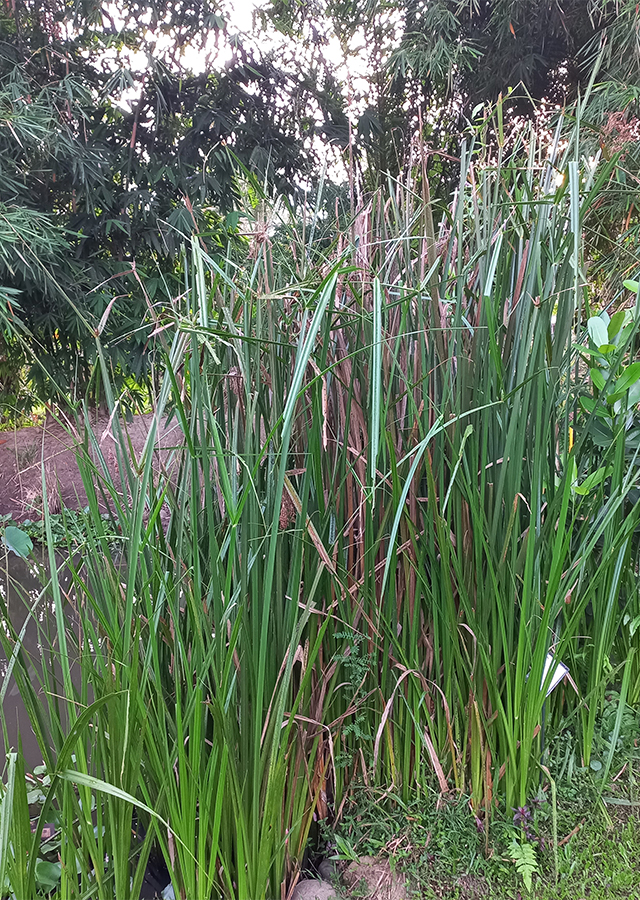
Rumput rija-rija (Scleria sumatrensis) is a sedge-family herb up to 400 cm tall from the Cyperaceae family distributed from India to Northern Australia. In Kalimantan, this plant is known as a troublesome swampland weed and an indicator of acid sulfate soil. In Peninsular Malaysia, a decoction of its root mixed with pandan and areca nut is traditionally used to treat gonorrhea.
Agroecology
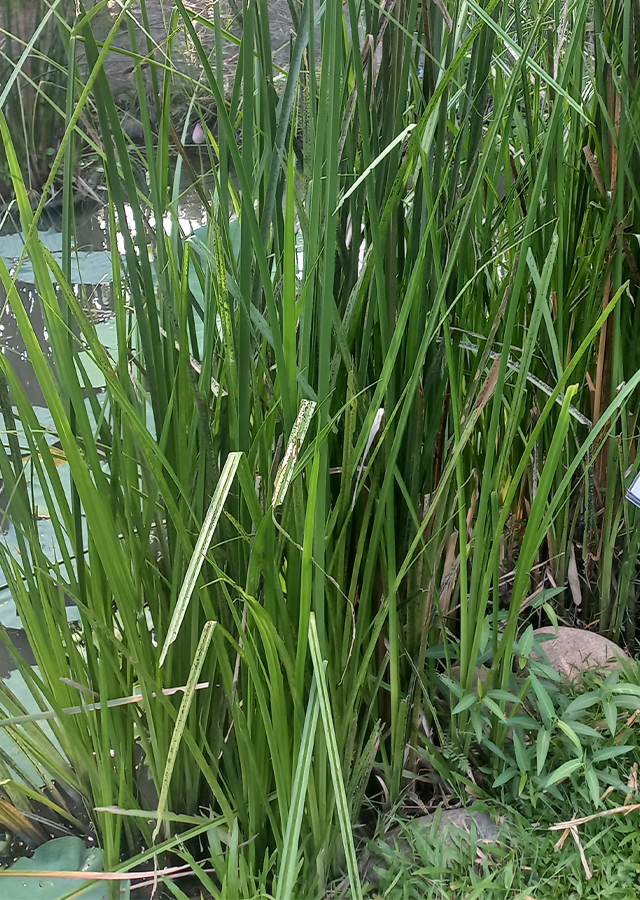
Rumput rija-rija can be found growing in dry open areas, forests and shrublands, and can also be found in swampy locations, peatland, peat swamp forest, up to elevations of 500 m asl. This plant grows very well in dry areas and swamps, inter-row spaces, footpaths, and plantation discs. This plant is also commonly found in waterlogged areas and serves as an indicator plant signaling that the area has acidic water. This is supported by the statement that rija-rija is specific to acid sulfate soil and resistant to high soil acidity.
Morphology
- Roots fibrous, brownish black in color.
- Stem sturdy, triangular, smooth or slightly rough, green with purple markings.
- Leaves simple, ribbon-shaped, alternate in three rows, clustered in the middle of the stem forming a false whorl, 3-5 blades. Narrowing further upward, leaf margins scabrous and sharp enough to cut skin. Hairless or hairy at the base. Leaf sheath narrow.
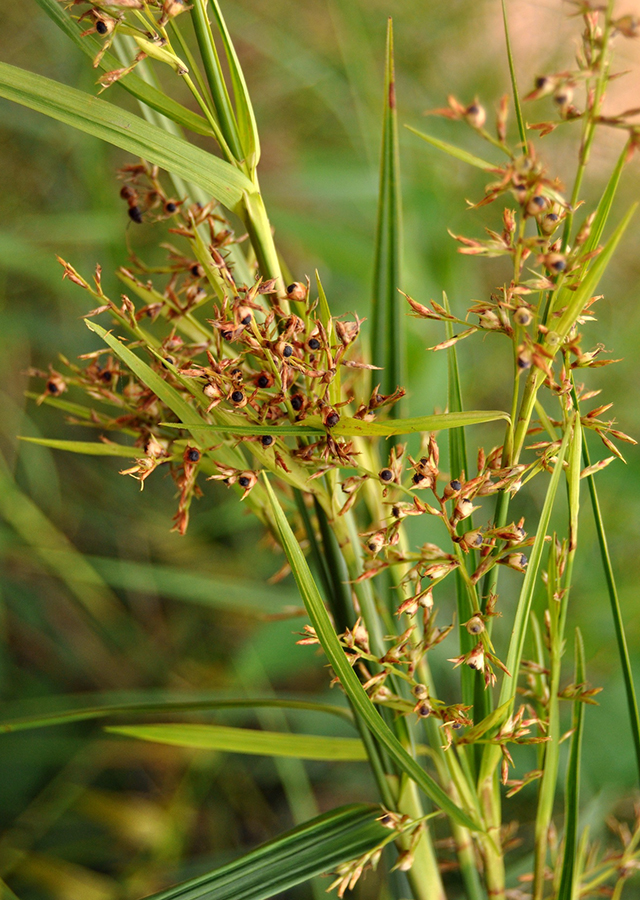
- Flowers have a cup-shaped disc, very large, 3-lobed. Inflorescence an oblong panicle, primary bract shorter than or equal in length to the panicle. Primary bract shorter than or equal in length to the panicle, secondary bract finely hairy. Stamens about 2 mm long. Spikelets clustered 2-3, unisexual, light brown or reddish. Glumes (floral bracts) ovate or broadly ovate, straw-colored to purplish.
- Fruit has a wrinkled or notched surface, fruit length about 2.5 mm, partially covered by the persistent glumes (floral bracts) for about half its length.
- Seeds black.
Cultivation
- Propagation is generative (seed). Seed germination time takes about 392 days.
- Flowers year-round, pollinated by wind. Its seeds are eaten by birds, which also helps dispersal to distant places, besides through water flow.
Chemical Content
Information not found. Further research is needed.
Benefits
Treats gonorrhea, improves digestion, postpartum maternal care.
Local Names
Sesayang, Siunit (Sumatra), Keris-keris, Kerisan, Kares-kares, Pĕrèdang, Rambang, Sampa hiering, Tali juru (Kalimantan), Rambang, Rumput piso.
Traditional Recipes
The following recipes reflect traditional knowledge passed down through generations, not a substitute for professional medical diagnosis or advice. Consult a healthcare provider before use.
1. Improves digestion
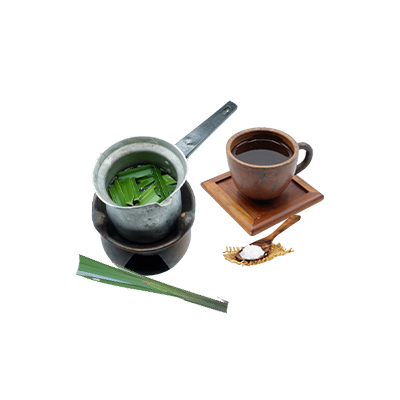
- Prepare an adequate amount of fresh rumput rija-rija stems and wash until clean.
- Boil the stems until it boils.
- Strain then add a little table salt.
- Drink twice a day, morning and evening, for maximum results.
Reference Sources
- PROSEA. 2016. Scleria sumatrensis (PROSEA). https://uses.plantnet-project.org/en/Scleria_sumatrensis_(PROSEA). 07-10-2021.
- Royal Botanic Gardens. 2021. Plants of the World Online: Scleria sumatrensis Retz. https://powo.science.kew.org/taxon/urn:lsid:ipni.org:names:315076-1. 07-10-2021.
- Herry Iswahyudi dan Juwardi Hanafie. 2017. TEKNIK PENGENDALIAN GULMA PADA TANAMAN MENGHASILKAN KELAPA SAWIT (Elaeis gueneensis Jacq) DI PT. BARITO PUTERA PLANTATION. Agrisains, Jurnal Budidaya Tanaman Perkebunan Politeknik Hasnur, 3(2): 51-58.
- Partomihardjo T., Hermawan E., Pradana E. W. 2020. Tumbuhan Hutan Rawa Gambut Merang Kepayang. ZSL Indonesia.