Selenicereus monacanthus (Lem.) D.R.Hunt
Summary
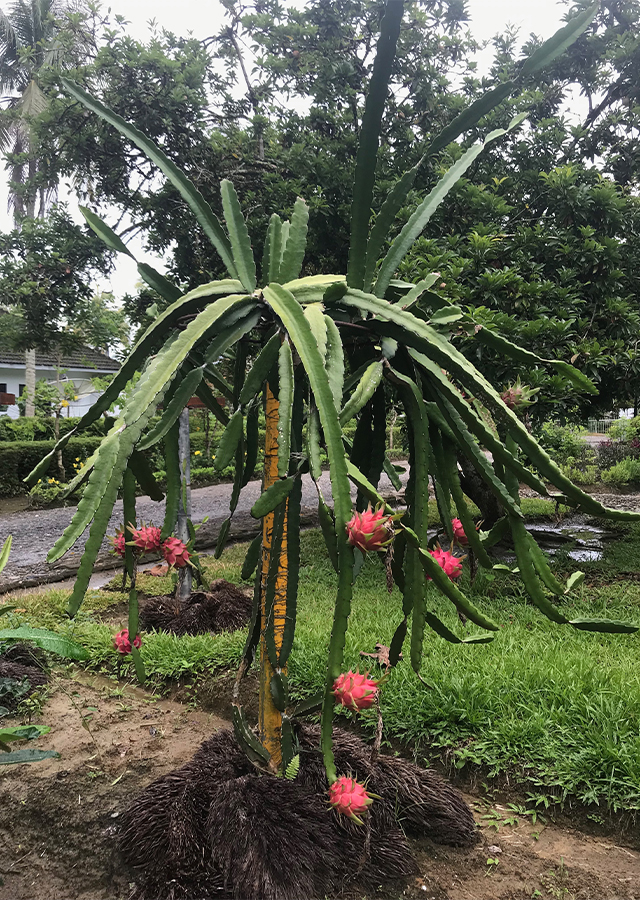
Dragon fruit (Selenicereus monacanthus) is an epiphytic succulent up to 10 meters long of the Cactaceae family, originating from America and distributed from Florida to Brazil. Vietnam was the first country to trade this fruit globally before it entered Indonesia around 2000 via import from Thailand. Dragon fruit is rich in antioxidants and is believed to help control blood sugar and maintain heart health.
Agroecology
Grows ideally in lowlands (0-350 m above sea level), rainfall 500-2,000 mm/year. Ideal air temperature between 26-36°C and humidity between 70-90%. Prefers sandy soil with 20-30% organic matter, soil pH 5.5-6.5.
Morphology
- Epiphytic roots attach to or climb on other plants.
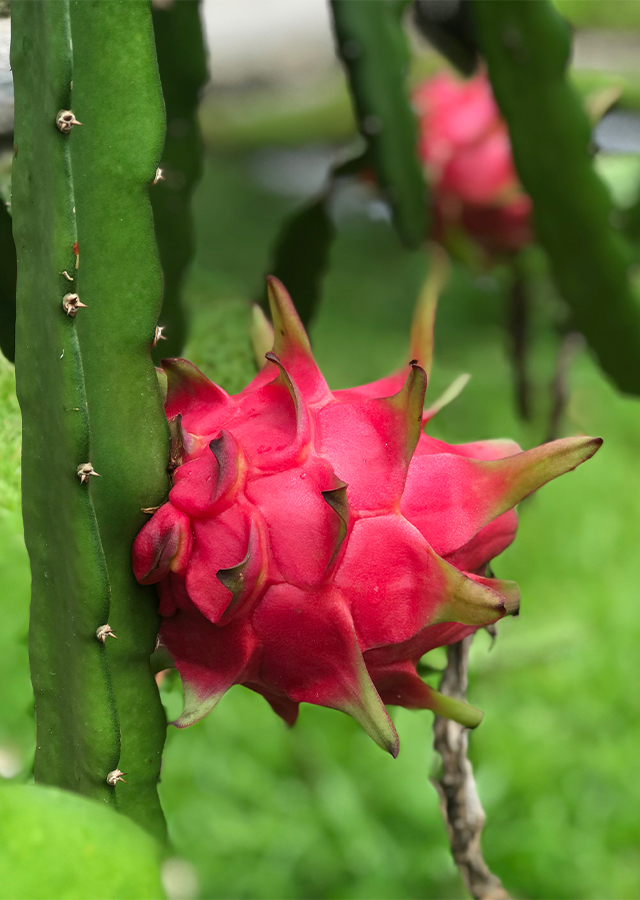
- Stem triangular shaped (cross-section), elongating up to a maximum of 9 m, green in color, thorny.
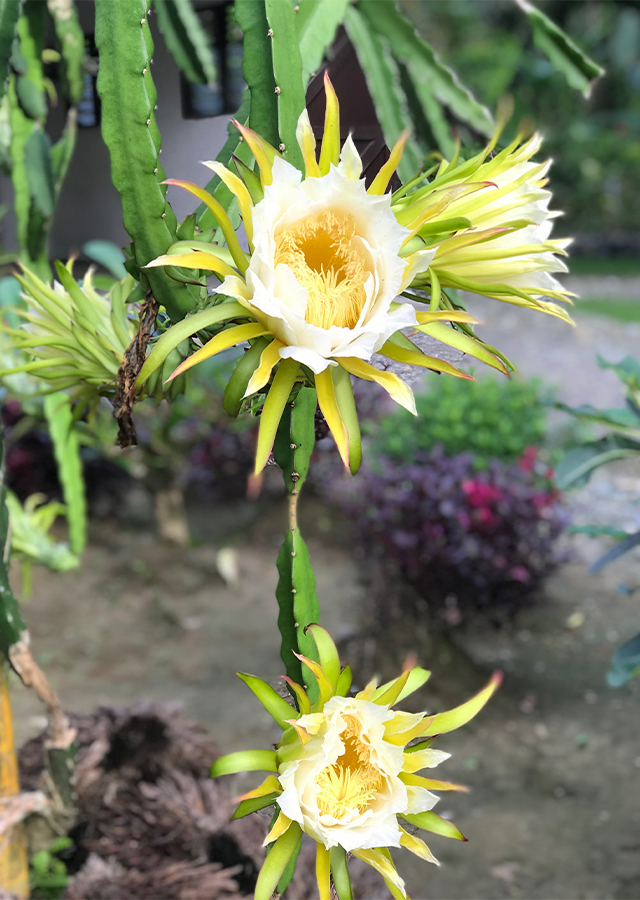
- Flowers located on stem tendrils, trumpet-shaped and white in color.
- Fruit finely fibrous flesh, red in color, many small black seeds, soft texture, sweet and slightly sour taste.
Cultivation
Propagated generatively (by seed) and vegetatively (stem/tendril cuttings) by cutting old (at least 2 years old) and productive tendrils. Tendrils are cut 30-35 cm long, the lower tip of the cutting is made tapered. Cuttings are air-dried for 2–3 weeks to dry the cut wound and then planted directly in the field.
Chemical Content
Flavonoids, thiamine, niacin, pyridoxine, cobalamin, phenolics, betacyanins, polyphenols, carotene, phosphorus, phytoalbumin.
Benefits
Antidiabetic, antioxidant, antitumor, addresses high blood pressure, smooths skin, improves eyesight, improves heart function.
Simplisia
Propagated generatively (by seed) and vegetatively (stem/tendril cuttings) by cutting old (at least 2 years old) and productive tendrils. Tendrils are cut 30-35 cm long, the lower tip of the cutting is made tapered. Cuttings are air-dried for 2–3 weeks to dry the cut wound and then planted directly in the field.
Traditional Recipes
The following recipes reflect traditional knowledge passed down through generations, not a substitute for professional medical diagnosis or advice. Consult a healthcare provider before use.
1. Diabetes
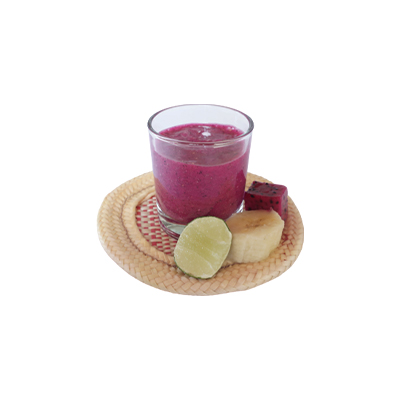
- Take 100 g dragon fruit, 1 ambon banana, 1/4 lime (take the juice), water as needed, ice cubes as needed (optional).
- Put the dragon fruit, banana and water into a blender and blend. Pour the juice into a serving glass, add the lime juice. Stir evenly.
Reference Sources
- CABI. (No date). Invasive Species Compendium. Hylocereus undatus (dragon fruit). cabi.org/isc/datasheet/27317. 11-02-2021.
- Hindawi. (2020). Hylocereus polyrhizus. https://www.hindawi.com/journals/ecam/2020/7520736/ 19-04-2021
- Hitendraprasad, P.P., Hegde, K., & Shabaraya, A.R. (2020). Hylocereus undatus (Dragon Fruit): A Brief Review. International Journal Pharm. Science Rev. Res. 60(1): 55-57.
- Lim, T.K. (2012). Edible Medicinal And Non Medicinal Plants - Fruits Vol. 1: 650-655. Springer.
- MC Jeronimo, JVC. Orine, MRC. Novaes. (2016). Nutritional pharmacological and toxicological characteristics of pitaya (Hylocereus undatus). African Journal of Pharmacy and Pharmacology.
- Science Direct. (2016). Hylocereus polyrhizus. https://www.sciencedirect.com/topics/agricultural-and-biological-sciences/hylocereus-polyrhizus 19-04-2021