Senna macranthera (DC. ex Collad.) H.S.Irwin & Barneby
Summary
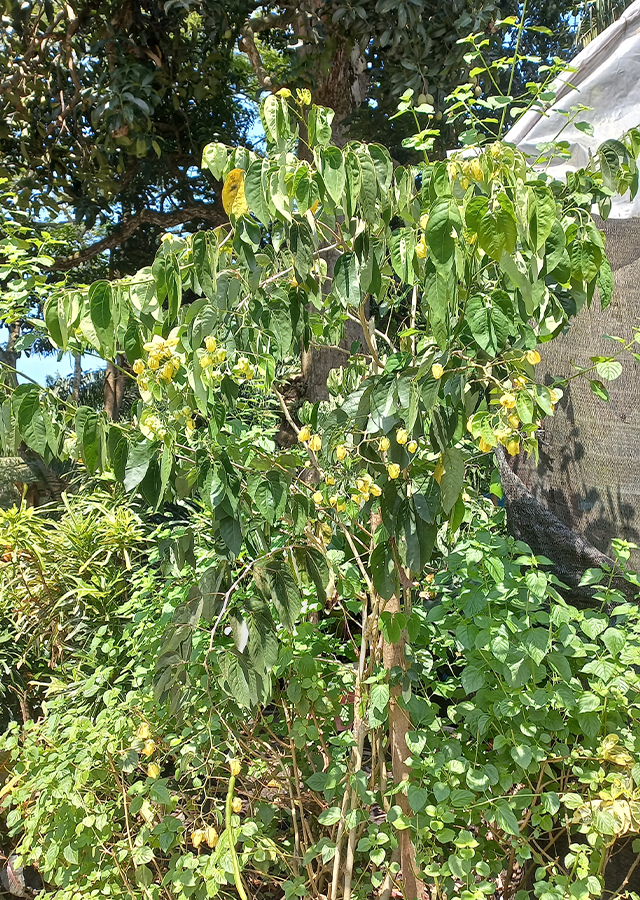
Senna (Senna macranthera) is a tree 6-8 meters tall from the Fabaceae family native to South America, popular as an ornamental in small towns because its yellow flowers attract bees. Its bark contains anthraquinones used in the pharmaceutical and dye industries. Senna is traditionally used to treat syphilis and constipation.
Agroecology
Grows best in sunny locations. Succeeds in various soil types. A fast-growing tree, easily reaching a height of 3.5 m within 2 years from seed.
Morphology
- Bark light wood, heartwood yellowish-brown. Outer bark (rhytidome) gray-mottled, entire or slightly cracked and scaly, inner bark yellowish white.
- Leaves alternate, hairy, paripinnate, with 2 pairs of leaflets, basal pair with extrafloral nectaries, petiole and rachis 4-6 cm long. Leaflets opposite, short-petioled, veins pinnate, generally elliptic, 5-10 x 2.5-4 cm.
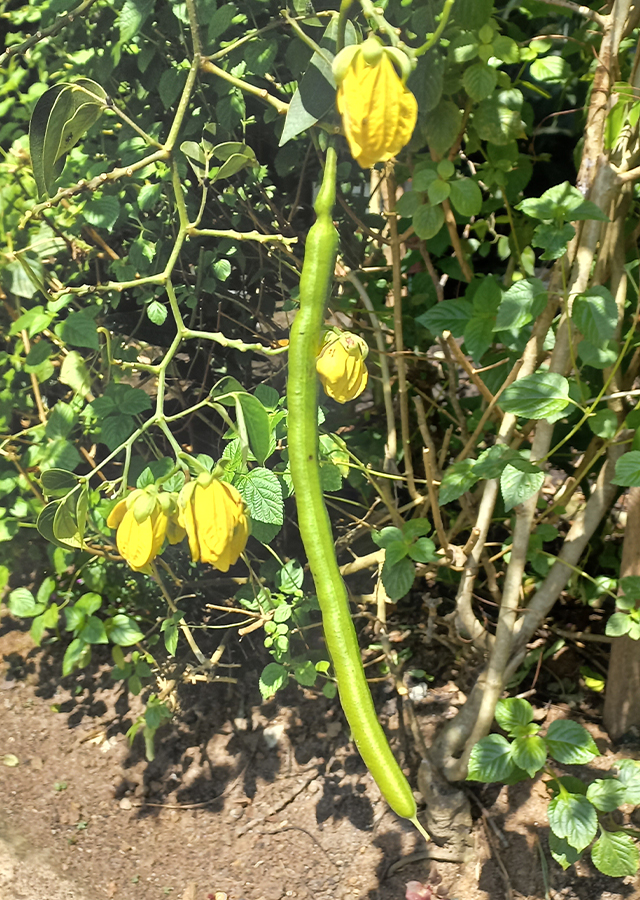
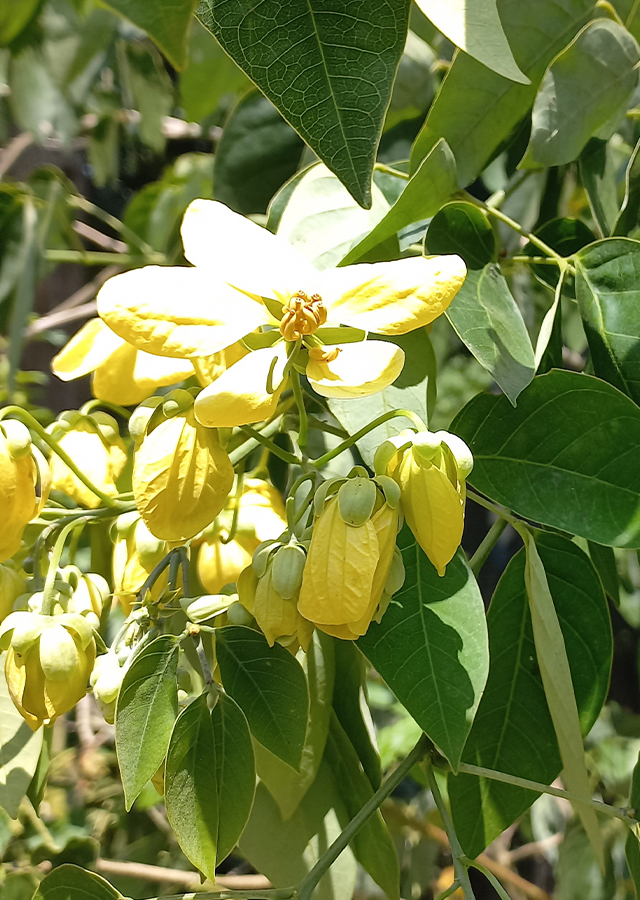
- Flowers dichlamydeous, pentamerous, hermaphroditic, yellow, fragrant, large, pedicel 3-4 cm long, corolla dialypetalous, zygomorphic, androecium formed by 2 large, 5 medium, and 3 short stamens. Inflorescence terminal, large and showy, formed by racemes of 6-8 flowers.
- Fruit cylindrical, subwoody, generally straight, septate, polyspermous, 7-20 x 1-1.5 cm, black when ripe.
- Seeds obovoid, brown, hard, 5-7 x 3.5-5 mm.
Cultivation
- Propagation is generative (seed). Seeds have a hard seed coat and may need scarification before sowing to speed up germination. Scarification can usually be done by pouring a little near-boiling water over the seeds and then soaking them for 12-24 hours in warm water. At this point they should absorb moisture and swell. If not, carefully nick the seed coat (taking care not to damage the embryo) and soak for another 12 hours before sowing. Sow the seeds in partial shade in the nursery bed.
- A moderate germination rate can usually be expected, with seeds germinating within 10-30 days. Once seedlings reach a height of 4-6 cm, plant them into individual containers, and the seedlings will be ready for planting out 4-5 months later.
Chemical Content
Flavonoids, tannins, coumarins, emodin anthraquinone.
Benefits
The plant is reportedly used in the treatment of syphilis, constipation. Has anti-inflammatory activity, laxative effect, and intestinal motility effects.
Simplisia
- Prepare an adequate amount of fresh senna leaves, wash clean with running water then drain.
- Dry under the sun or with an oven at 40°C until the moisture content reaches 10%.
- Grind using a blender until it becomes powder.
- Store in a clean, airtight container.
Local Names
Informasi tidak ditemukan. Butuh penelusuran lebih lanjut.
Traditional Recipes
The following recipes reflect traditional knowledge passed down through generations, not a substitute for professional medical diagnosis or advice. Consult a healthcare provider before use.
1. Constipation
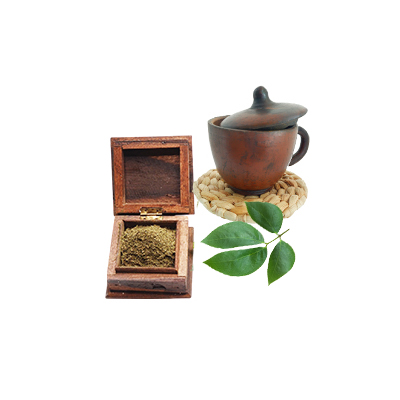
- Take dried senna leaves in powder form.
- Steep with hot water.
- Let it cool to warm/cold.
- Strain then drink, used for treating constipation and other digestive disorders.
Reference Sources
- Royal Botanic Gardens. 2021. Senna macranthera (DC. ex Collad.). http://www.plantsoftheworldonline.org/taxon/urn:lsid:ipni.org:names:911359-1. 18-12-2021.
- Useful Tropical Plants Database. 2021. Senna macranthera. http://tropical.theferns.info/viewtropical.php?id=Senna+macranthera. 18-12-2021.
- Lyvia Guarizea; Juliana C. da Costaa; Leandro B. Dutraa; Renata F. Mendesa; Isabel V. A. Limaa; ElitaScio. 2011. Anti-inflammatory, laxative and intestinal motility effects of Senna macranthera leaves. DOI: 10.1080/14786411003754264.
- Arvores Do Bioma Cerrado. Senna macranthera (DC. ex Collad.). http://www.arvoresdobiomacerrado.com.br/site/2017/04/23/senna-macranthera-dc-ex-collad-h-s-irwin-barneby-var-nervosa-h-s-irwin-barneby/. 18-12-2021.