Senna siamea (Lam.) H.S.Irwin & Barneby
Summary
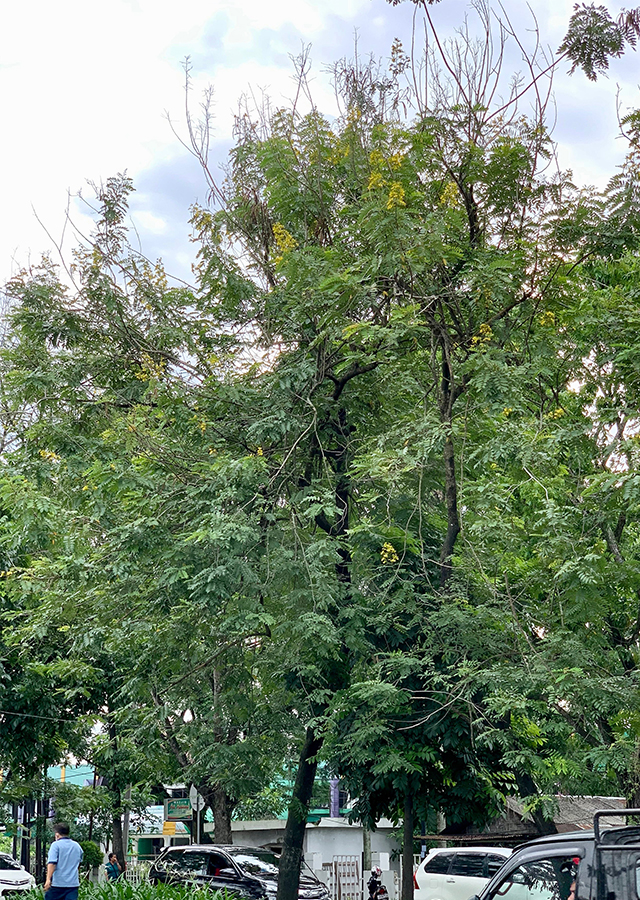
Johar (Senna siamea) is a tree 5-20 meters tall of the Fabaceae family, distributed from Indonesia and Thailand to India and Sri Lanka. Besides being planted as a roadside shade tree and windbreak in plantation areas, its young leaves and flowers are commonly eaten as a vegetable. Its bark and leaves are traditionally used to help control diabetes and malaria, and to treat intestinal worms in children.
Agroecology
Grows well in tropical lowlands with a monsoon climate, rainfall between 500-2,800 mm/year, and temperatures of 20-31 °C. Cannot grow at elevations above 1,300 m above sea level or at temperatures below 10 °C. Favors sunny, well-drained locations and fertile soil with a pH between 5.5-7.5.
Morphology
- Roots taproot.
- Trunk has grayish-brown bark. Wide branching, forming a round canopy.
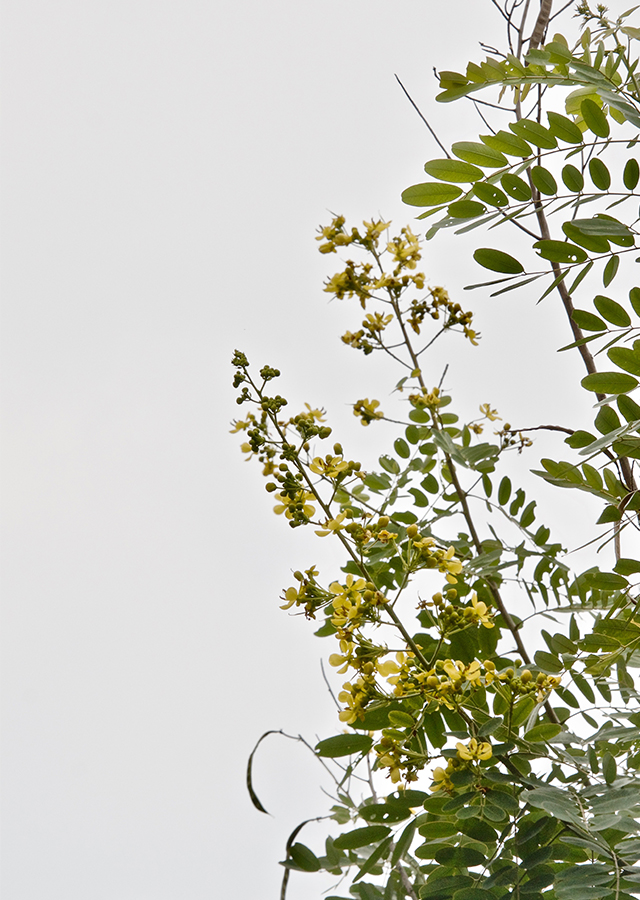
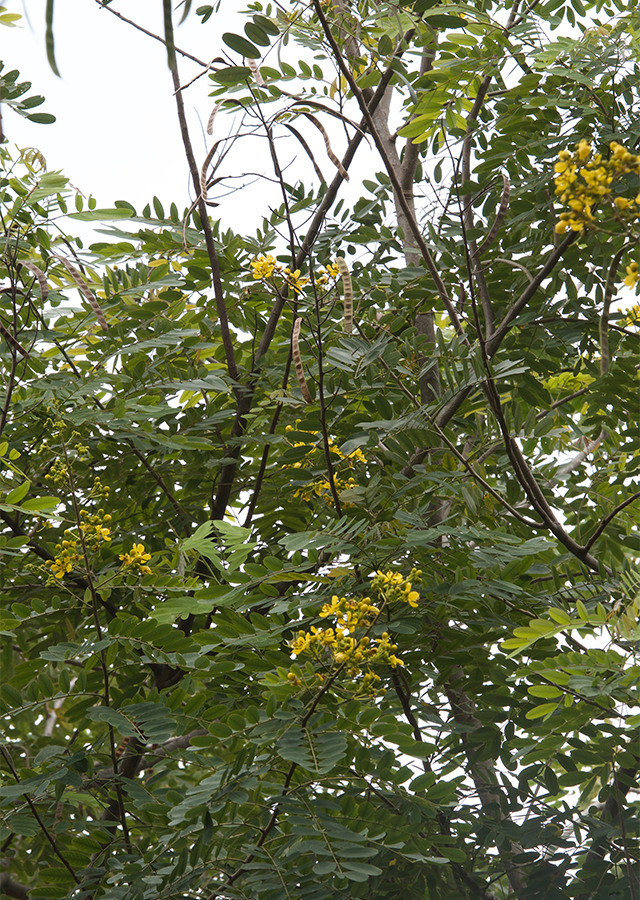
- Leaves compound, evenly pinnate venation, dark green and glossy on the upper side, dull green with fine hairs on the underside, rounded shape, smooth margins.
- Flowers panicles emerging at branch tips. Corolla bright yellow, 5 petals, obovate.
- Fruit pod-shaped.
- Seeds flattened ovate, glossy brown.
Cultivation
- Propagated by seed. Can be sown directly in the field.
- Begins flowering and fruiting at 2-3 years old.
Chemical Content
Barakol, alkaloids, flavonoids, tannins, saponins, carotenoids, lupeol, anthraquinones, sitosterin, terpenoids, steroids, cardiac glycosides, essential oil.
Benefits
Treats diabetes, malaria, intestinal worms in children, itching and scabies; acts as a sedative; treats liver disorders; reduces appetite; treats anemia, fever, high blood pressure; acts as a laxative; treats syphilis, herpes; antirheumatic.
Simplisia
- Select fresh johar leaves, wash thoroughly.
- Dry in an oven at 40 °C until reaching a moisture content of 10%.
- Grind into a powder.
- Store in a closed container.
Local Names
Bujuk or Dulang (Sumatra). Juar or Juwar (Betawi, Sunda and Java), Johor (Malay), Jati wesi (Java).
Traditional Recipes
The following recipes reflect traditional knowledge passed down through generations, not a substitute for professional medical diagnosis or advice. Consult a healthcare provider before use.
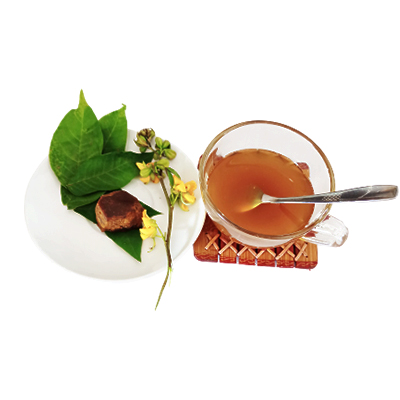
1. Malaria
- Boil 10 g of fresh leaves in 1 cup of water for 15 minutes. Let cool, then strain the mixture. Add 2 tsp brown sugar and mix well.
- Drink twice a day in equal amounts, morning and evening.
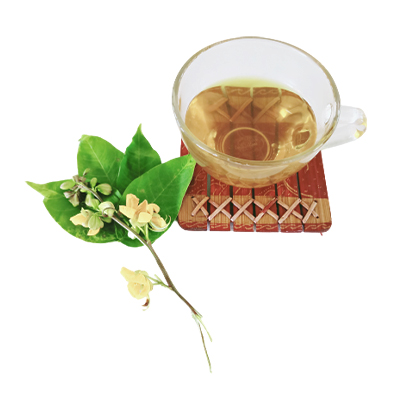
2. Diabetes
- Prepare 1 handful of fresh johar leaves and wash thoroughly. Boil in 220 ml of water until boiling and the water is reduced by half. Once cool, strain.
- Drink twice a day, 1 cup each time.
Reference Sources
- CABI. (2013). Invasive Species Compendium. Senna siamea (yellow cassia). https://www.cabi.org/isc/datasheet/11462. 14-08-2020.
- Feedipedia. (No date). Siamese senna (Senna siamea). https://www.feedipedia.org/node/323. 14-08-2020.
- Fern, Ken, (2014). Useful Tropical Plants: Senna siamea. http://tropical.theferns.info/viewtropical.php?id=Senna+siamea. 14-08-2020.
- PFAF. (No date). PFAF Plant Database: Senna Siamea. https://pfaf.org/user/Plant.aspx?LatinName=Senna+siamea. 14-08-2020.
- PROSEA. (2016). Senna siamea - PlantUse English. https://uses.plantnet-project.org/en/Senna_siamea_(PROSEA). 14-08-2020.
- PROSEA. (2016). Senna (PROSEA Medicinal plants). https://uses.plantnet-project.org/en/Senna_(PROSEA_Medicinal_ plants). 14-08-2020.
- PROSEA. (No date). PROSEA Handbook Number. https://www.prota4u.org/prosea/view.aspx?id=3043. 14-08-2020.
- StuartXchange. (2020). Philippine Medicinal Plants: Thailand Shower. http://www.stuartxchange.org/ThailandShower. 14-08-2020.