Smallanthus sonchifolius (Poepp.) H.Rob.
Summary
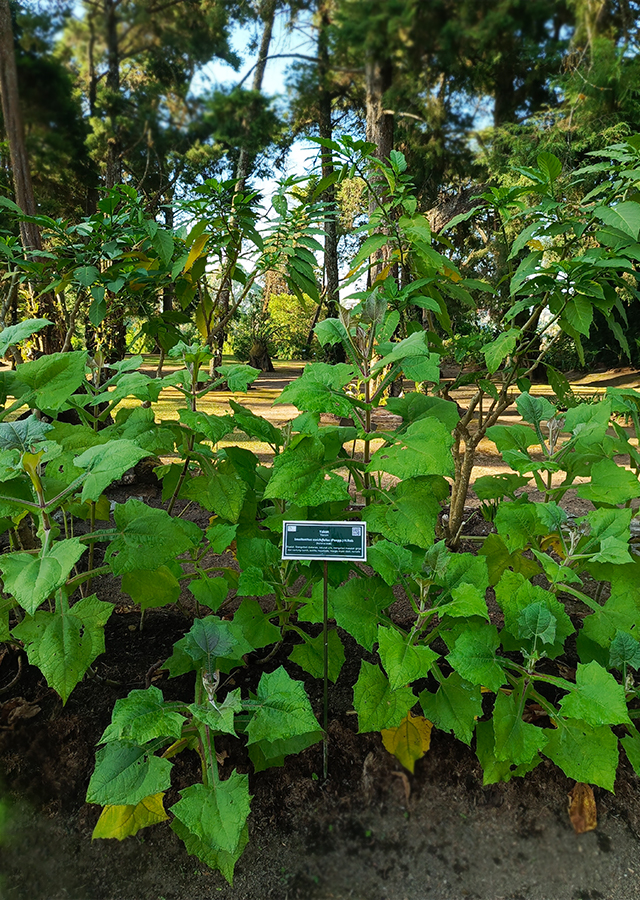
Smallanthus sonchifolius or yakon is an herb native to the Andes mountains that has been cultivated since pre-Inca times for its sweet tuber, edible both raw and processed into jam and juice. Its leaves and stems are also commonly eaten as a vegetable, while indigenous Peruvians have used this plant for generations to help people with diabetes and address kidney and muscle disorders.
Agroecology
Yakon is a highland plant species in tropical regions, where it can be found at elevations up to 3,600 m asl. Grows best in areas where the mean annual daytime temperature is in the range of 12-22°C, but can tolerate 5-30°C, and prefers mean annual rainfall in the range of 800-1,200 mm, but tolerates 600-1,400 mm. In South America, the plant succeeds in areas with annual rainfall varying from 900-3,500 mm. This species is very hardy and able to grow in hot or cold conditions, but its growth is intolerant of frost. Dormant tubers can tolerate temperatures at least slightly below freezing. This species' growth prefers a position in full sun and in shade. For best results, yakon requires a warm position in soil rich in organic matter, with an ideal pH in the range of 5.5-6.5, tolerating 5-7.
Morphology
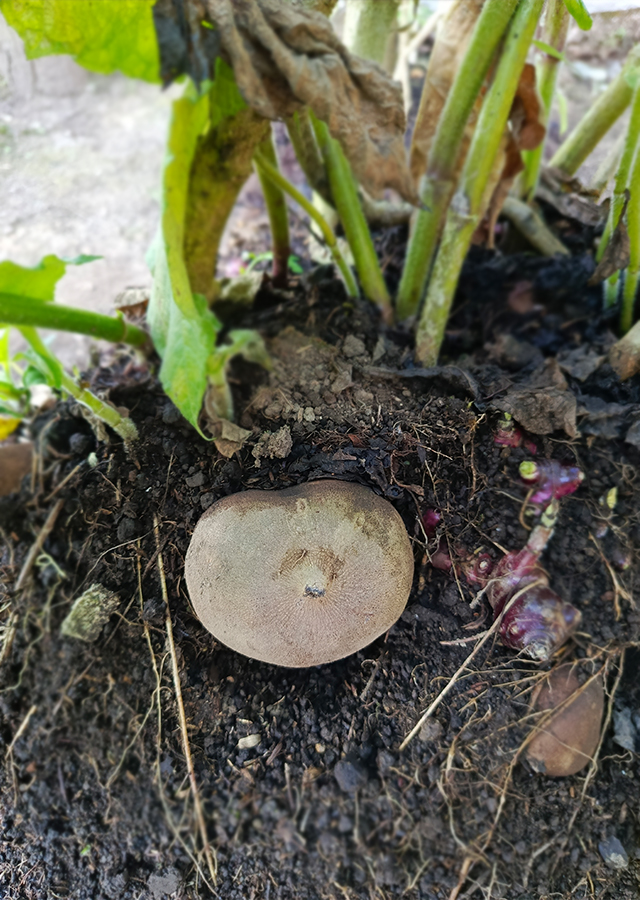
- Roots large tuberous roots similar to sweet potato, with a much sweeter taste and yellowish-white flesh with a crisp, juicy consistency. Has two types of tuberous roots: smaller tubers formed in clusters around the stem, forming shoots to produce new stems, and large tubers usually on thin roots 2-5 cm long, used as storage organs and lacking the capacity to form new shoots. These are the tubers typically eaten. Tuberous roots brittle, brown to purple in color. Tastes like a combination of apple, watermelon, and celery.
- Leaves large sagittate shaped, opposite, margin widely toothed and extending down the stem.
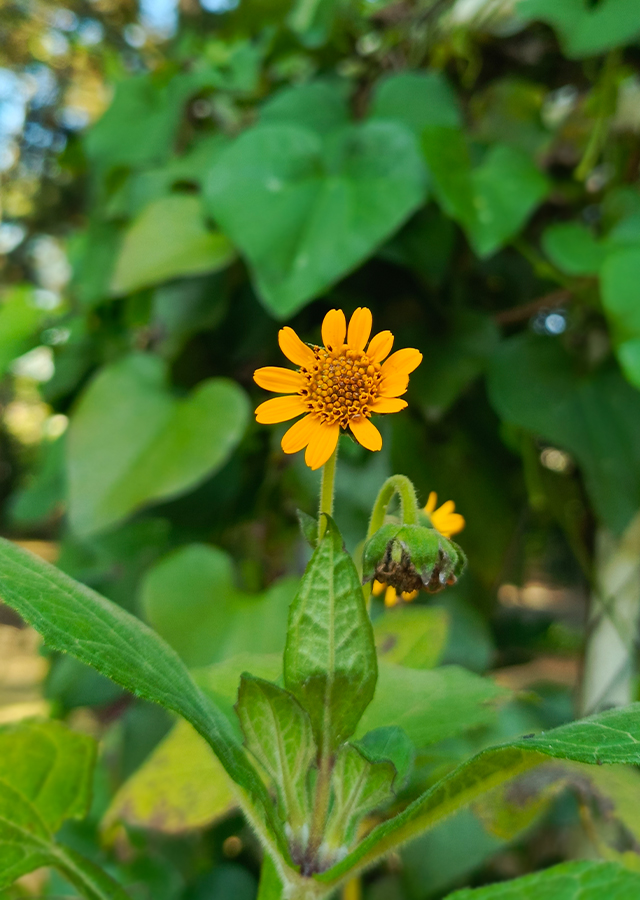
- Flowers aster-like, yellow to orange.
Cultivation
- Plant propagation through seed, division or splitting of the dormant plant, and basal shoot cuttings.
- Division or splitting while dormant, by cutting the main stem to 10 cm long and storing it with the cluster of small tubers in a cool, frost-free location, and it is not recommended to let it dry out.
Chemical Content
Fructooligosaccharides (FOS), protocatechuic, chlorogenic, caffeic, and ferulic acids, inulin, monoterpenes, sesquiterpenes, oligofructans, polyphenols, γ-cadinene, 3-caffeoylquinic acid, chlorogenic acid, 2,4-dicaffeoylaltraric acid, 2,5-dicaffeoylaltraric acid, 3,5-dicaffeoylaltraric acid, 3,5-dicaffeoylquinic acid, enhydrin, fluctuanin, gentisic acid, melampolides, β-pinene, rosmarinic acid, sonchifolin, tryptophan, 2,3,5-tricaffeoylaltraric acid, 2,4,5-tricaffeoylaltraric acid, uvedalin, gallic acid, β-sitosterol, behenic acid, kaempferol, quercetin, vanillic acid, hexadecanoic acid, amino acids (arginine and glutamine), phenolates, alkaloids, sesquiterpene lactones, terpenoids and triterpenoids, two new diterpenes (ent-kaurane-3β,16β,17,19-tetrol (1) and ent-kaurane-16β,17,18,19-tetrol).
Benefits
Treats diabetes, a diuretic, addresses kidney and bladder problems, cystitis, hepatosis, myalgia (muscle pain), and rheumatism.
Simplisia
- Prepare an adequate amount of yakon leaves, wash clean with running water.
- Dry under the sun or with an oven at 40°C until the moisture content reaches 10%.
- Grind using a blender until it becomes powder.
- Store in a clean, airtight container.
Local Names
Informasi tidak ditemukan. Butuh penelusuran lebih lanjut.
Traditional Recipes
The following recipes reflect traditional knowledge passed down through generations, not a substitute for professional medical diagnosis or advice. Consult a healthcare provider before use.
1. Diabetes
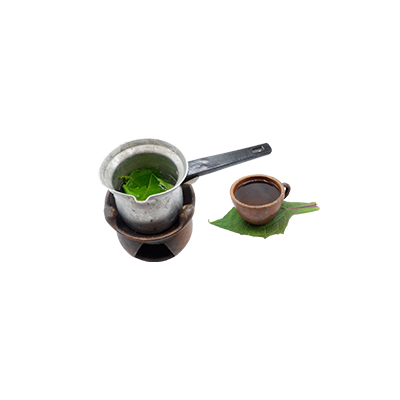
- Prepare an adequate amount of fresh yakon leaves and wash until clean.
- Boil the leaves until it boils.
- Let it cool to warm/cold.
- Strain then drink.
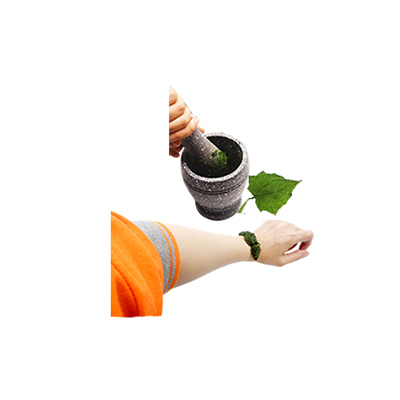
2. Rheumatism
- Take an adequate amount of fresh yakon leaves and wash until clean.
- Grind until it becomes a paste.
- Apply the leaf paste as a poultice on the affected area.
Reference Sources
- Royal Botanic Gardens. Plants of the World Online: Smallanthus sonchifolius (Poepp.) H.Rob. https://powo.science.kew.org/taxon/urn:lsid:ipni.org:names:237510-2. 21-05-2022.
- Stuartxchange. 2020. Philippine Medicinal Plants: Yacon. http://www.stuartxchange.org/Yacon. 21-05-2022.
- Tropical Plants Database, Ken Fern. 2021. Smallanthus sonchifolius. https://tropical.theferns.info/viewtropical.php?id=Smallanthus+sonchifolius&redir=Polymnia+edulis. 21-05-2022.
- J. Lachman, E.C. Fernández, M. Orsák. 2003. Yacon [Smallanthus sonchifolia (Poepp. et Endl.) H. Robinson]
chemical composition and use – a review. Plant, Soil and Environment, 49(6): 283–290.