Solanum betaceum Cav.
Summary
Tamarillo (Solanum betaceum) is a shrub or small tree 2-7 meters tall from the Solanaceae family native to southern Bolivia and northwestern Argentina, cultivated in the Andean highlands. Its fruit is rich in vitamins A, C, and E, commonly eaten fresh or processed into juice. Tamarillo leaves are traditionally used to treat liver inflammation and sore throat.
Agroecology
The plant grows best at low elevations in the subtropics and medium to high elevations in tropical regions, where it can succeed at elevations up to 2,800 m asl. It grows best in areas where the mean annual daytime temperature is in the range of 16-22°C, but can tolerate 10-30°C. It can be killed by temperatures of -2°C or lower. It prefers mean annual rainfall in the range of 2,000-2,600 mm, but tolerates 600-4,000 mm. The plant may not be sensitive to day length. Succeeds in a sunny position in well-drained soil. Prefers light, slightly acidic, fertile soil. Prefers a pH in the range of 6.3-7, tolerating 5.8-7.5. Dislikes drought. The plant is very susceptible to wind damage. The plant has a shallow root system and dislikes being hoed at the surface; it is best mulched.
Morphology
- Stem densely puberulent with glandular and eglandular unbranched hairs. Sympodial units (3-)4-foliate.
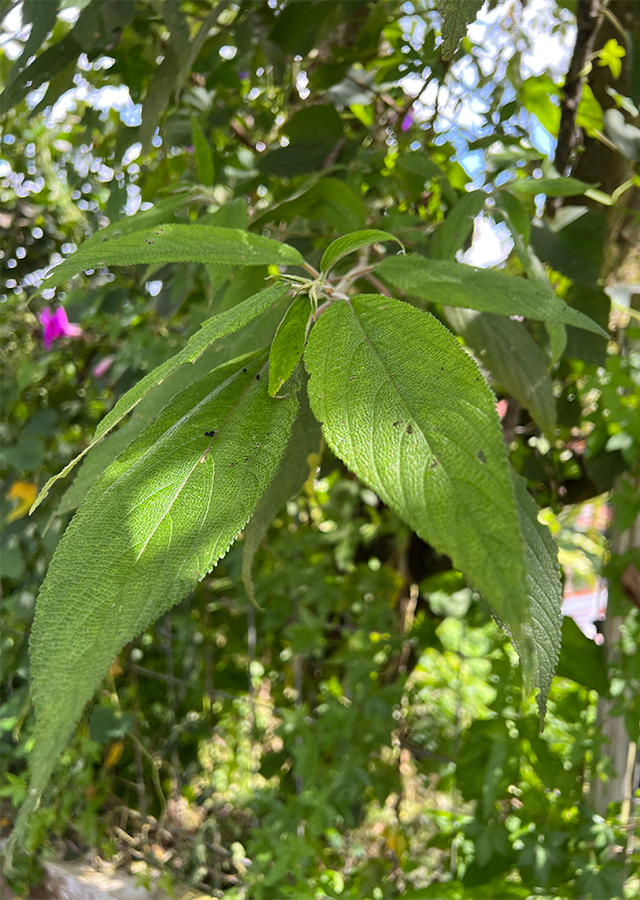
- Leaves simple, blade 7-40 x 6-35 cm, ca. 1-1.5 times longer than wide, ovate, sparsely puberulent adaxially with unbranched hairs, denser on the veins, densely puberulent below; base cordate to auriculate with basal lobes 1.5-6 cm; margin entire; apex acuminate; petiole 3-25 cm, densely puberulent.
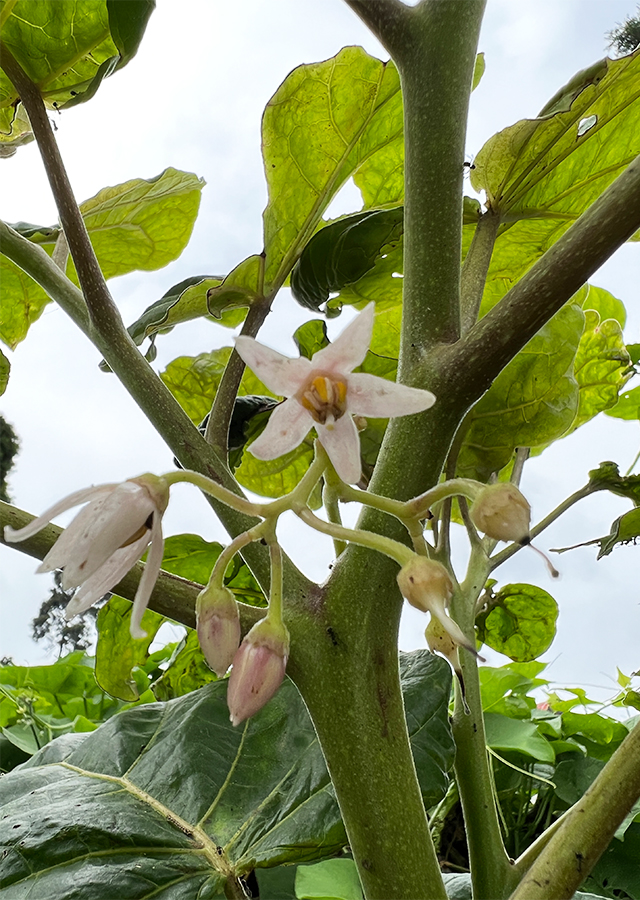
- Flowers, inflorescence 2.5-15 cm, unbranched or branched, with 10-50 flowers, all flowers perfect, axis moderately to densely puberulent; peduncle 1.5-9 cm; rachis 2-8 cm; pedicel 10-20 mm, in fruit 15-50 mm, spaced 3-10 mm apart, articulated above the base, leaving a pedicellar remnant 1-3 mm long. Flower buds elliptic to ovoid, blunt to tapering at the tip. Flower with calyx lobes 3-5 mm, lobes 1-2 x 2-3 mm, deltate, blunt to truncate, apiculate at the tip, fleshy, sparsely to densely puberulent. Corolla 2-2.5 cm in diameter, lobes 10-15 mm, star-shaped, subcoriaceous to fleshy, pinkish white, tube 2-3 mm, lobes 7-12 x 2.5-4 mm at the base, narrowly triangular, pointed at the tip, hairless abaxially and adaxially, margin tomentose. Anther thecae 5-6 x 2-2.5 mm, lanceolate, connivent, pale yellow, pores directed adaxially and distally; connective 4.5-5 x 1-2 mm, narrowly triangular, at the base slightly shorter than the thecae at the tip, equal to or slightly shorter than them at the base, absent adaxially, bright lemon yellow. Ovary hairless; style 5-6 x 0.5-1 mm, protruding 1-2.5 mm beyond the stamens, cylindrical, hairless; stigma truncate.
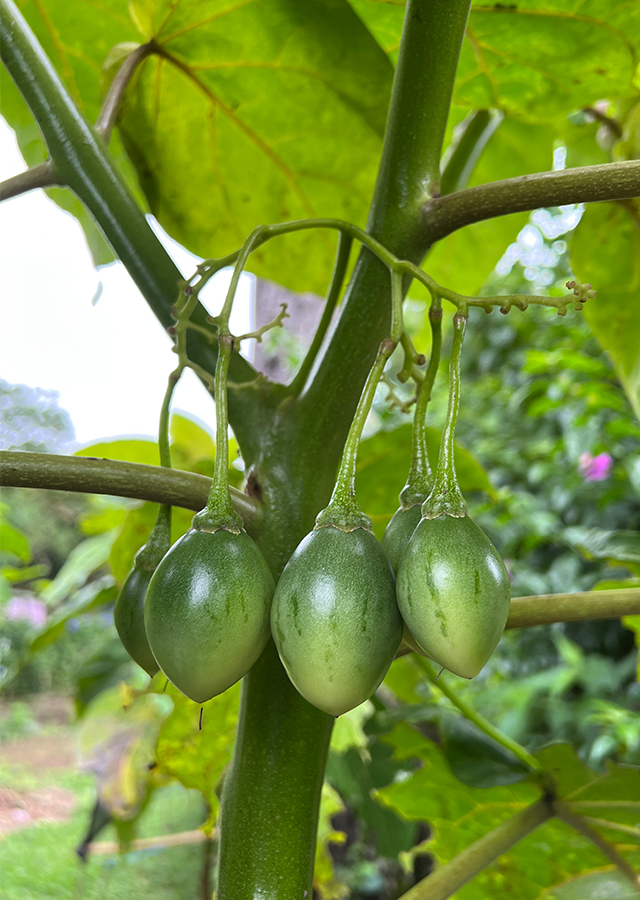
- Fruit 4-10 x 3-5 cm, ellipsoidal or ovoid, blunt or pointed at the tip, yellow to orange, red, or purple, often with darker longitudinal stripes, hairless; stone cell aggregates present.
- Seeds 3-4 x 3.5-4 mm, flat, densely puberulent.
Cultivation
Propagation is generative using seed, and vegetative with stem cuttings. Seeds usually germinate within 4 weeks at 15°C, within 2 weeks at 25°C. When they are large enough, plant the seedlings into individual pots, and when the plants are large enough they can be planted out to the field. Stem cuttings use green wood.
Chemical Content
Carotenoids, flavonoids, terpenoids, steroids, saponins, alkaloids, and tannins.
Benefits
Its leaves are used to treat liver inflammation, as a sore throat remedy. Its juice is used to treat anemia and tonsillitis. Its fruit flesh, after being cooked in embers, is used as a poultice for inflamed tonsils.
Local Names
Tuwung kayu, Terung kayu (Bali), Kemar (Wonosobo).
Traditional Recipes
The following recipes reflect traditional knowledge passed down through generations, not a substitute for professional medical diagnosis or advice. Consult a healthcare provider before use.
1. Treats anemia
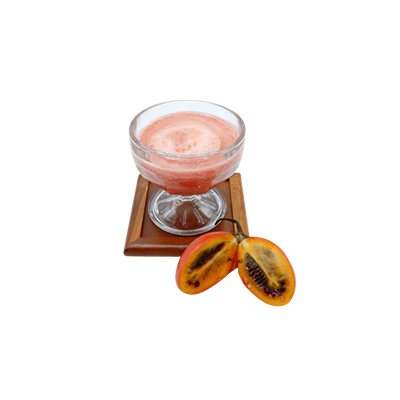
- Prepare ripe tamarillo fruit.
- Take the flesh then blend, adding a little boiled water.
- Strain then drink.
- Tamarillo juice can treat anemia.
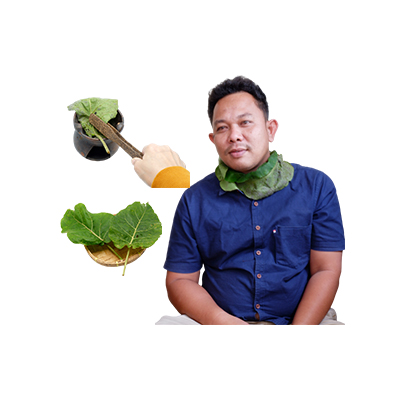
2. Sore throat remedy
- Take tamarillo leaves.
- Warm them then wrap around the neck as a sore throat remedy.
Reference Sources
- Royal Botanic Gardens. Plants of the World Online: Solanum betaceum Cav.. https://powo.science.kew.org/taxon/urn:lsid:ipni.org:names:306169-2#synonyms. 02-03-2022.
- Useful Tropical Plants Database. 2021. Solanum betaceum.https://tropical.theferns.info/viewtropical.php?id=Solanum+betaceum, 02-03-2022.
- World Flora Online. 2022. Solanum betaceum Cav. http://www.worldfloraonline.org/taxon/wfo-0001026534. 03-03-2022.
- Inibaru Media. 2018. Mengenal Lebih Dekat Terung Belanda, Buah Khas Pegunungan. https://inibaru.id/indo-hayati/mengenal-lebih-dekat-terung-belanda-buah-khas-pegunungan. 03-03-2022.
- Yusrina Ika Putri. 2017. Ekstraksi Kuersetin dari Kulit Terong Belanda (Solanum betaceum Cav.) Menggunakan pelarut Etanol. Skripsi. Departemen Teknik Kimia. Fakultas Teknik. Universitas Sumatera Utara. Medan.