Solanum mammosum L.
Summary
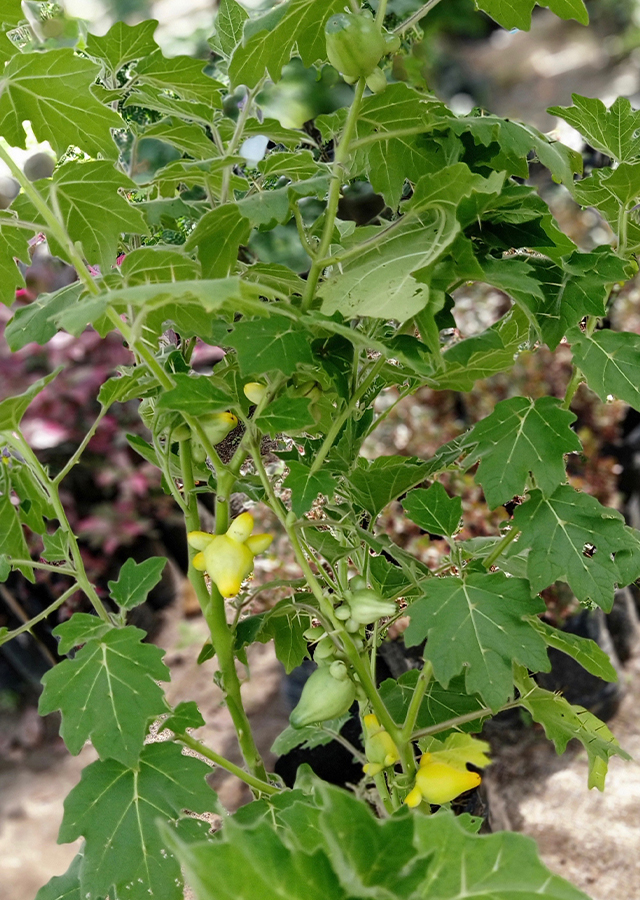
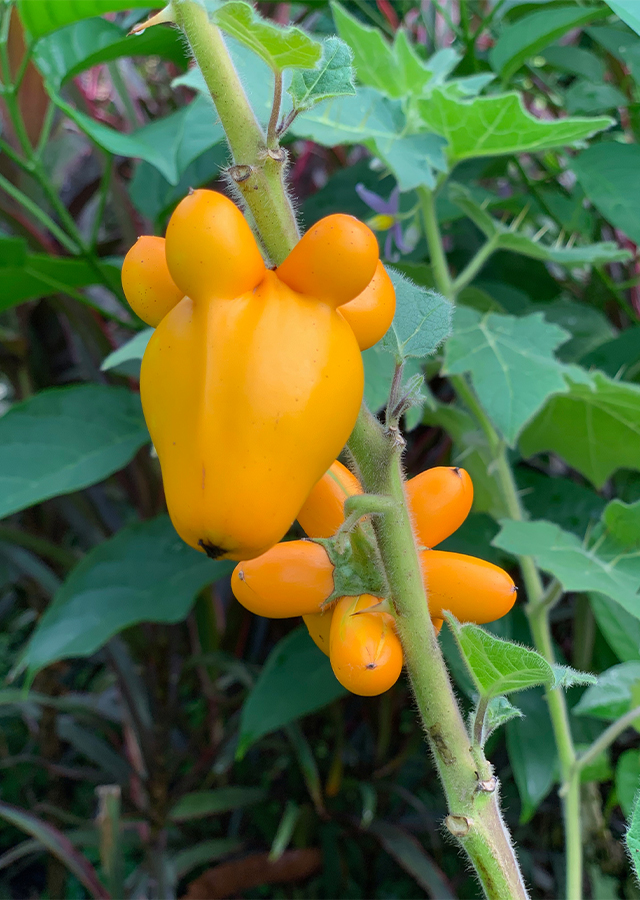
Terung susu (Solanum mammosum) is a shrub up to 1.5 meters tall of the Solanaceae family, native to southern North America and the Caribbean, distributed as far as the Amazon forest. Its fruit, shaped like a cow's teat, makes it a unique ornamental as well as traditional medicine. Terung susu is believed to help with breast cancer treatment and has antimalarial properties.
Agroecology
Grows in tropical climate regions with high rainfall. Prefers full sunlight for its growth. Grows at elevations of 100-1,800 m above sea level. Able to adapt well to most soils, but thrives in moist and clayey soil.
Morphology
- Root a taproot, brown.
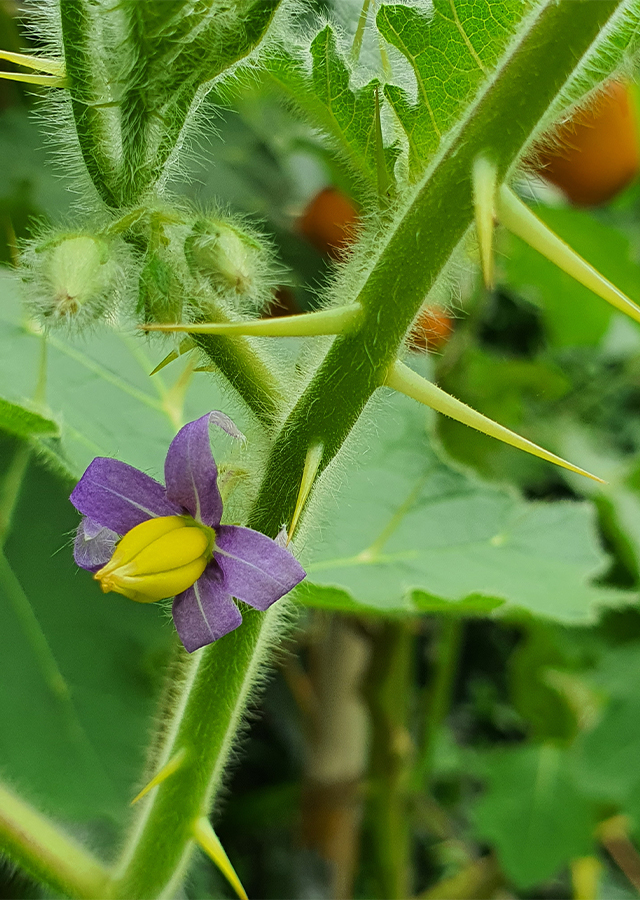
- Stem upright, round, thorny, pale green.
- Leaves oblong, scattered arrangement, tapering tip and base, lobed edges, pinnate venation, hairy, 20-23 cm long, 8-12 cm wide, light green, thorny.
- Flowers star-shaped, hairy sepals, five-lobed, ± 0.5 cm long, green.
- Fruit oblong, ± 10 cm in diameter, yellow.
- Seeds round flat, light brown.
Cultivation
- Propagated using seed and cuttings.
- Seeds are sown in fertile media.
- Generally germinates 3-4 weeks after sowing. After several leaves grow, can be transplanted to a polybag or field.
Chemical Content
- Fruit: steroidal alkaloid and saponin (solamargine, solasonine, protodioscin, pseudoprotodioscin and Inidioside D, solasodine, diosgenin, and phytosterols.
- Leaves: steroidal alkaloid, flavonoid, and polyphenol.
Benefits
Breast cancer treatment, diabetes, high blood pressure disease, uterine cancer, vermifuge, antioxidant, antimalarial, hemorrhoid remedy.
Simplisia
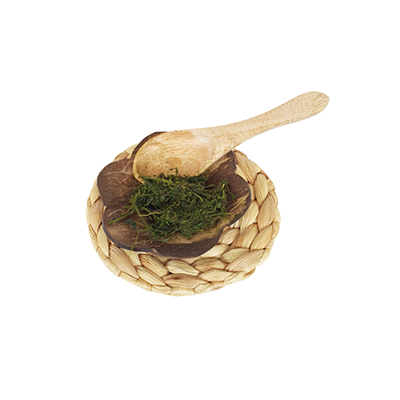
- Take terung susu leaves, remove the thorns and wash thoroughly.
- Dry the leaves in the sun.
- Store in an airtight container.
Local Names
This plant is known by the local name Terong susu (Java).
Traditional Recipes
The following recipes reflect traditional knowledge passed down through generations, not a substitute for professional medical diagnosis or advice. Consult a healthcare provider before use.
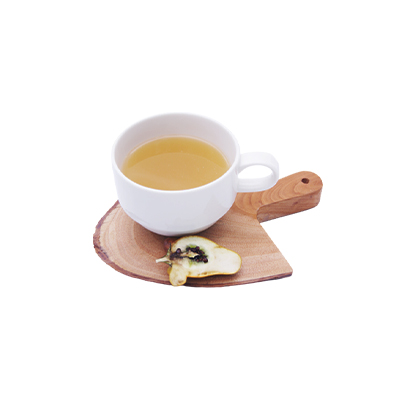
1. Vermifuge
- Take seeds (2 g) then dry.
- Roast the seeds, pound finely then steep with ½ glass of hot boiled water, once cool then strain.
- Drink the strained liquid all at once before bed.
2. Hemorrhoids
- Take terung susu leaves as needed.
- Wash the leaves thoroughly.
- Pound until mashed.
- Apply to the affected area.