Spathodea campanulata P.Beauv.
Summary
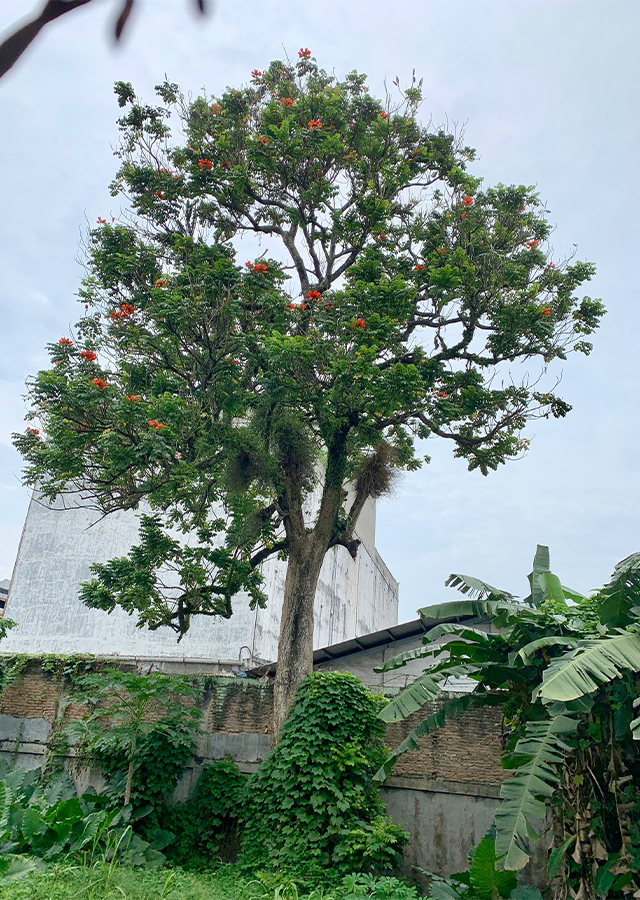
Kecrutan or African tulip tree (Spathodea campanulata) is a tree up to 25-35 meters tall of the Bignoniaceae family, native to the dry tropical forests of Africa, now popular as roadside shade despite often being considered an invasive weed. Its blazing red trumpet-shaped flowers are its main attraction. Kecrutan is traditionally believed to help address malaria, diabetes mellitus, and dysentery.
Agroecology
This plant naturally grows in forests, riverbanks, and thickets, up to elevations of 2,000 m above sea level, pH 5-7.5. This tree does not tolerate strong wind and shade, but needs full sunlight for its growth. Temperature ranges 27-30°C during the day.
Morphology
- Stem up to 60 cm in diameter.
- Bark grayish-brown when young and turning blackish-gray with age.
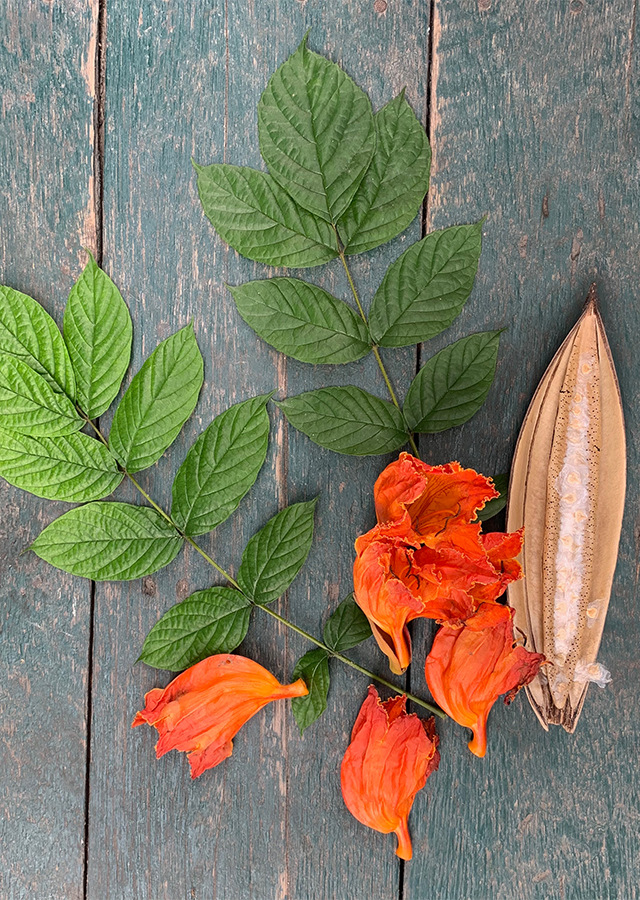
- Leaves have a pinnate compound type, evenly round-shaped and flat leaf edges.
- Flowers compound, orange-red in color, large and striking. Corolla bell-shaped and broad.
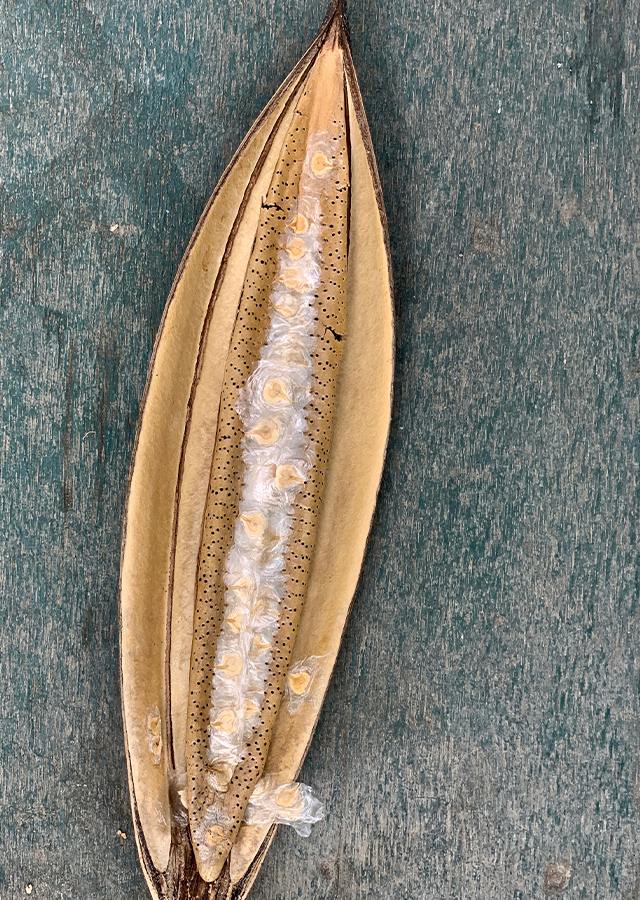
- Fruit blackish-brown in color and has boat-shaped valves.
Cultivation
Propagated using seed, cuttings, grafting, air layering and offsets.
Chemical Content
Alkaloid, flavonoid, saponin, steroid, terpenoid, tannin, glycoside, sterol, cerebroside, iridoid, ketone, phenol, carboxylic acid, benzyl benzoate, geranyl acetone, β-caryophyllene, farnesyl acetone, aromadendrene, tricosane.
Benefits
Remedy for malaria, HIV, diabetes mellitus, edema, dysentery, constipation, digestive disorders, boils, skin disease, wounds, fever, urethral inflammation, antidote, reduces rashes in infants, anti-inflammatory, analgesic, antibacterial, antioxidant, antifungal.
Simplisia
Not yet available.
Local Names
Kiengsrot, Ki acret (Sunda).
Traditional Recipes
The following recipes reflect traditional knowledge passed down through generations, not a substitute for professional medical diagnosis or advice. Consult a healthcare provider before use.
1. Healing wounds
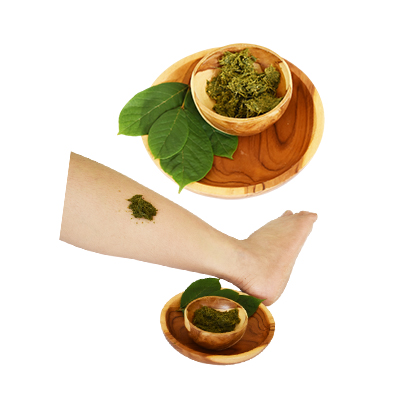
- Prepare kecrutan bark as needed.
- Wash thoroughly.
- Pound into a paste.
- Apply to the wound.
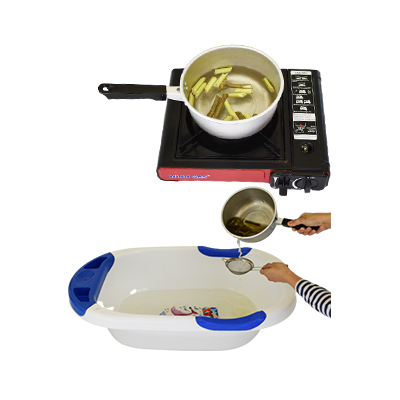
2. Reducing rashes in infants
- Take kecrutan stem as needed, wash thoroughly.
- Prepare water then boil together with the stem then strain.
- Use the concoction for bathing.
Reference Sources
- Boniface PK. 2017. Advances on ethnomedicinal uses, phytochemistry, and pharmacology of Spathodea campanulata P. Beauv. EC. Pharmacol. and Toxicol. 5(2): 51-62.
- CABI. Invasive Spesies Compendium. Spathodea campanulate (African tulip tree) - Invasive Species Compendium. https://www.cabi.org/isc/datasheet/51139 12-06-2020.
- Dhanabalan R, Doss A, Balachandar S, Kezia E, Jagadeeswari M, Karthik H. 2008. In vitro phytochemical screening and antibacterial activity of organic leaf extracts of Spathodea campanulata P. Beauv against hospital isolated bacterial strains. Ethnobot. Leaflets 12: 1022-28.
- Porsea.2018. Spathodea campanulata. https://uses.plantnet-project.org/en/Spathodea_campanulata_(PROTA) 10-12- 2019.
- Kumar SN, Thampi N. 2015. Phytochemical screening and characterization of the bioactive compounds from the leaves of Hyptis suaveolens and Spathodea campanulata. J. Chem. and Pharmaceut. Res. 7(7): 840-850.
- Wagh AS, Butle SR. 2018. Plant profile phytochemistry and pharmacology of Spathodea campanulata P. Beauvais (African tulip tree): A review. Int. J. Pharm. and Pharmaceut. Sci. 10: 1-6.