Sphagneticola trilobata (L.) Pruski
Summary
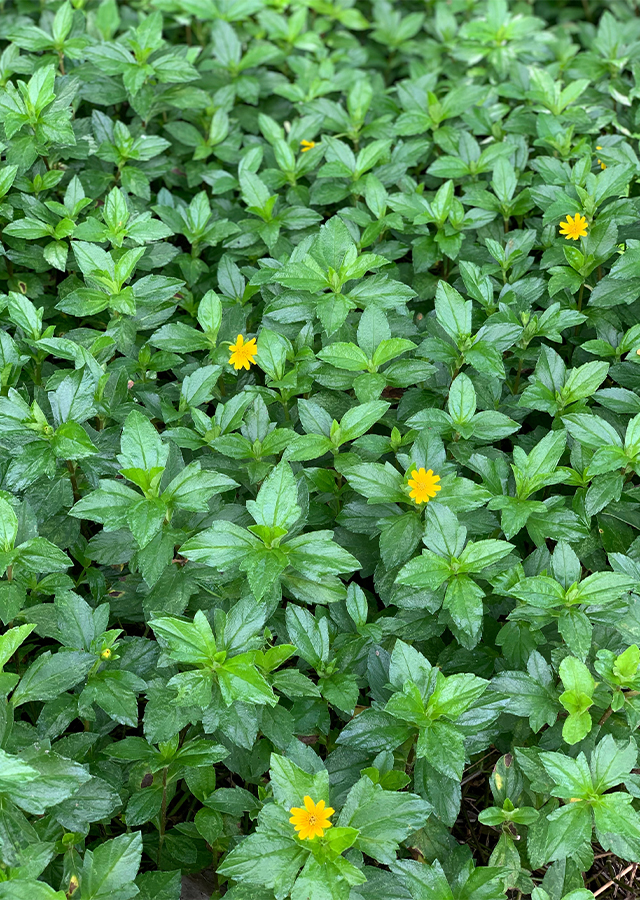
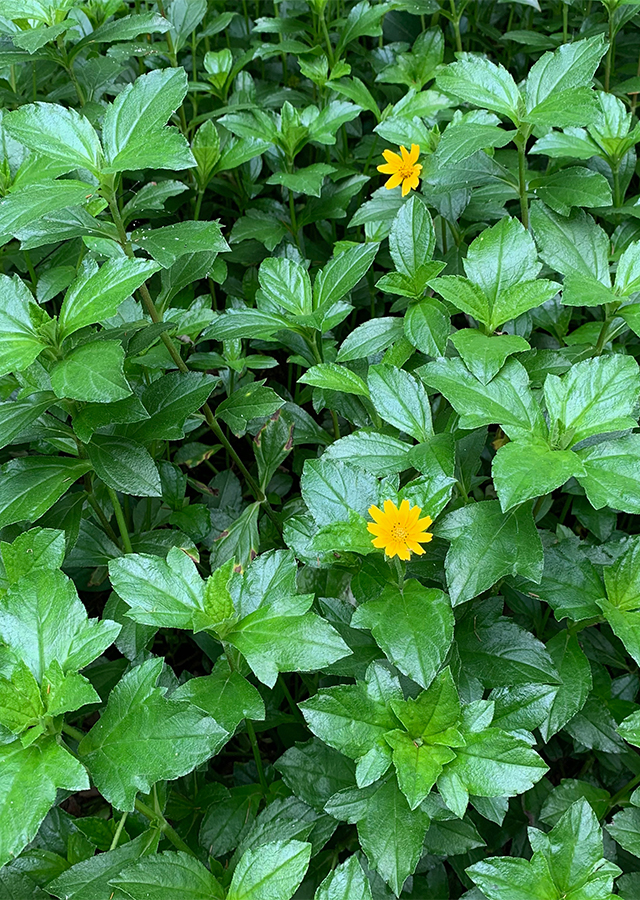
Wedelia (Sphagneticola trilobata) is a creeping herb up to 45 cm tall of the Asteraceae family, native to Central America and the Caribbean islands, now spread throughout nearly all tropical regions. Besides being known for its diuretic properties, this plant is sometimes used in small amounts as a seasoning for fish and turtle meat. Traditionally, wedelia is also believed to relieve hepatitis, malaria, and muscle cramps.
Agroecology
Generally found in wet soil, sometimes in swamps and along coastlines, up to an elevation of 700 m above sea level. Grows well in regions with temperatures around 10-30°C, rainfall of 1,000-2,500 mm/year. Tolerant of high salt concentrations, moist and fertile soil at pH 5.5-7.5, loamy soil, well-drained, waterlogging, and drought. Requires full sun or moderate-intensity shade.
Morphology
- Stem green, round, roots can grow at the plant's nodes.
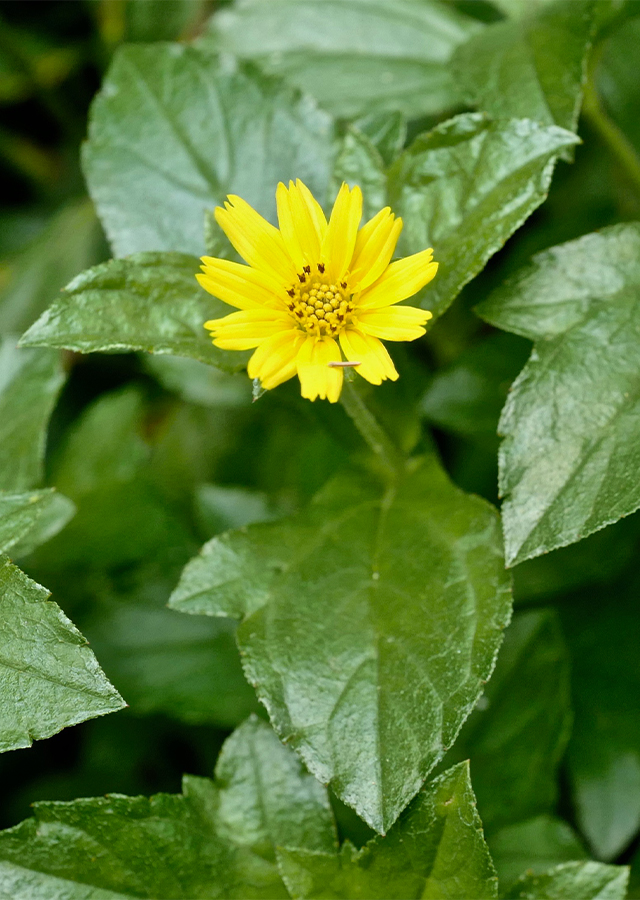
- Leaves green, obovate, 4-9 cm long and 2-5 cm wide, toothed margins, opposite arrangement.
- Flowers solitary, bright yellow, emerging in the leaf axils, stalk 3-10 cm long.
Cultivation
Propagation can be done by offshoot separation and shoot cuttings.
Chemical Content
Alkaloids, flavonoids, saponins, terpenoids, steroids, glycosides, tannins, phenols, amino acids, germacrene D, alpha-phellandrene, alpha-pinene, E-caryophyllene, bicyclogermacrene, limonene, alpha-humulene.
Benefits
Promotes urination; treats hepatitis and malaria; reduces flu symptoms accompanied by a runny nose; eliminates muscle cramps, rheumatism, bruises, back pain, and headache.
Simplisia
Not Yet Available
Local Names
Saruni laut, Widelia (Java, Sunda), Cinga-cinga (Ternate), Widelia (Java).
Traditional Recipes
The following recipes reflect traditional knowledge passed down through generations, not a substitute for professional medical diagnosis or advice. Consult a healthcare provider before use.
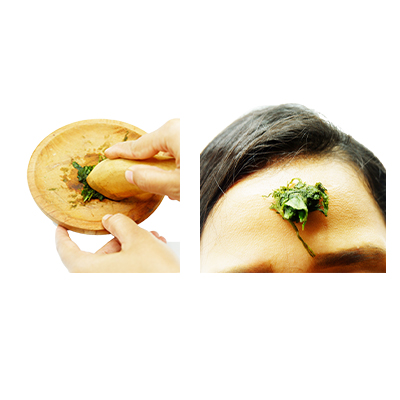
1. Headache
- Wash a sufficient amount of fresh leaves thoroughly.
- Pound until mashed.
- Rub onto the forehead.
2. Severe Cough and Malaria
- Clean a sufficient amount of fresh leaves
- Mash the leaves.
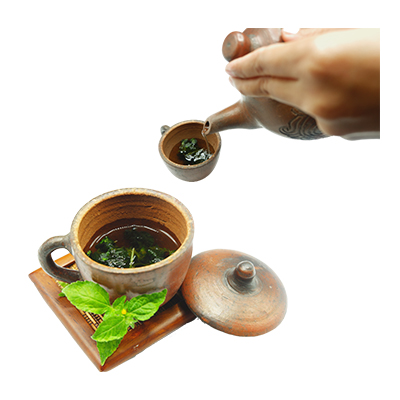
- Steep in warm water. Strain. Drink the mixture.
3. Stopping Bleeding Wounds
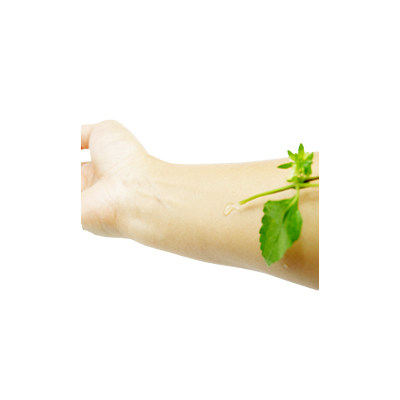
- Collect a sufficient amount of sap from the leaves.
- Apply the sap to the wound.