Spondias dulcis Parkinson
Summary
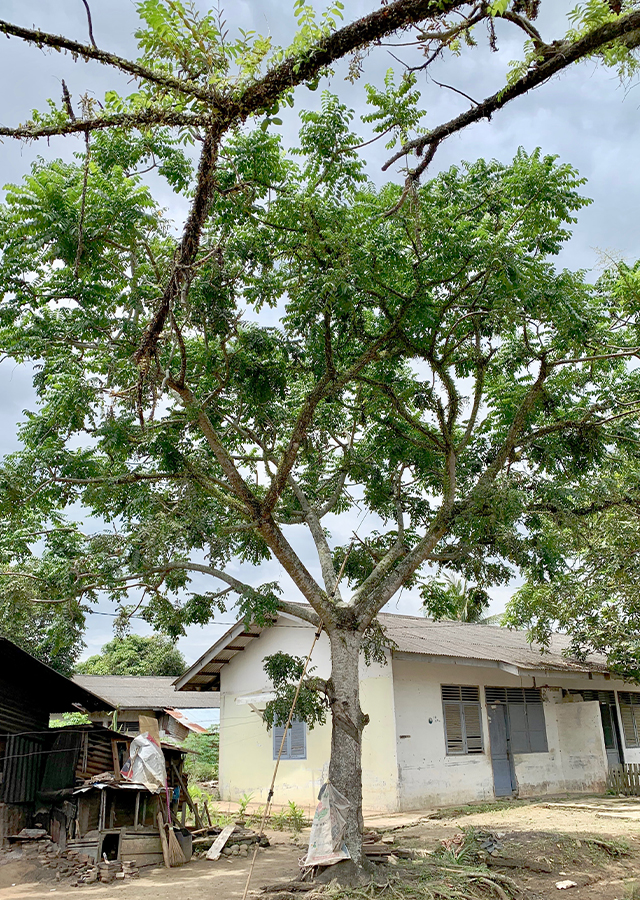
Kedondong (Spondias dulcis) is a tree up to 25 meters tall of the Anacardiaceae family, originating from South and Southeast Asia, including Indonesia, Malaysia, and Vietnam. Its fresh sour fruit is commonly eaten directly or processed into rujak and preserves, while its young leaves are made into a vegetable. Traditionally, kedondong is also believed to maintain digestive health and relieve cough.
Agroecology
Grows well in tropical areas up to an elevation of 700 m above sea level, pH 5.5-6.5, temperature 22-27 °C, and rainfall 900-1,800 mm/year. This plant requires full sunlight.
Morphology
- Roots taproot, dark brown.
- Stem strong, woody and hard textured, round shaped, grows upright, sympodial branching.
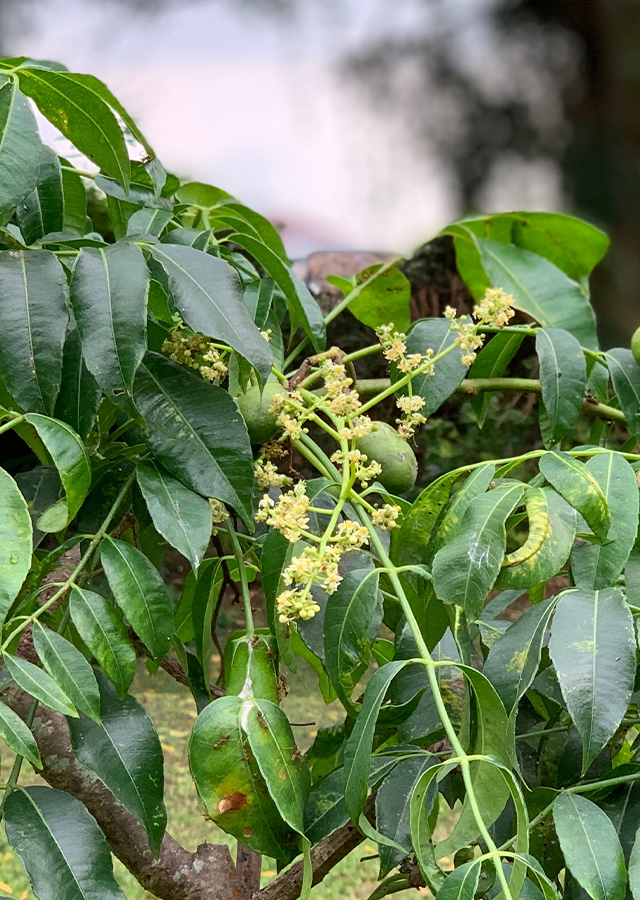
- Leaves compound, pinnate venation, 5-15 leaflets with a tapering leaf tip.
- Flowers compound, panicle-shaped, 2 cm long, yellowish-white in color.
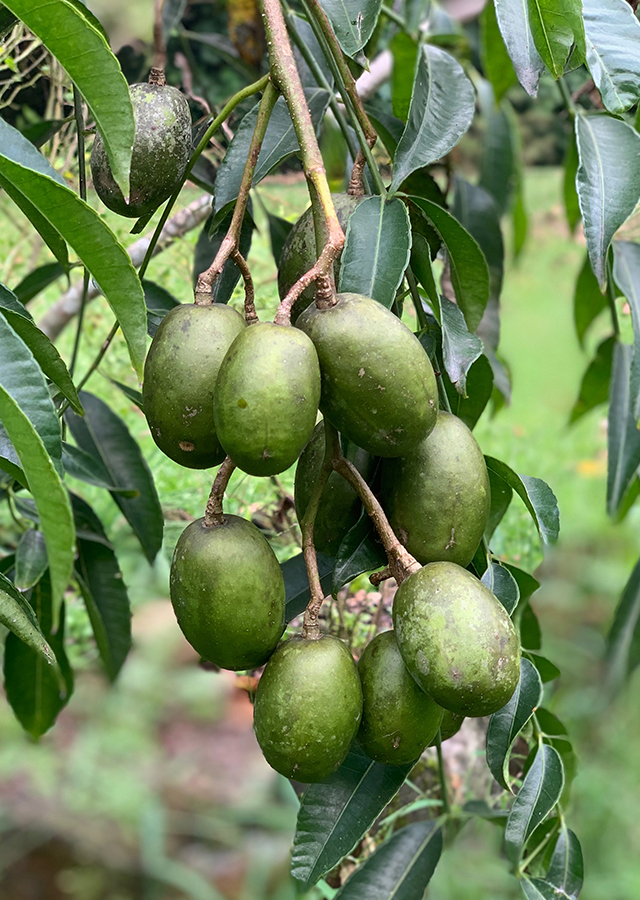
- Fruit round with a fairly thin, skin-like outer wall.
- Seeds round and coarsely fibrous, yellowish-white in color.
Cultivation
Propagated generatively (by seed) and vegetatively (cuttings, air-layering, and graft-budding).
Chemical Content
Alkaloids, saponins, tannins, phenolics, flavonoids, triterpenoids, steroids, glycosides, limonene, pinene, hexanal, ascorbic acid.
Benefits
Maintains digestive health, dysentery, treats burns, cough, reduces fever, boosts immunity, promotes healthy skin, maintains bone health, treats sore throat, high blood pressure, and mouth infections.
Simplisia
- Prepare fresh kedondong leaves then wash thoroughly with running water.
- Cut the leaves into pieces then dry in an oven at ± 50 °C until the moisture content reaches 10%.
- Once dry, grind the leaves using a blender into a coarse powder.
- Pack in a clean, closed container.
Local Names
Kadondong (Sunda), Kedundung (Madura), Kacemcem (Bali), Inci (Bima, NTT), Karunrung (Makassar), Dau kaci (Bugis).
Traditional Recipes
The following recipes reflect traditional knowledge passed down through generations, not a substitute for professional medical diagnosis or advice. Consult a healthcare provider before use.
1. Dysentery
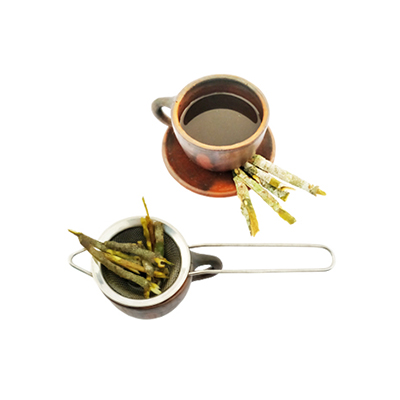
- Wash 5 g fresh kedondong bark thoroughly then cut into pieces.
- Boil with 2 glasses of water for 25 minutes.
- Cool the concoction then strain.
- Drink the strained liquid all at once.
Reference Sources
- Fernandes FHA, Boylan F, Salgado HRN. 2018. Quality standardization of herbal medicines of Spondias dulcis Parkinson using analytical and microbiological analysis. J Therm Anal Calorim 134: 1923–1928.
- Hasanah N, Handayani A. 2019. Uji toksisitas dan uji fitokimia ekstrak daun Kedondong (Spondias dulcis Parkinson). Edu Masda Journal 3(1): 13-23.
- Balqis U, Masyitha D, Febrina F. 2014. Proses penyembuhan luka bakar dengan gerusan daun Kedondong (Spondalis dulcis F.) dan vaselin pada tikus putih (Rattus norvegicus) secara hispatologis. Jurnal Medika Veterinaria 8(1): 9-14.
- Prosea. 2016. Spondias dulcis. https://uses.plantnet-project.org/en/Spondias_cytherea_(PROSEA) 10-12-2019.