Stelechocarpus burahol (Blume) Hook.f. & Thomson
Summary
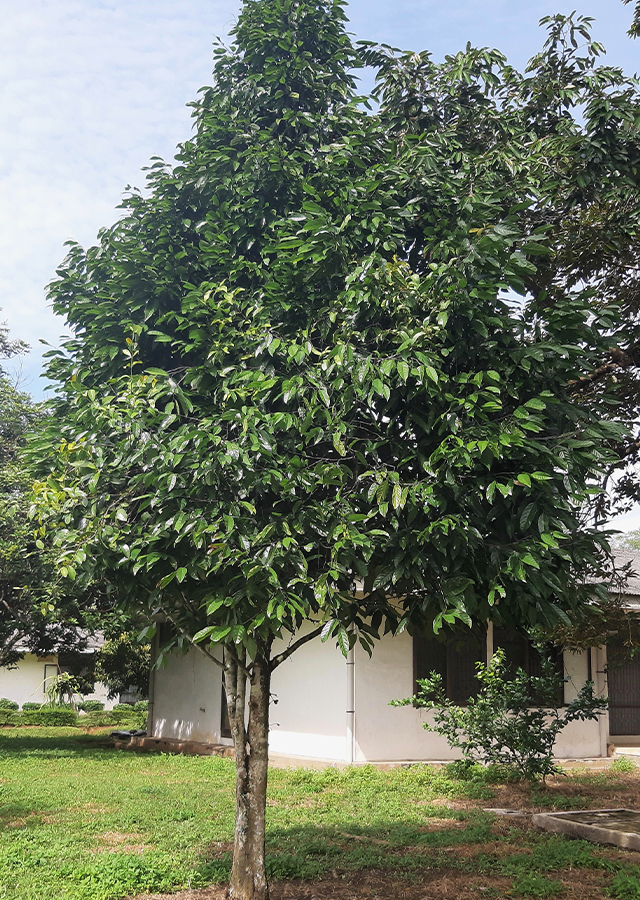
Kepel (Stelechocarpus burahol) is a rare tree up to 25 meters tall of the Annonaceae family, a plant native to Indonesia now the identity flora of the Special Region of Yogyakarta. In the past, its fruit could only be planted by royal court circles and was used by court princesses as a natural body odor remover. Kepel is also traditionally believed to be anti-inflammatory and help lower uric acid levels.
Agroecology
This plant is found in secondary forests of tropical lowlands up to elevations of 600 m above sea level. Prefers sandy soil with high organic matter content and full sunlight conditions. Usually grows well among bamboo clumps.
Morphology
- Roots taproot, no buttress roots.
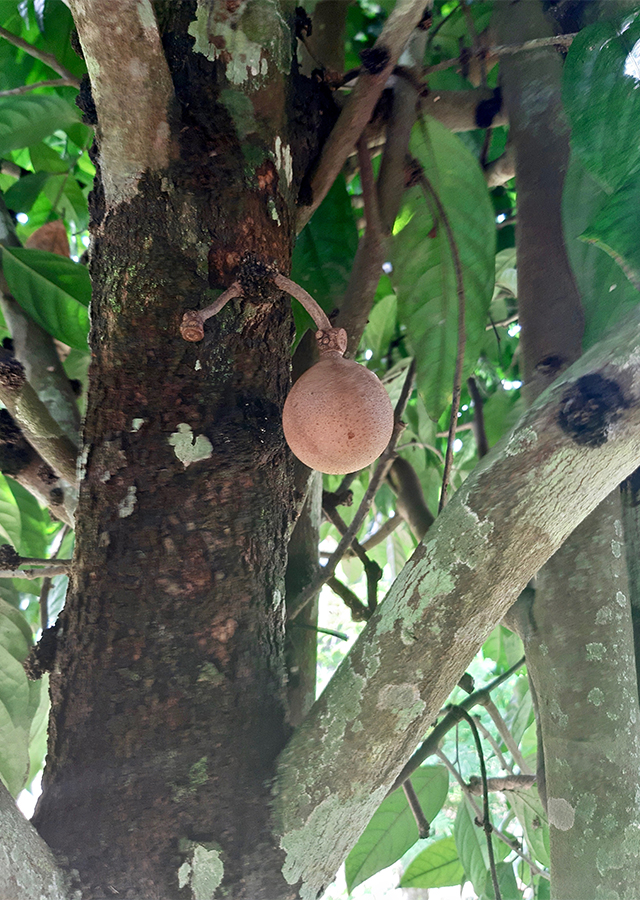
- Stem dark grayish-brown to black, monopodial branching, has bumps from where fruit previously grew.
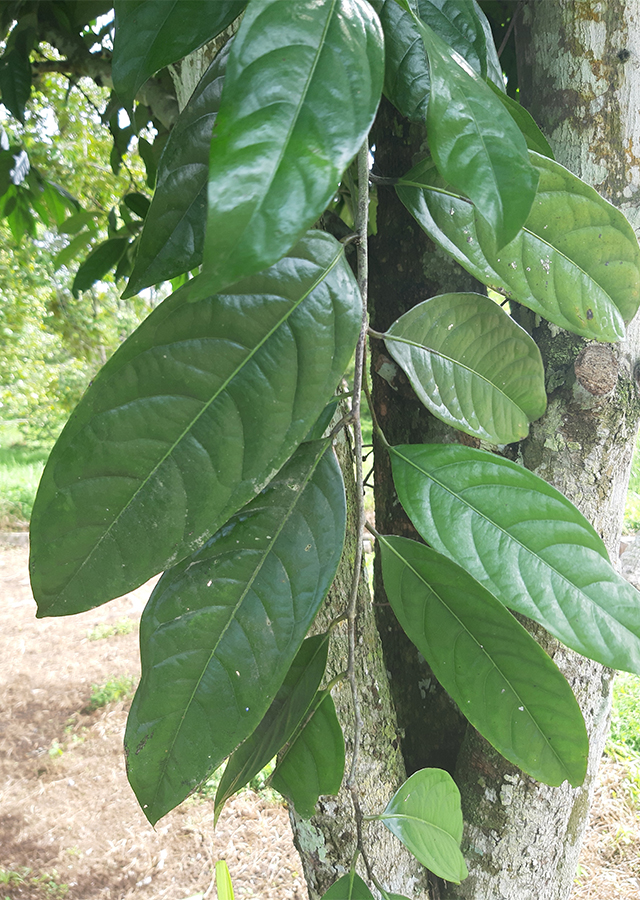
- Leaves single, elliptical-oblong to egg-shaped-lance-shaped, smooth edges, tapering tip, dark green, hairless.
- Flowers monoecious, male flowers clustered (at the top and on old branches), female flowers (at the stem base), fragrant, hairless or slightly hairy.
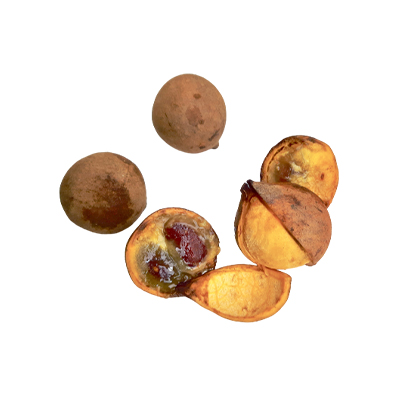
- Fruit round-oblong with a somewhat tapering base, brown (ripe), brown pericarp containing edible fruit pulp.
- Seeds 4-6 per fruit, elliptical, 3.25 cm long.
Cultivation
- Generative propagation (by seed) and vegetative (stem cuttings).
- Seeds are sown, transplanted to a polybag nursery, seedlings 50 cm tall can be planted in the field with a spacing of 6 x 6 m or 4 x 4 x 4 m.
Chemical Content
Flavonoids (3,7,3',4'-tetrahydroxy-5-methyl flavone), alkaloids, terpenoids, kaempferol-3-O-rhamnoside, polyphenols and quinones.
Benefits
- Anti-inflammatory, removes bad breath and body odor, antidiuretic, kidney inflammation remedy, lowers uric acid levels, antioxidant, contraception, prevents cancer.
Simplisia
Not yet available.
Local Names
Kecindul, Cindul, Simpol, Burahol, and Turalak.
Traditional Recipes
The following recipes reflect traditional knowledge passed down through generations, not a substitute for professional medical diagnosis or advice. Consult a healthcare provider before use.
1. Gout
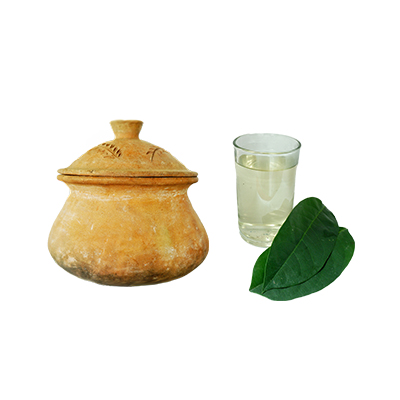
- Boil 7 kepel leaves with 3 glasses of water until it boils and 1 1/2 glasses of water remain. Divide into 2 equal portions.
- Drink twice a day.
2. Kidney Inflammation Remedy
- Prepare ± 1 ripe kepel fruit, wash the fruit thoroughly.
- Eat the kepel fruit flesh directly.
Reference Sources
- Acuan Sediaan Herbal Volume 4 Edisi Pertama. 2008. Badan Pengawas Obat dan Makanan (Asam Urat)
- Widyaningrum H., Tim Solusi Alternatif. 2019. Kitab tanaman obat nusantara. Cet. ke-2. Yogyakarta: Media Pressindo (Obat Radang Ginjal)