Stenochlaena palustris (Burm.f.) Bedd.
Summary
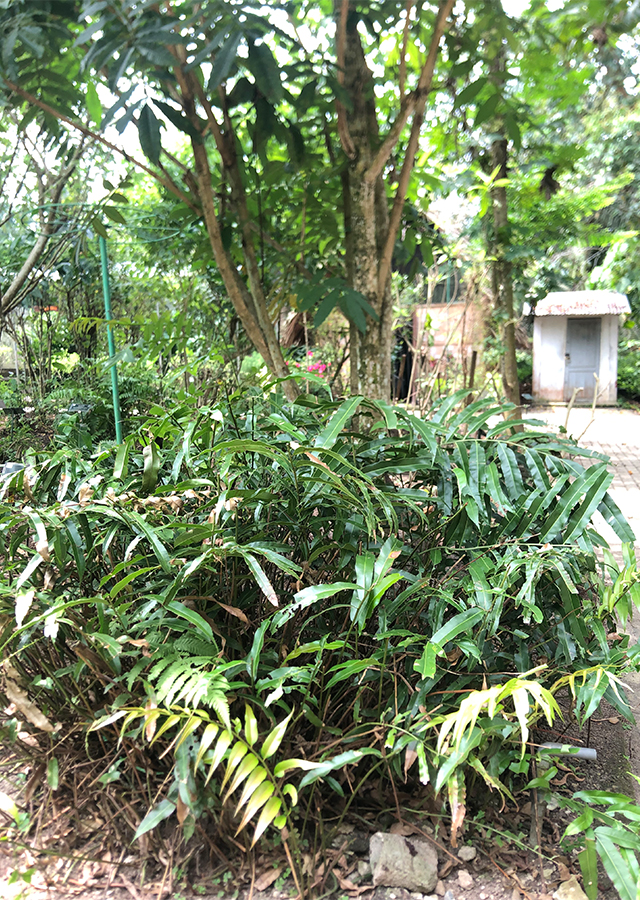
Stenochlaena palustris or shrimp fern is distributed from India, throughout Southeast Asia, to Australia and Polynesia, though generally only grown on a small scale in home hedges. Its pink, crunchy young leaves, tasting similar to spinach, are highly favored as a raw vegetable side dish in Java, while its black rhizome is often used as wig material for thinning hair or as a rattan substitute for tying baskets. In Sumatra, this vegetable is even consumed as a natural laxative, besides its traditional efficacy for reducing fever and treating skin diseases.
Agroecology
Stenochlaena palustris is usually found in somewhat wet soil in freshwater swamp forests, behind mangrove forests, along rivers, marshes, on floating vegetation, lowland rainforest, and also found in drier, flood-free places from sea level up to elevations of 300 m asl, and 900 m asl in Java. In Thailand and Papua New Guinea, this plant is found in lowlands and low hills up to elevations of 300-400 m asl. Generally this plant is an epiphyte that climbs and reaches high in periodically waterlogged areas, where the lower rhizome is often submerged. Tolerant of full sun, but prefers partial shade conditions. In warm-climate regions, this plant will grow easily, provided there is sufficient light and moisture.
Morphology
- Rhizome green, long-creeping, dark. With dark brown to black scales, coiled, ovate-lanceolate shaped, small, most prominent growing at the tip, fully covering the tip. Can attach to tree trunks using adhesive roots.
- Stem brown, smooth, less than 1 cm in diameter and sparsely branched.
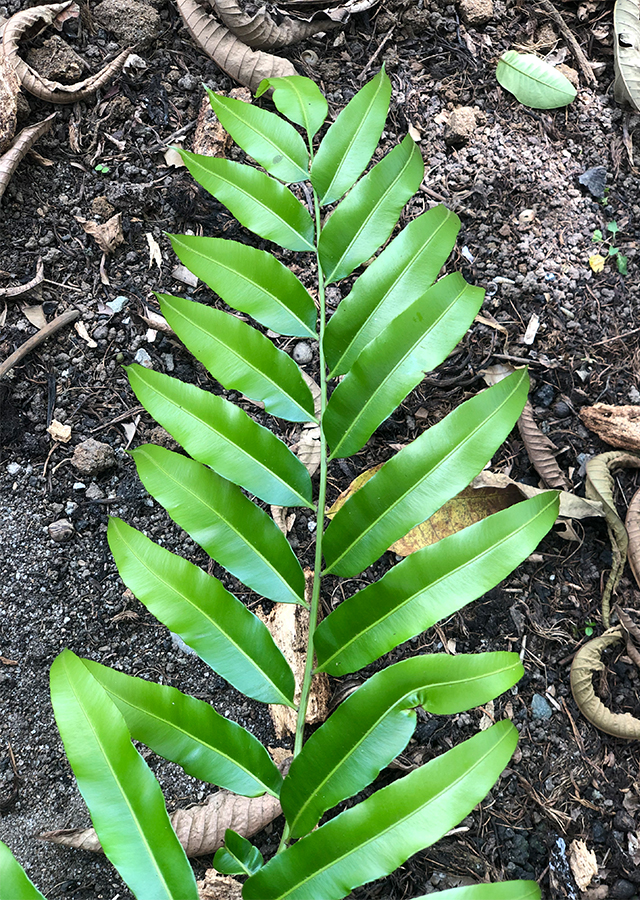
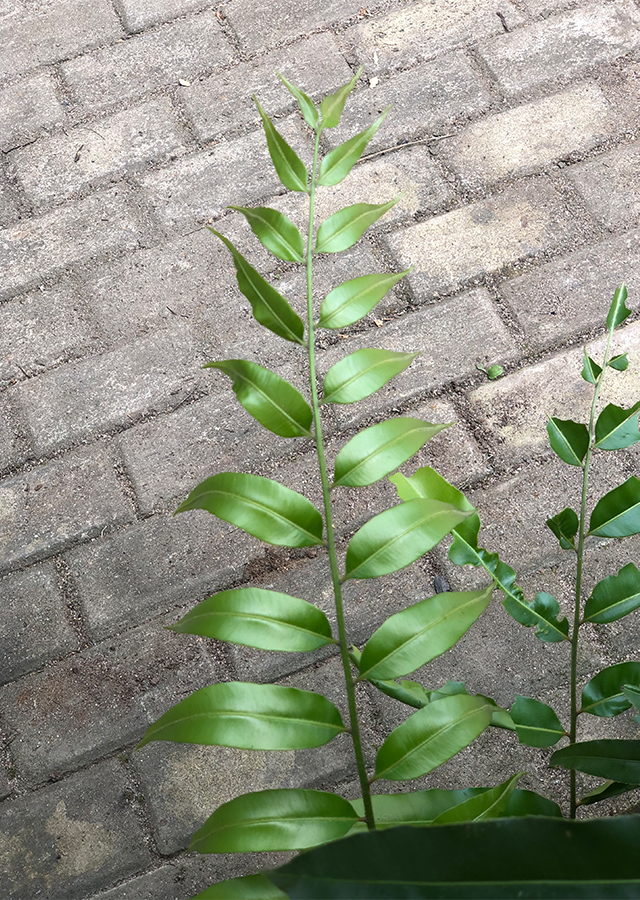
- Leaves (fronds) pinnately compound, red on young leaves, while mature leaves are bright green to dark green, glossy, hairless although young plants may have some scales and pale short hairs throughout. There are two types of fronds, sterile fronds and fertile fronds. Sterile fronds have wider blades, spear-shaped to broadly spear-shaped with toothed margins, while fertile fronds are very narrow, tending to droop, about 20 cm long, 0.3 cm wide with smooth margins. Both types can grow up to 80 cm, having 8-15 pairs of leaflets and 1 terminal leaflet.
- Sori long and linear shaped, found on each side of the frond almost covering the entire width of the leaflet. Tend to only be produced on the upper part of the plant from fertile fronds. Spores bilateral, colorless, translucent, papillose-verrucose.
Cultivation
Plant propagation with spores but easier with rhizome cuttings.
Chemical Content
Five flavonol glycosides (stenopalustroside A-E), kaempferol 3-O-(3''-O-E-p-coumaroyl)-(6''-O-E-feruloyl)-β-D-glucopyranoside (6), kaempferol 3-O-(3'',6''-di-O-E-p-coumaroyl)-β-D-glucopyranoside, kaempferol 3-O-(3''-O-E-p-coumaroyl)-β-D-glucopyranoside, kaempferol 3-O-(6''-O-E-p-coumaroyl)-β-D-glucopyranoside, kaempferol 3-O-β-D-glucopyranoside, alkaloids, flavonoids, glycosylglucose, lipid derivatives, saponins, steroids, and terpenoids.
Benefits
Reduces fever, treats skin disease, acne, boils, stomachache, testicular atrophy, heals wounds, infections and diabetes, a laxative and contraceptive remedy.
Local Names
Pakis bang (Jawa), Paku hurang (Sunda), Paku merah (Kalimantan, Maluku), Kelakai.
Traditional Recipes
The following recipes reflect traditional knowledge passed down through generations, not a substitute for professional medical diagnosis or advice. Consult a healthcare provider before use.
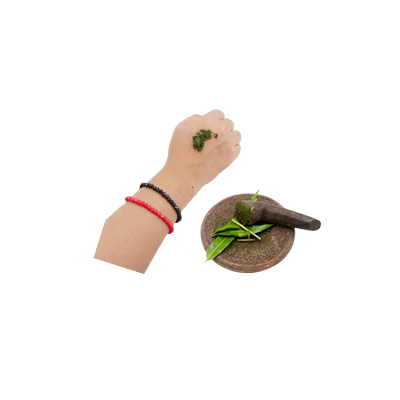
1. Heals wounds
- Take an adequate amount of fresh shrimp fern leaves and wash until clean.
- Grind until it becomes a paste.
- Apply as a poultice on the wounded area.
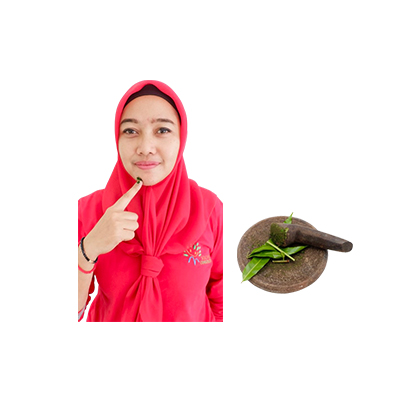
2. Treats acne
- Prepare an adequate amount of fresh shrimp fern leaves and stems and wash until clean.
- Pound finely until it becomes a paste.
- Apply to acne-affected skin.
Reference Sources
- Stenochlaena palustris (Burm.f.) Bedd. | Plants of the World Online | Kew Science
- Stenochlaena palustris - Useful Tropical Plants (theferns.info)
- PROSEA - Plant Resources of South East Asia (prota4u.org)
- Diliman, Stenochlaena palustris, CLIMBING swamp FERN/ Alternative Medicine (stuartxchange.com)
- NParks | Stenochlaena palustris