Sterculia foetida L.
Summary
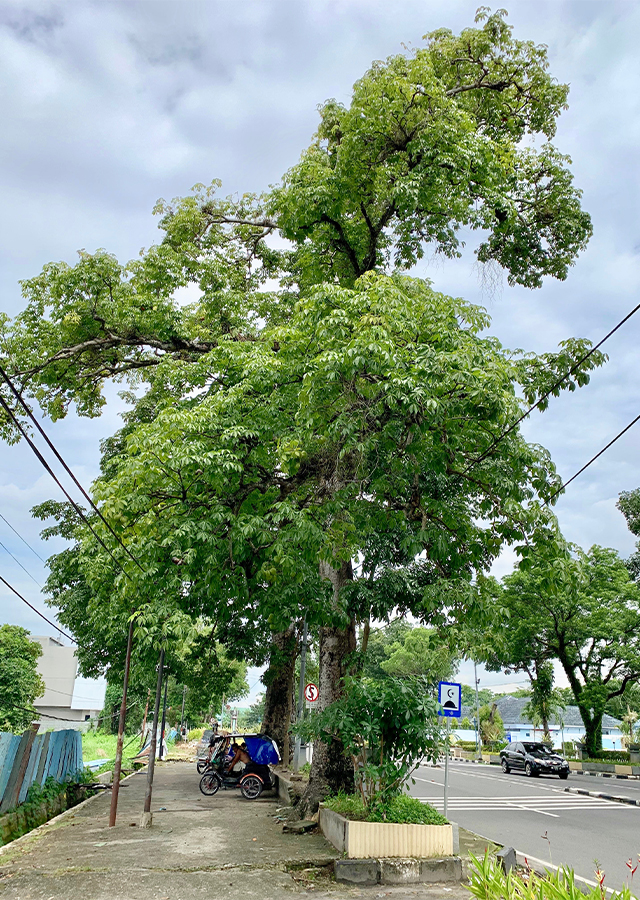
Kepuh (Sterculia foetida) is a giant tree growing up to 40 meters tall of the Malvaceae family, native to tropical Africa, distributed as far as Southeast Asia and Australia. Its massive trunk is used to make matchsticks, coffins, and boats, while its seeds produce lamp oil and batik wax. Kepuh leaves are traditionally believed to treat fever and ease bone fractures.
Agroecology
Kepuh is found in lowland and coastal areas at elevations of 0-400 m above sea level, with an annual temperature of 18-32°C, average rainfall of 1,100-1,800 mm/year, prefers soil with a deep solum, fertile, moist and well-drained with a pH of 6-7.5 with full sunlight.
Morphology
- Root stilt roots and buttress roots.
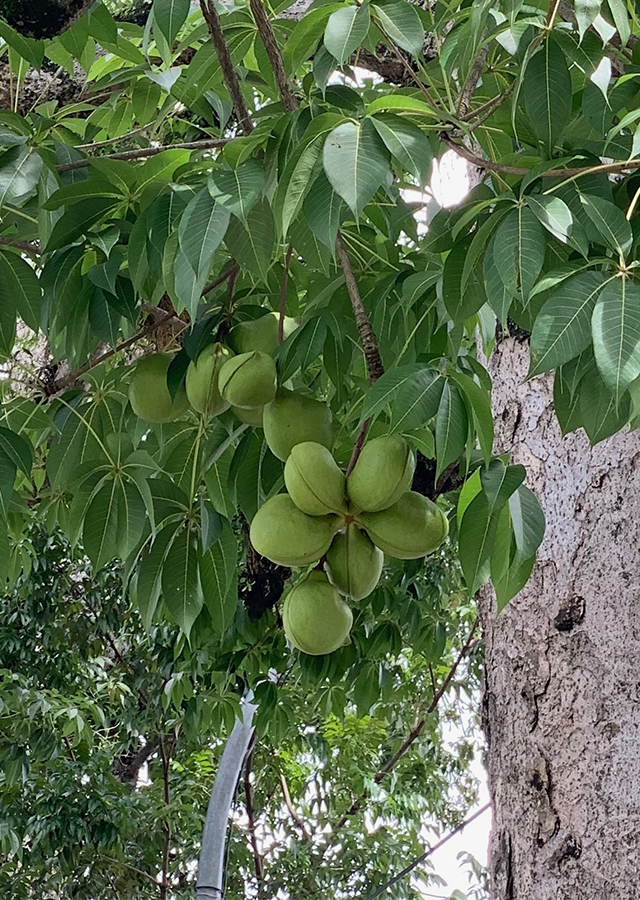
- Leaves palmately compound, stalked and clustered at the twig tips. Leaflets number 7-9, oval-oblong, tip and base tapering.
- Flowers compound in panicles near the twig tip, green or pale purple, sepals divided into 5 like a corolla.
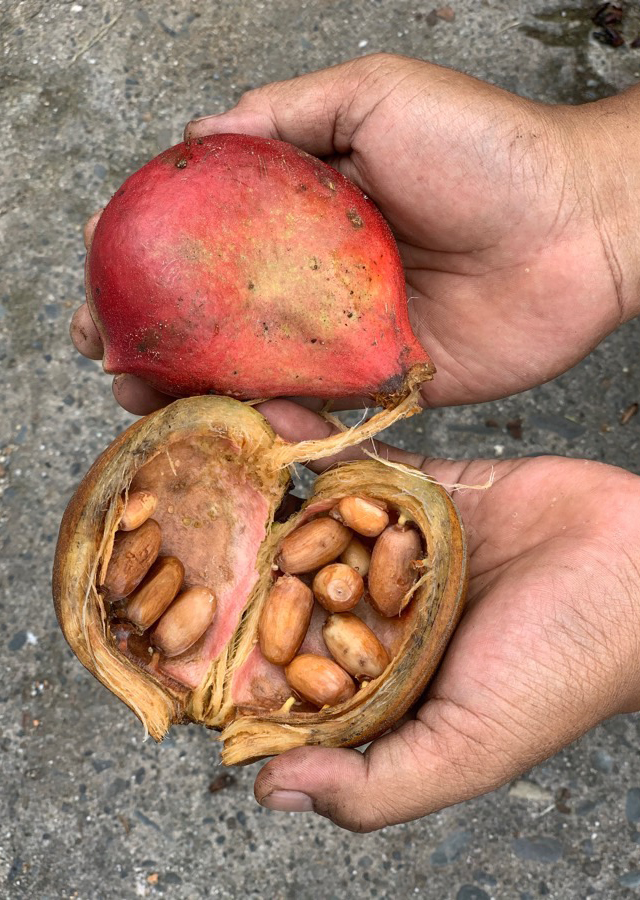
- Fruit a large follicle, plump oblong, thick-skinned, bright red, clustered in a star-shaped arrangement.
- Seeds 10-15 per fruit, blackish, attached with a yellow aril.
Cultivation
Propagated through fallen seeds in relatively wet or waterlogged soil conditions until small shoots form.
Chemical Content
Seed flesh: oleic acid, linoleic acid, palmitic acid, myristic acid, cyclopropene fatty acids (CPFA) such as 8,9 methylene-heptadec-8-enoic acid (malvalic acid) and sterculic acid (9,10-methylene-ocadec-9-enoic acid).
Benefits
- Leaves: treats fever, hair wash, poultice to ease pain in sprained or fractured limbs.
- Bark: abortifacient.
Simplisia
Not yet available.
Local Names
Halumpang (Batak), Koleangka (Sunda), Kepoh, Jangkang (Java), Jhangkang, Kekompang (Madura), Kepuh, Kepah, Kekepahan (Bali) Bungoro, Kalumpang (Makassar), Kailupa furu, Kailupa buru (North Maluku).
Traditional Recipes
The following recipes reflect traditional knowledge passed down through generations, not a substitute for professional medical diagnosis or advice. Consult a healthcare provider before use.
1. Fever
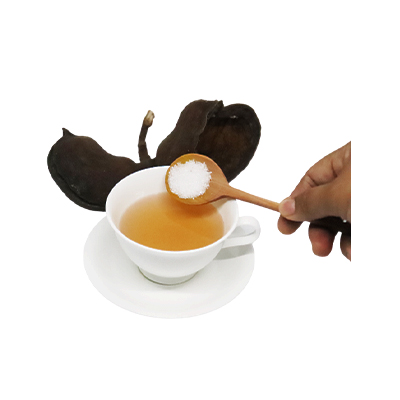
- Prepare 20 g dried kepuh fruit rind. Cut the rind into small pieces, then boil with 1 glass of water for 15 minutes. Cool and strain.
- Add 1 tbsp sugar to the concoction, stir evenly and drink all at once.
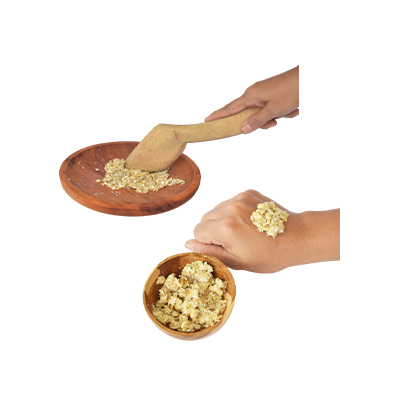
2. Removing itching
- Wash 1 kepuh fruit thoroughly.
- Heat the kepuh fruit.
- Mash then apply to the itchy area.
- Apply 1-2 times a day, leave for 15-30 minutes a day.
Reference Sources
- Konservasi Kepuh (Sterculia foetida L.) di Kabupaten Sumbawa Nusa Tengara Barat. Metananda, dkk, 2016. https://repository.ipb.ac.id/handle/123456789/83110 24-08-2020
- Potensi Ganda Tumbuhan Hutan Pohon Kepuh (Sterculia foetida linn). Ridhawati, 2015. http://rimbawan2013hut4a.blogspot.com/2015/04/potensi-ganda-tumbuhan-hutan-pohon.html 07-07-2020
- FORDA.mof.org. https://www.forda-mof.org/files/buku_2_kepuh.pdf 31-01-2021
- Badan penelitian dan pengembangan kesehatan. 2001. Inventaris tanaman obat indonesia (I) jilid 2. depkes. (Obat demam)
- Hariana Arief, dkk. 2015. Kitab Resep Herbal : menghilangkan gatal. https://books.google.co.id/books?id=OCHgCgAAQBAJ&pg=PA148&lpg=PA148&dq=arief+hariana+kepuh&source=bl&ots=TO3kFEsDMG&sig=ACfU3U3ymPnwMT-9M3bDaYlDfHUTCyBUig&hl=id&sa=X&ved=2ahUKEwi6hOr-zcruAhWM6nMBHYcvCfcQ6AEwCHoECAcQAg#v=onepage&q=arief%20hariana%20kepuh&f=false 15 -08-2020