Strobilanthes auriculata var. dyeriana (Mast.) J.R.I.Wood
Summary
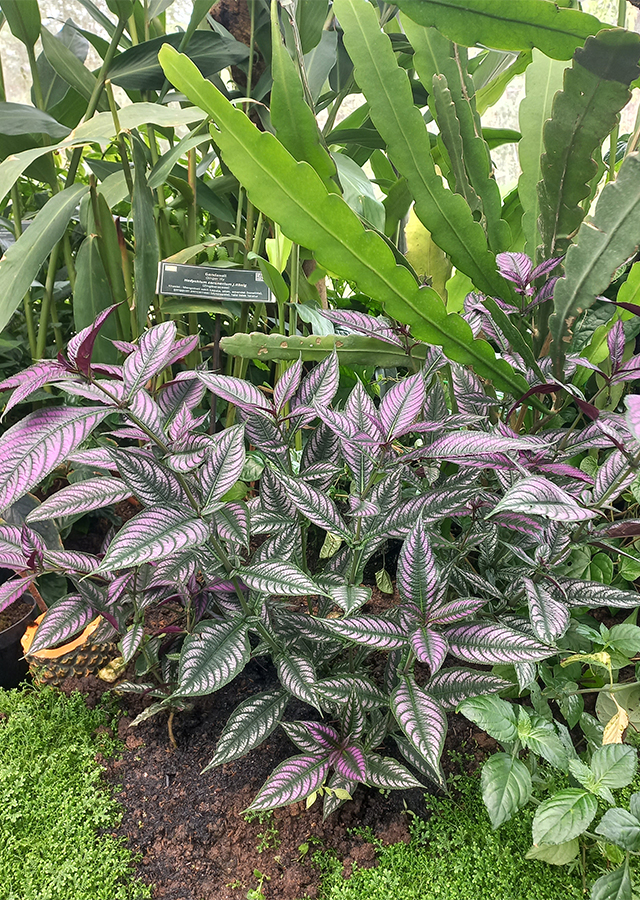
Persian shield (Strobilanthes auriculata var. dyeriana) is a shrub 0.9-1.2 meters tall from the Acanthaceae family native to Myanmar and Thailand, distributed as far as Pakistan and China. Its beautiful purplish leaf color makes it a popular tropical ornamental. Persian shield is traditionally believed to be diuretic and helps relieve rheumatism.
Agroecology
Persian shield prefers fertile soil, rich in organic matter, well-drained, with a pH range of 5.5-7.5. Requires full sun to partial shade, temperature of 15°C, high humidity. Keep the soil moist, water when the top layer of soil is dry.
Morphology
- Roots taproot, brown.
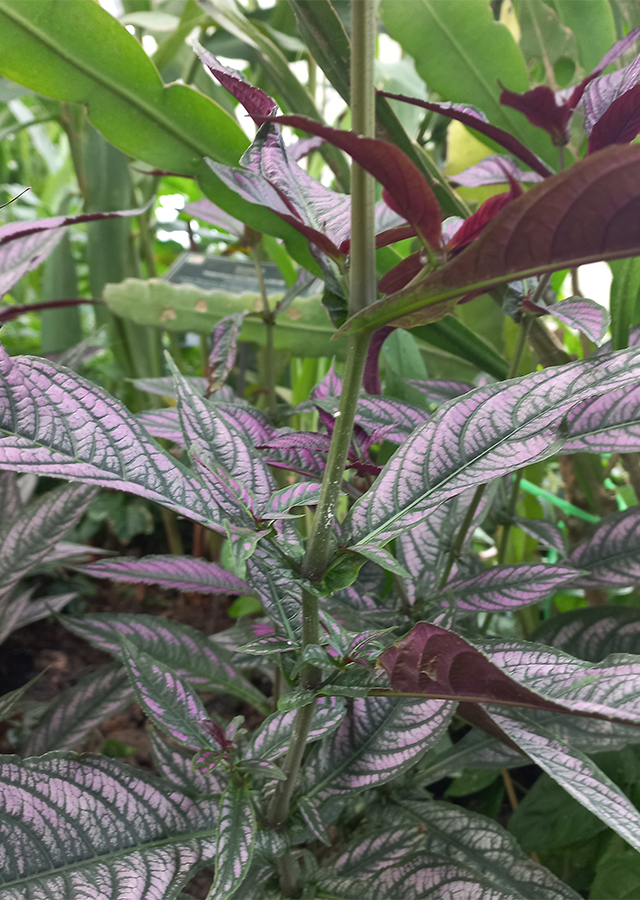
- Stem soft, square-shaped on the surface, woody, purplish green.
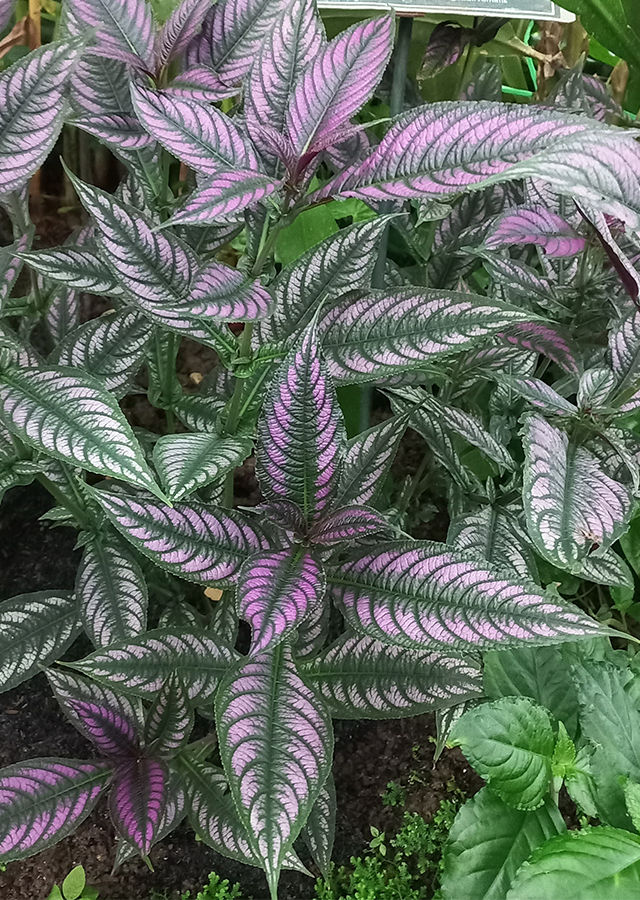
- Leaves variegated in color, dark green with pink or dark purple spots above when young, becoming whitish on older leaves, elliptic, 12-30 cm long, tapering and usually with a sessile auriculate base, margin serrate, apex tapering, upper surface sparsely hairy.
- Flowers purple, funnel-shaped with 5 lobes arranged in a short, cone-like inflorescence.
- Fruit a capsule, round, enclosed by a light brown calyx.
- Seeds kidney-shaped, small, about 1 mm in diameter, brown.
Cultivation
Easily propagated from seed or cuttings, but cuttings work best. For cuttings, choose a stem 16 cm long and remove all leaves except the topmost. Place the cut end into a glass of water or your preferred moist rooting medium. If using water, change the water daily. In a rooting medium, keep it evenly moist. Place your plant in a shaded location where it still gets indirect light, and ensure humidity is maintained around the plant (a plastic bag placed over it can help with this). This will develop roots within 2-5 weeks depending on the vigor of the plant and the season.
Chemical Content
Saponins, polyphenols, and flavonoids.
Benefits
Diuretic and a remedy for rheumatism.
Simplisia
- Prepare Persian shield leaves, wash clean with running water then drain.
- Dry under the sun or with an oven at 40°C until the moisture content reaches 10%.
- Grind using a blender until it becomes powder, then sift with a 60 mesh sieve.
- Store in a clean, airtight container.
Local Names
Information not found. Further research is needed.
Traditional Recipes
The following recipes reflect traditional knowledge passed down through generations, not a substitute for professional medical diagnosis or advice. Consult a healthcare provider before use.
1. Diuretic
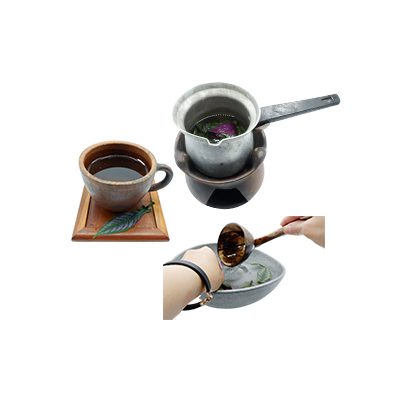
- Wash 10 g of fresh Persian shield leaves clean with running water.
- Boil the leaves with 2 glasses of water for 25 minutes.
- Let it cool then strain.
- Drink the strained result.
Reference Sources
- Royal Botanic Gardens. 2017. Plants of the World Online: Strobilanthes auriculata var. dyeriana (Mast.) J.R.I.Wood. http://powo.science.kew.org/taxon/urn:lsid:ipni.org:names:20011952-1. 10-10-2021.
- Flora Fauna Web. 2020. Strobilanthes dyerianus Mast. https://www.nparks.gov.sg/florafaunaweb/flora/2/4/2481. 10-10-2021.
- Epic Gardening. 2021. Persian Shield: Caring For Strobilanthes dyeriana. https://www.epicgardening.com/persian-shield/. 10-10-2021.
- Widyaningrum, H. dan Tim Solusi Allternatif. 2019. Kitab Tanaman Obat Nusantara. Media Pressindo (Anggota IKAPI). Yogyakarta.