Strobilanthes crispa (L.) Blume
Summary
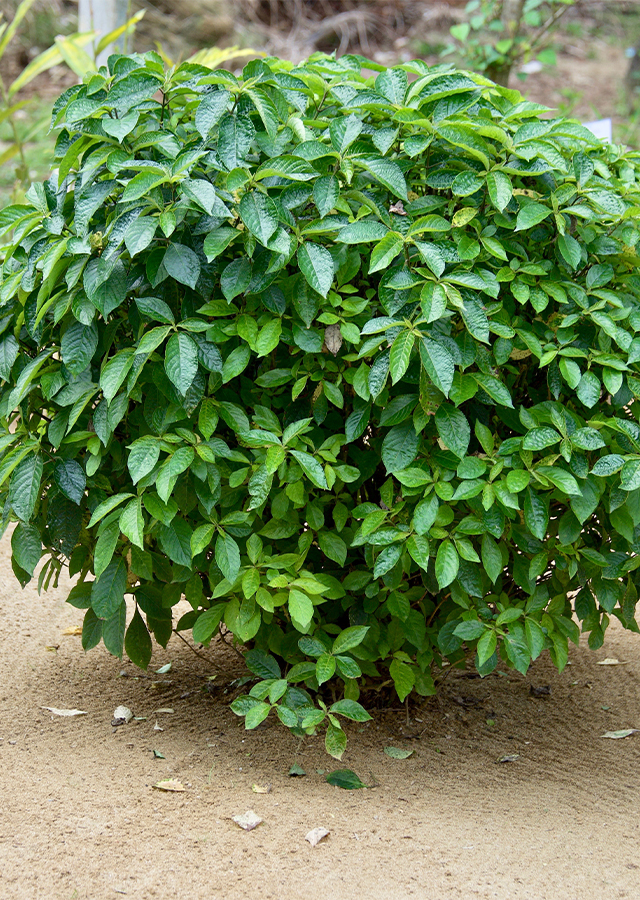
Kejibeling (Strobilanthes crispa) is a shrub up to 1 meter tall of the Acanthaceae family, originating from Madagascar and spreading to Indonesia and Malaysia. Its leaves with a distinctive crinkled texture are commonly eaten as a fresh vegetable and planted as a yard hedge. Kejibeling is traditionally believed to help dissolve kidney stones and control cholesterol levels.
Agroecology
Grows well at elevations of 50-1,200 m above sea level, annual rainfall 2,500-4,000 mm/year, sandy to clay soil texture, pH 5.5-7. Prefers open places. Found growing wild in forests, riverbanks and sometimes planted in yards.
Morphology
- Roots taproot, light brown in color.
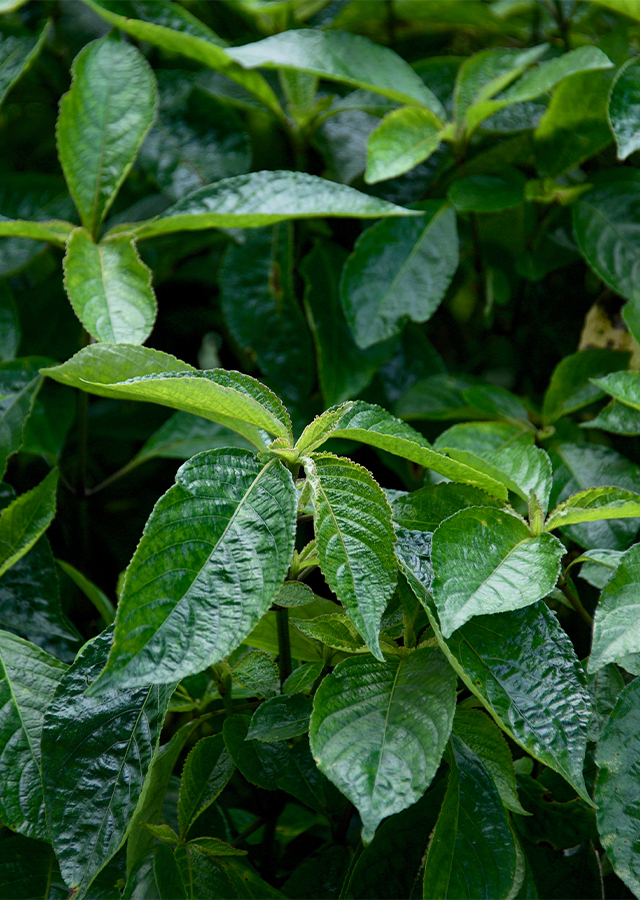
- Stem jointed, round shaped, coarsely hairy surface, green.
- Leaves single, arranged opposite with short stalks, leaf blade lance-shaped, pinnate venation, serrated edges, tapering tip and base, rough surface.
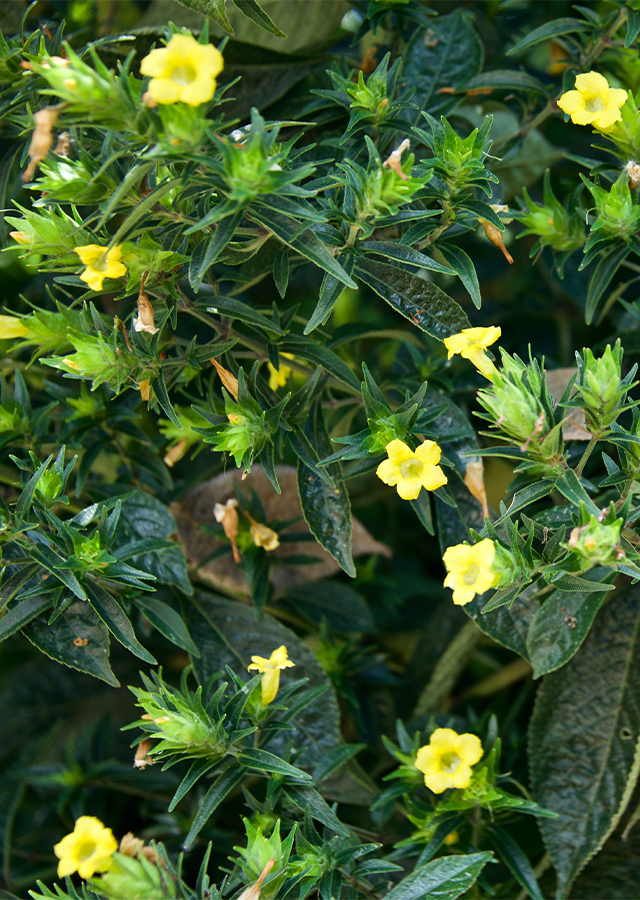
- Flowers compound, funnel-shaped, yellow or purple in color.
- Seeds round, flat, small, brown in color.
Cultivation
- Propagated vegetatively (cuttings).
- Cutting the stem for cuttings from a mature branch, cut 20-25 cm long. The resulting stem cuttings can be planted directly in the soil at a depth of 6-8 cm.
- Harvesting is done by pruning the plant's shoot part 20-30 cm long.
Chemical Content
Alkaloids, tannins, saponins, flavonoids, polyphenols (tocopherol, cinnamic acid, phosphatide), catechin, caffeine, silicic acid, silicic acid.
Benefits
Dysentery remedy, diarrhea, kidney stones, diabetes, fever, cholesterol reducer, antioxidant, antibacterial, hemorrhoids, treats venomous snake bites, diuretic, cures leukemia, prevents AIDS.
Simplisia
- Select kejibeling leaf shoots and wash thoroughly.
- Arrange on a tray and air-dry for several days.
- Store in an airtight plastic bag.
Local Names
Kecibeling, Picah beling (Betawi), Sambang geteh (Java), Reundeu beureum (Sunda), Lire (Ternate).
Traditional Recipes
The following recipes reflect traditional knowledge passed down through generations, not a substitute for professional medical diagnosis or advice. Consult a healthcare provider before use.
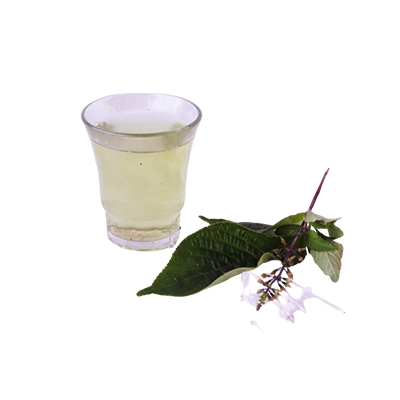
1. Kidney Stones
- Wash 10 g kejibeling leaves, 20 g cat's whiskers leaves, 10 g hibiscus leaves, and 3 g jasmine leaves thoroughly.
- Boil all ingredients with 600 ml water until it boils and the water is reduced to 200 ml.
- Drink the concoction 3 times a day and then drink at least 1 liter of water in a day.
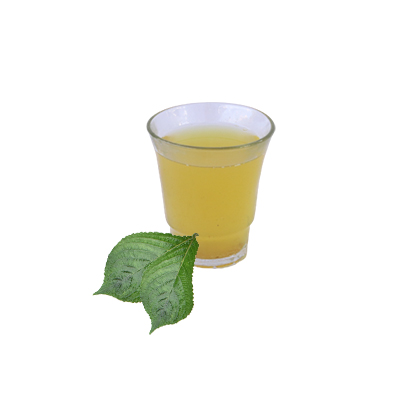
2. Hemorrhoids
- Clean 6 g kejibeling leaves, 6 g chanca piedra leaves, 3 g temulawak rhizome.
- Boil all ingredients with 4 glasses of water adding 1 g tamarind until it boils for 15 minutes, cool.
- Drink 3 times a day, 1/2 glass each time. Treat for 5 days.
Reference Sources
- Adibi S, Nordan H, Ningsih SN, Evand MK, Rohiat S. 2017. Aktivitas antioksidan dan antibakteri ekstrak daun Strobilanthes crispus bl (keji beling) terhadap Staphylococcus aureus dan Escherichia coli. Jurnal Pendidikan dan Ilmu Kimia. 1(2): 148-154.
- Ismail M, Manickam E, Danial AM, Rahmat A, Yahaya A. 2015. Chemical composition and antioxidant activity of Strobilanthes crispus leaf extract. J. Nutr. Biochem. 11: 536-542.
- Nurraihana H, Hanoon NAN. 2013. Phytochemistry, pharmacology and toxicology properties of Strobilanthes crispus. I.F.R.J. 20(5): 2045-2056.
- Yaacob NS, Yankuzo HM, Devaraj S, Wong JKM, Lai CS. 2015. Anti-tumor action, clinical biochemistry profile and phytochemical constituents of a pharmacologically active fraction of S. crispus in NMU-induced rat mammary tumour model. PloS ONE 10(5): 1-20.