Strobilanthes tonkinensis Lindau
Summary
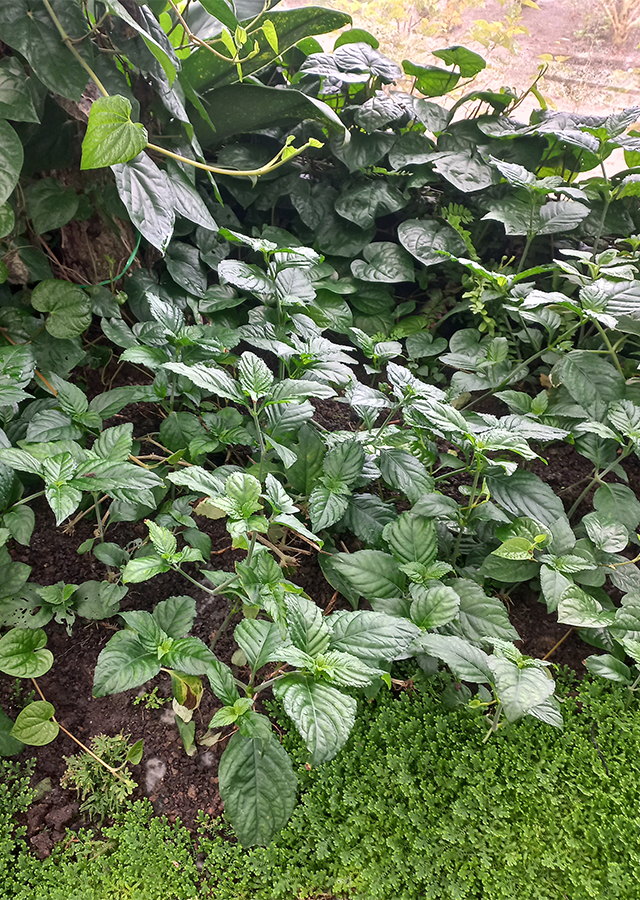
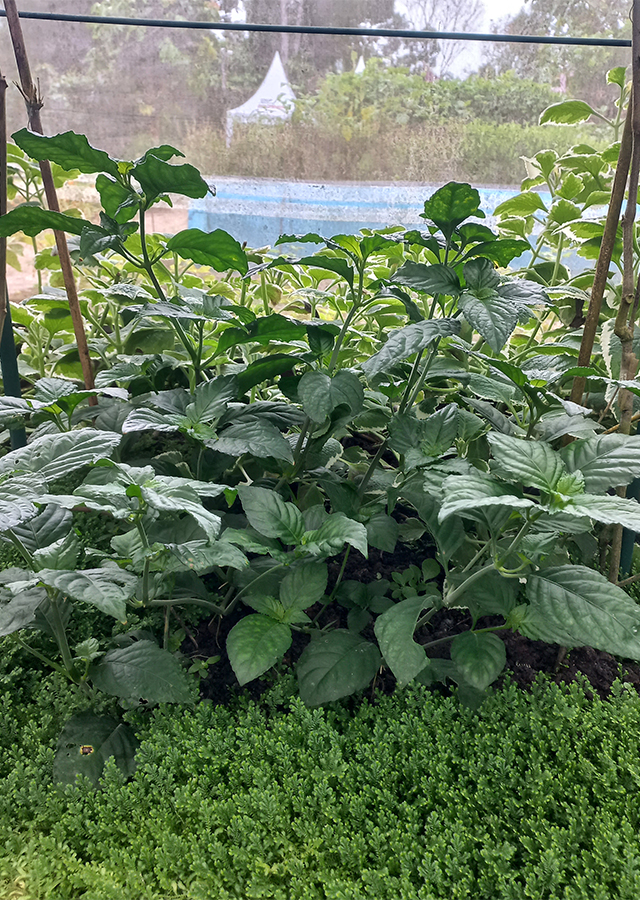
Paris (Strobilanthes tonkinensis) is an aromatic herb 50-100 cm tall from the Acanthaceae family native to Yunnan Province, China, popular as an herbal tea with a distinctive glutinous rice-like aroma in Southern China. In North Sumatra, its leaves are used in making Karo oil. Paris is traditionally believed to reduce fever and help treat diabetes.
Agroecology
Paris grows in moist forests at elevations of 200-1,500 m asl.
Morphology
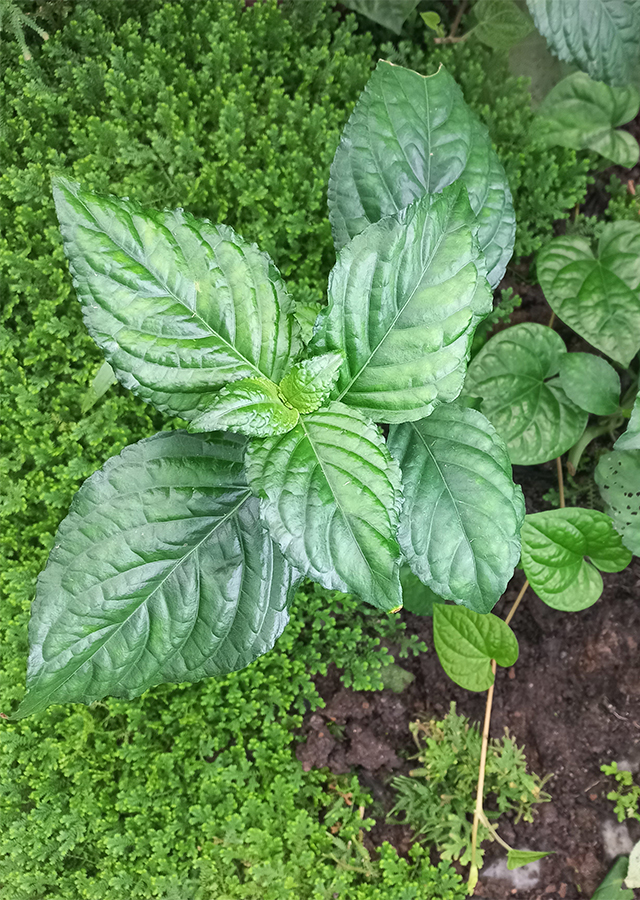
- Stem puberulent, 4-angled, hairless, fragrant when dry. Petiole up to 2 cm, puberulent.
- Leaves broadly oblong-elliptic, 18.5 × 6 cm in size, both surfaces sparsely hairy especially on the veins, upper leaf surface with prominent cell walls, secondary veins 4-7 on each side of the primary vein, base tapering and the vein merging into the petiole, margin crenate, apex acute.
- Inflorescence terminal, a simple raceme, 3-11 cm, sometimes with branches arising from the apical leaf axils; rachis puberulent with gland-tipped trichomes; bracts linear-spatulate, 10-12 × 2-2.5 mm, sparsely puberulent and gland-tipped puberulent, densely covered with white cystoliths, 1-veined; bracteoles linear, 5 × 1 mm, puberulent, abaxially densely covered with cystoliths. Calyx 5-lobed to the base; lobes linear, 8-9 × 1 mm, subequal, puberulent, outside covered with prominent cystoliths. Corolla pink to pure white, 3.2 cm, straight, hairless outside, hairless inside except for trichomes retaining the pistil; the basal tube cylindrical and 2 mm wide, gradually widening to a 1 cm mouth after 1 cm; lobes orbicular, 5 mm in diameter. Stamens 4, included; the shorter filament pair 4 mm, hairless; the longer filament pair 7 mm, pubescent; anther thecae oblong, 3 mm; pollen type 4. Ovary ovate, 3 mm, gland-tipped pilose at the tip, style 1.5 cm, smooth.
- Fruit a narrowly oblong-ovate capsule, 8-10 × 2.5 mm, gland-tipped pilose, 4-seeded, tip (rounded-tapering) apiculate.
- Seeds ovate, 2 × 2 mm in size, puberulent; areola small, hairless.
Cultivation
Propagation can be done by tissue culture as this plant has become increasingly rare.
Chemical Content
Triterpene (squalene), ethyl pipecolinate, 2-acetyl-3,4,5,6-tetrahydropyridine, 1-(2-pyridinyl), 1-hepten-3-one, 3-octanone, 3-octanol, 1-(2-pyridinyl)-ethanone, 2-acetylpiperidine, 1-(3,4,5,6-tetrahydro-2-pyridyl)-1-propanone and 1-(1,4,5,6-tetrahydro-2-pyridyl)-1-propanone.
Benefits
Reduces fever, helps in treating diabetes. Has a number of activities such as antiviral, antitumor, anti-inflammatory, and anticoagulant.
Local Names
Information not known. Further research is needed.
Traditional Recipes
The following recipes reflect traditional knowledge passed down through generations, not a substitute for professional medical diagnosis or advice. Consult a healthcare provider before use.
1. Fever
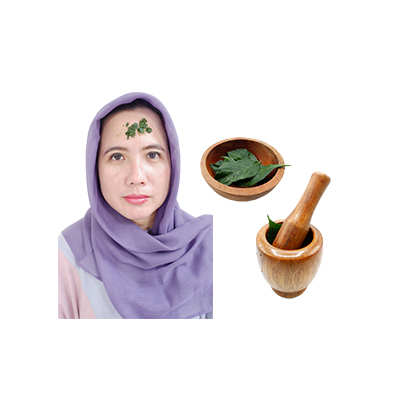
- Take paris leaves then wash until clean.
- Grind the leaves into a paste.
- Apply the leaf paste to the forehead.
- Repeat until the fever goes down.
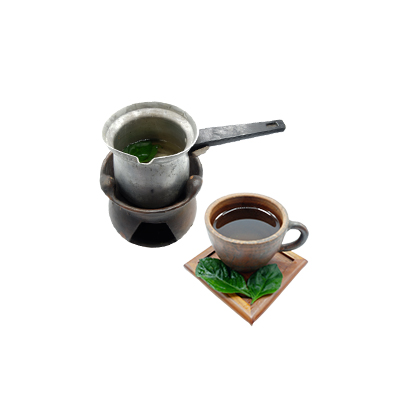
2. Diabetes
- Wash paris leaves clean with running water.
- Boil the leaves until it boils.
- Let it sit until warm/cold.
- Strain and drink.
Reference Sources
- Royal Botanic Gardens. 2021. Strobilanthes tonkinensis Lindau. http://www.plantsoftheworldonline.org/taxon/urn:lsid:ipni.org:names:55986-1. 17-12-2021.
- Flora of China. Strobilanthes tonkinensis Lindau. vol 19. http://www.efloras.org/florataxon.aspx?flora_id=2&taxon_id=250096747. 17-12-2021.
- Srikun N. 2017. In vitro propagation of the aromatic herb Strobilanthes tonkinensis Lindau. Agric Nat Resour. 51(1):15–19.
- Zhang Yanju . 2015. Analysis of Volatiles in Strobilanthes tonkinensis Leaf Extracted by Headspace Solid-phase Microextraction.Published 2015 Chemistry. Chinese Journal of Tropical Crops. https://www.semanticscholar.org/paper/GC%2FMS-Analysis-of-Volatiles-in-Strobilanthes-Leaf-Yanju/c203d6a6205591d17c5e9f07aebb3dd6bbcb2ac6