Strongylodon macrobotrys A.Gray
Summary
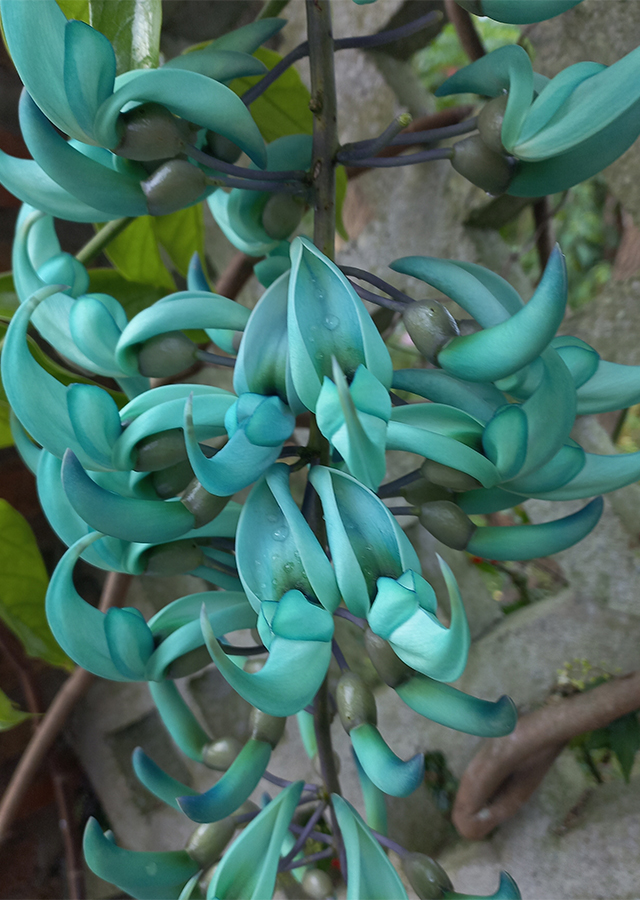
Strongylodon macrobotrys, or jade vine, is a liana native to the Philippines considered one of the most beautiful flowering plants in the world thanks to the turquoise color of its dangling flower clusters when in full bloom. Its popularity among ornamental plant enthusiasts has ironically made it increasingly rare in the wild due to habitat destruction, giving it vulnerable status on the IUCN Red List. Behind its beauty, research has found compounds in jade vine showing biological activity as an anticancer agent.
Agroecology
Jade vine is found thriving in tropical forests, along rivers or in ravines from 700 to 1,000 m asl. This species grows well in fertile, well-drained soil, with a slightly acidic to neutral soil acidity (pH 6-7). Jade vine grows best if the roots are in a shaded location, while the leaves receive full sun.
Morphology
- Roots a taproot.
- Stem woody, with gray, smooth bark, round, sturdy.
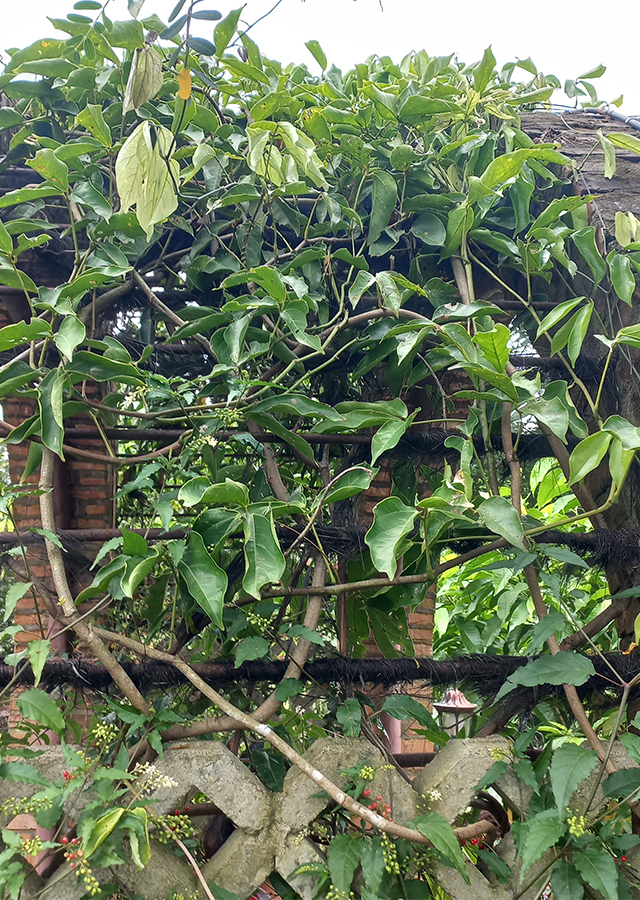
- Leaves trifoliate (consisting of 3 leaflets), light green, oblong shaped, veins pinnate, margin entire, tip acuminate, base obtuse. The tendril stalk is relatively wide, about 2.5 cm wide.
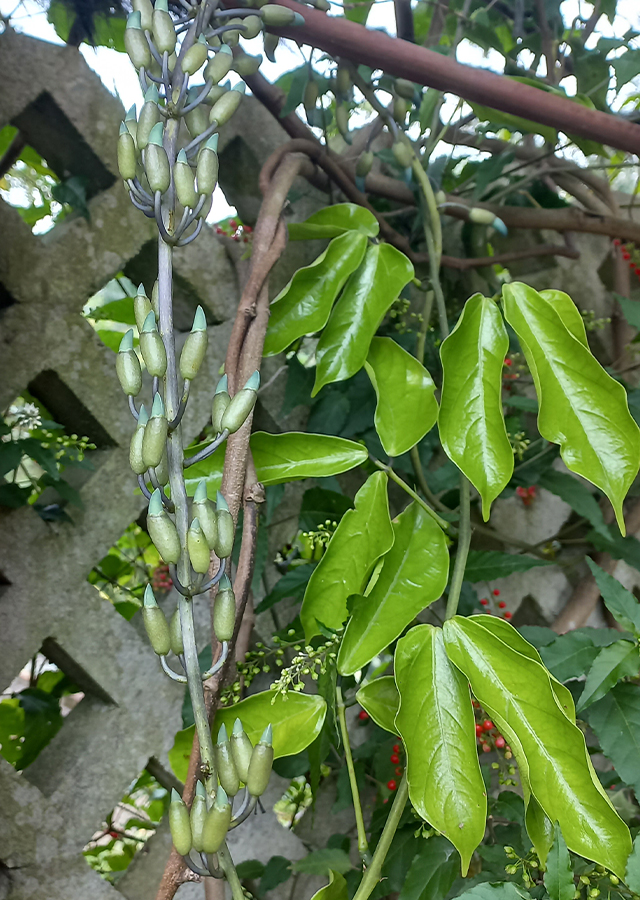
- Flowers bisexual, corolla claw-shaped (curved) or bird-beak shaped with a unique bluish-green color similar to mineral colors like turquoise and jade. The calyx forms an arch. The flower stalk or pedicel is short and attached to the flower cluster. Flowers arranged in a long hanging inflorescence known as independent coils or pseudoracemes (1.5-3 m long) with 75 flowers or more. The inflorescence appears at the tip of the stem (terminal flowers).
- Fruit a fleshy pod, oblong or round, with a short curly beak at its tip, the fruit is green. In 1 fruit there are up to 12 seeds.
- Seeds light brown, oblong shaped.
Cultivation
Plant propagation with seed, stem cuttings, or budding.
Chemical Content
Taraxerone, stigmasterol, β-sitosterol, triglycerides, β-stigmasteryl 3-O-β-D-glucopyranoside, polyprenol, lutein, squalene, chlorophyll, malvin (an anthocyanin), and saponarin (a flavone glycoside).
Benefits
Has potential as an anticancer agent.
Local Names
Rumbai irian, Kuku macan biru.
Reference Sources
- Royal Botanic Gardens, Kew. Plants of the World Online: Strongylodon macrobotrys A.Gray. https://powo.science.kew.org/taxon/urn:lsid:ipni.org:names:519595-1. 14-08-2022.
- Flora Fauna Web. 2022. Strongylodon macrobotrys. https://www.nparks.gov.sg/florafaunaweb/flora/1/5/1506. 14-08-2022.
- Stuartxchange. 2021. Philippine Medicinal Plants: Tayabak. http://www.stuartxchange.org/Tayabak. 14-08-2022.
- Ragasa C. Y. et al. 2014. Chemical constituents of Strongylodon macrobotrys. Der Pharma Chemica, 2014, 6 (6):366-373. http://derpharmachemica.com/archive.html.
- Planter and Forester. 2020. Strongylodon macrobotrys A.Gray, Jade Vine, Tanaman Merambat Berwarna Hijau yang Indah. https://www.planterandforester.com/2020/11/strongylodon-macrobotrys-agray-jade.html?m=1. 14-08-2022.