Styrax paralleloneurus Perkins
Summary
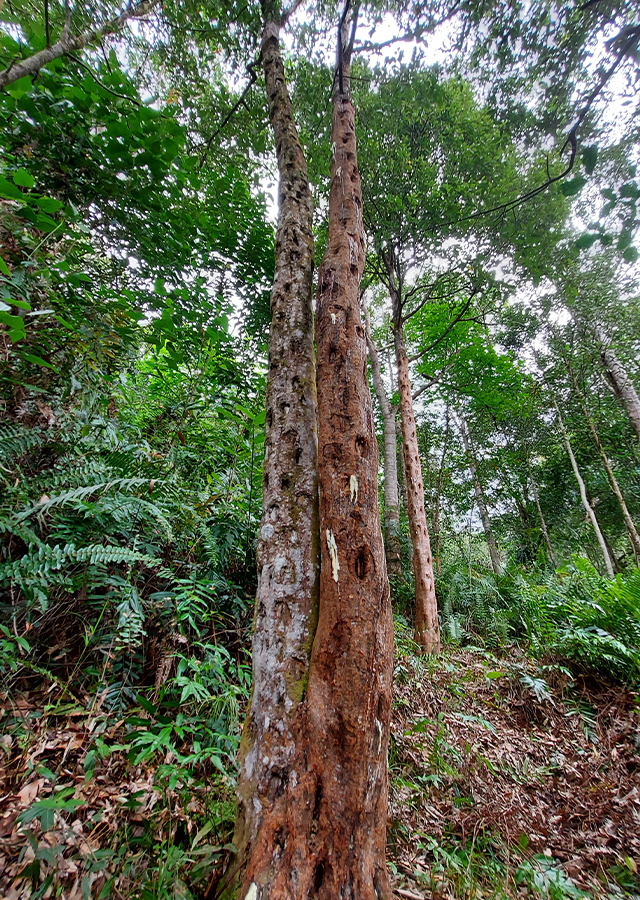
Kemenyan (Styrax paralleloneurus) is a tree 20-30 meters tall of the Styracaceae family, whose resin has been traded as far as the Arabian Peninsula and North Africa for more than 5,000 years. This distinctively aromatic resin is produced mostly in North Tapanuli, which according to local belief was once exported via the legendary port of Barus. Kemenyan is traditionally believed to have properties as a sedative and to relieve boils and digestive disorders.
Agroecology
Growing sites vary from lowlands to highlands at elevations of 60-2,100 m above sea level, able to grow in podzolic, andosol, latosol, and regosol soils. Grows in highly porous soil that drains water easily, and requires sunlight.
Morphology
- Roots taproot, light brown in color.
- Stem straight with few branches. Bark reddish in color.
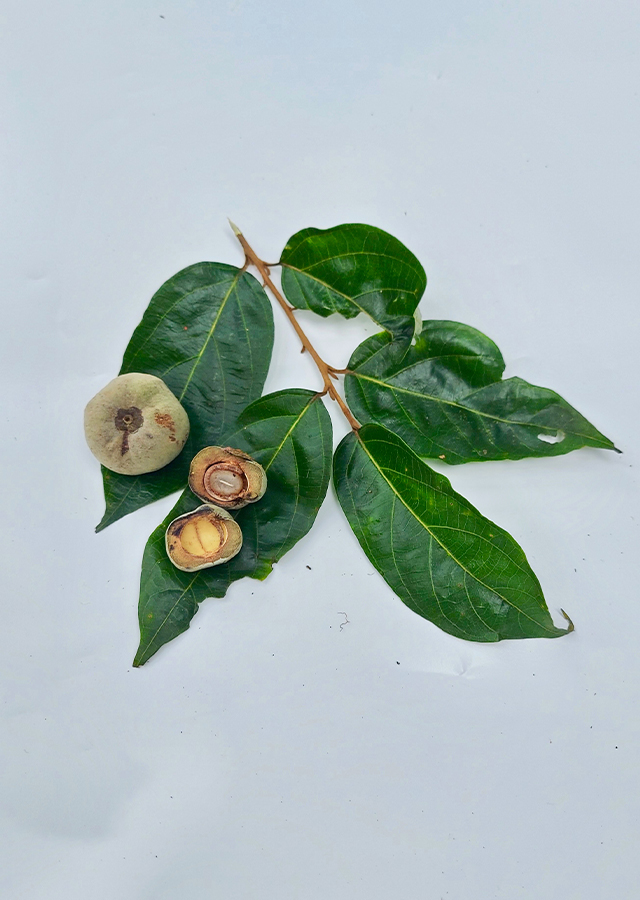
- Leaves single, spirally arranged, round oval shaped, elongated (elliptical) with a round base and pointed tip.
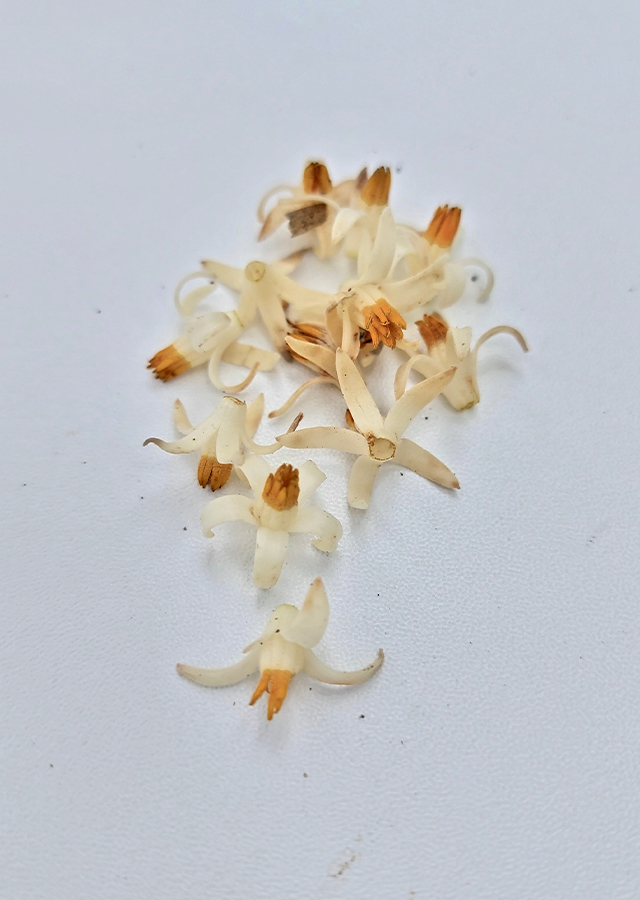
- Flowers compound, panicle-shaped at the tip or leaf axils. Caterpillar-shaped and oblong, relatively small.
- Fruit round and oblong shape, relatively small, green when young and brown when mature.
- Seeds round, brown, wrapped in thick, hard fruit flesh.
Cultivation
- Propagated by seed. Fruit is taken from fruit that has fallen from the parent tree.
- Resin is produced when the tree is 8-10 years old.
Chemical Content
Cinnamic acid, benzoic acid, styrol, tyracin, vanillin, coniferyl, cinnamate, coniferyl benzoate, benzoresinol, phenyl, phenylpropanoid.
Benefits
Sedative, treats tumors, boils, dysentery, fever, treats skin and digestive problems, cancer remedy, bronchitis, and disinfectant for wounds.
Simplisia
- Harvest the resin then air-dry by spreading it on the floor away from sunlight. The drying process takes approximately 5-7 weeks.
- Separate the bark and resin from mixed impurities such as remaining bark, leaves, and twigs.
- Pound the resin and resin powder until fine. Put into a bucket of water as a way to separate resin and impurities, then dry and heat until it melts and forms into larger slabs.
Local Names
Haminjon (Batak), Kemenjen (Pakpak Dairi), Keminjen (Karo), Menyan (Java).
Traditional Recipes
The following recipes reflect traditional knowledge passed down through generations, not a substitute for professional medical diagnosis or advice. Consult a healthcare provider before use.
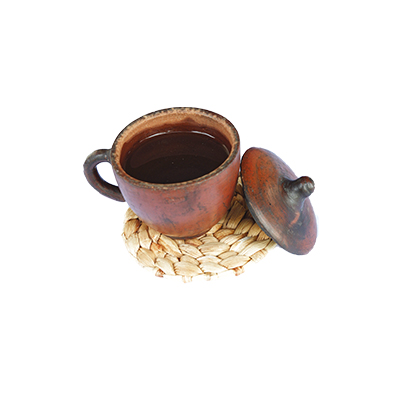
1. Sedative
- Wash 3 g kemenyan bark then mash finely.
- Steep with 1 glass of hot water, wait a few minutes then strain.
- Drink all at once.
Reference Sources
- Jayusman MP. 2014. Mengenal Pohon Kemenyan Styrax sp. IPB Press, Bogor 74.
- Ilmubudidaya. Klasifikasi Dan Morfologi Tanaman Kemenya. https://ilmudasar.id/klasifikasi-dan-morfologi-tanaman-kemenyan 19-02- 2020
- Kholibrina CR, Aswandi, Susilowati A. 2018. Flowering and fruiting phenology of Kemenyan toba (Styrax sumatrana J.J.Sm.) in Aek Nauli forest, North Sumatra. IOP Conf. Series: Earth and Environmental Science 122(2018)012061: 1-6.
- Pasaribu G, Jasni J, Damayanti R, Wibowo S. 2013. Sifat anatomi, sifat fisis dan mekanisme pada kayu kemenyan Toba (Styrax sumaterana) dan kemenyan bulu (Styrax paralleloneurus). J. Penel. Hasil Hutan 30(2): 161-169.
- Widyaningrum Herlina, Tim Solusi Alternatif. 2019. Kitab Tanaman Obat Nusantara. Media Pressindo. Jakarta. (Penenang)
- Satu Harapan. Com. 2016. Kemenyan, dari khasiat obat hingga kosmetik. .http://www.satuharapan.com/read-detail/read/kemenyan-dari-khasiat-obat-hingga-kosmetik 12-01-2021