Synedrella nodiflora (L.) Gaertn.
Summary
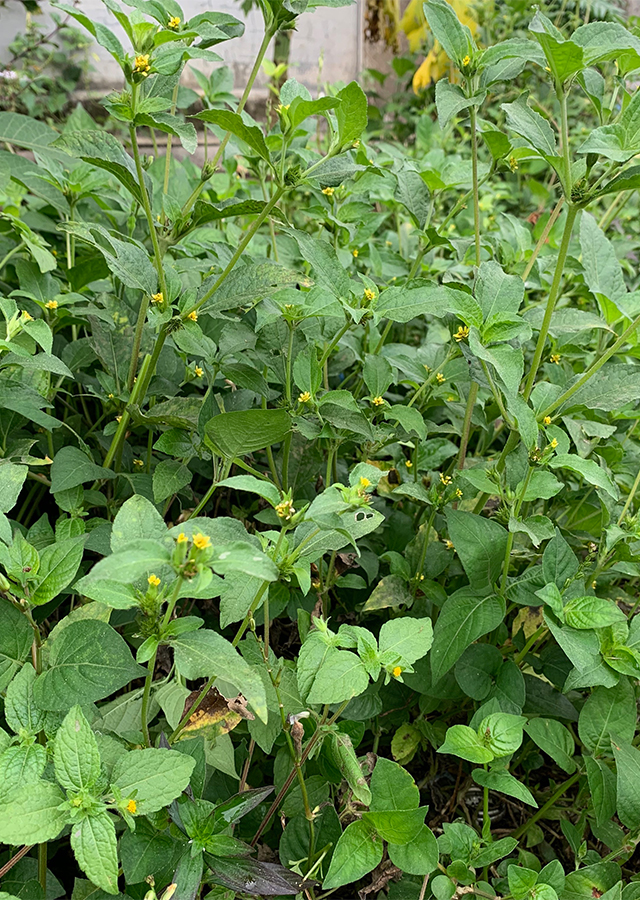
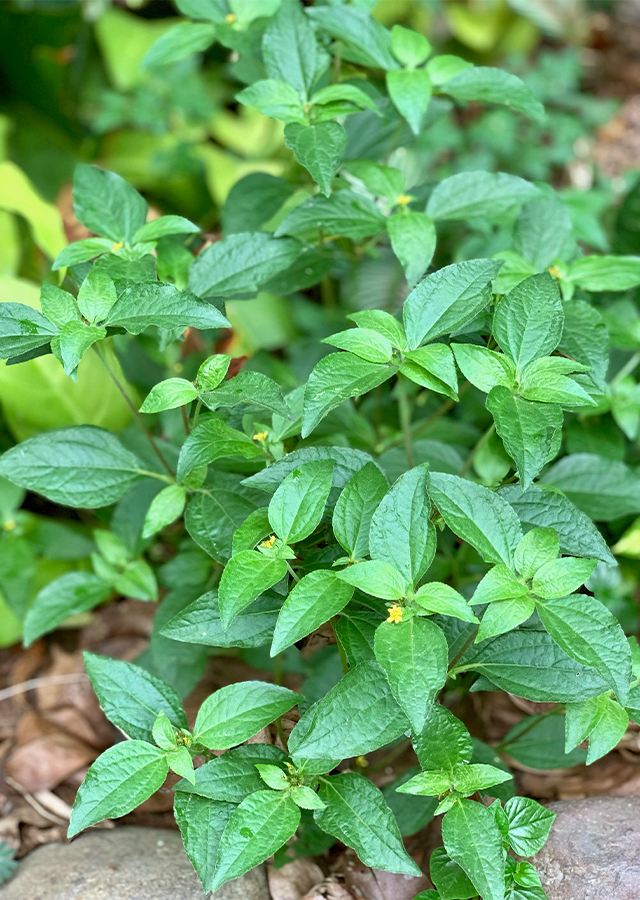
Jotang kuda (Synedrella nodiflora) is an annual herb up to 1.5 meters tall of the Asteraceae family, native to Central and South America, first recorded in Java in 1888. Its young shoots can be eaten as a vegetable, besides being used as a traditional liniment for diarrhea and hemorrhoids. Jotang kuda is also believed to be anti-inflammatory and to help address gum infections.
Agroecology
Jotang kuda can grow in full sunlight, but prefers bright shaded places. This plant does not like waterlogging and is often found in plantations, yards, roadsides, fences, and abandoned land. In Indonesia it grows up to elevations of 1,200 m above sea level.
Morphology
- Root fibrous with strong branches.
- Stem upright, green in color, finely hairy, many branches, has large nodes.
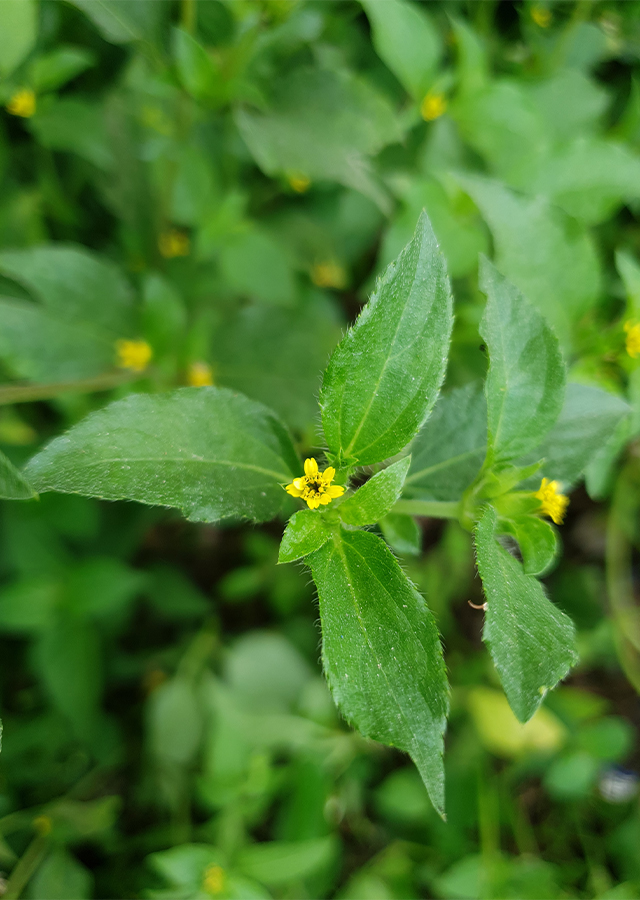
- Leaves green in color, elongated ovate-shaped, tapering tip, finely hairy, opposite arrangement, short-stalked.
- Flowers compound consisting of 5-6 flower heads, 10-20 central disc flowers, short-stalked, yellow sepals, yellow pollen.
- Fruit hard, black or dark brown in color, has thorns with fine hair. Cotyledon wider than the radicle.
Cultivation
Propagated generatively (seed).
Chemical Content
Flavonoid, alkaloid, steroid, triterpenoid, phenolic compounds, saponin, tannin, nodifloside A, β-sitosterol, stigmasterol, β-caryophyllene, germacrene D, β-farnesene, β-cubebene.
Benefits
Remedy for rheumatism, liniment for stomach ache (diarrhea), hemorrhoids, treats earache and gum infection, antidiuretic (urine promoter), anti-inflammatory, anticancer, antimicrobial, antioxidant.
Simplisia
- Separate jotang kuda leaves from the stem first.
- Wet-sort, then wash with running water to remove any dirt that may still be attached then drain. Cut into small pieces then dry by air-drying without direct sunlight exposure until the leaves become dry.
- Once dry, the leaves are cleaned again of any remaining dirt left during drying. Then store in a clean and airtight place.
Local Names
Babadotan lalaki, Jukut berak kambing, Jukut gendreng, Bruwan, Gletang warak, Krasuk, Serunen (Java), Gofumakeang (Ternate).
Traditional Recipes
The following recipes reflect traditional knowledge passed down through generations, not a substitute for professional medical diagnosis or advice. Consult a healthcare provider before use.
1. Stomach ache
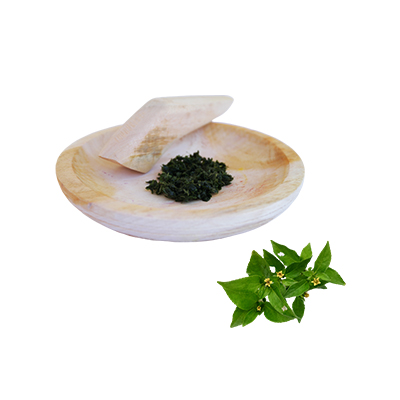
- Take 10-15 young jotang kuda leaves.
- Grind finely and add olive oil or black seed oil. Then apply to the painful or aching area.
Reference Sources
- CABI. Synedrella nodiflora(synedrella). https://www.cabi.org/isc/datasheet/52325 30-01-2021.
- Hidayat, Syamsul. (2016). Pl@nt Use. Synedrella nodiflora (PROSEA). https://uses.plantnet-project.org/en/Synedrella_nodiflora_(PROSEA) 30-01-2021.
- NCBI. (2012). Synedrella nodiflora. https://www.ncbi.nlm.nih.gov/pmc/articles/PMC3341718/. 30-01-2021
- Sumi Wijaya, al. (2015). Antibacterial and Antioxidant Activities of Synedrella nodiflora (L.) Gaertn. (Asteraceae). https://core.ac.uk/download/pdf/232211102.pdf 30-01-2021.
- University of Guam College of Natural & Applied Science. (2015). Synedrella nodiflora https://cnas-re.uog.edu/guam-weeds/synedrella-nodiflora/ 30-01-2021.