Syzygium cumini (L.) Skeels
Summary
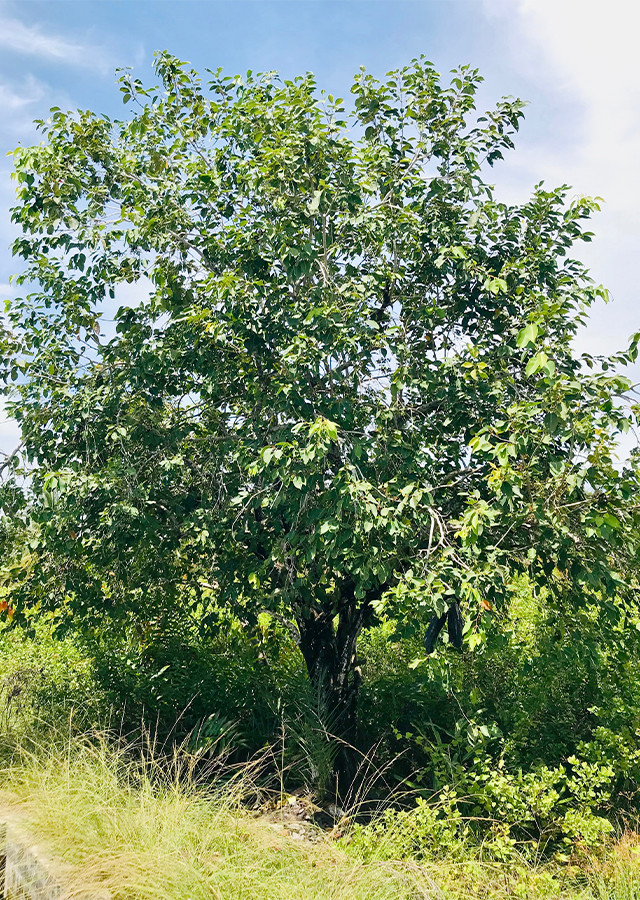
Jamblang (Syzygium cumini) is a tree 10-15 meters tall of the Myrtaceae family, naturally distributed from the subtropical Himalayas to India, Sri Lanka, and Australia. In Java, its dark purple fruit is commonly cultivated in yards and processed into jam, jelly, and fermented products. Traditionally, jamblang is also believed to help address gout and has antidiabetic properties.
Agroecology
Commonly grows in tropical and subtropical areas at elevations up to 2,000 m above sea level. Average rainfall 1,500-6,000 mm/year, annual daytime temperature around 20-32 °C, prefers bright locations but can also live in shade. Prefers soil pH 5.5-7 and is tolerant of strong wind.
Morphology
- Roots taproot, branching, light brown.
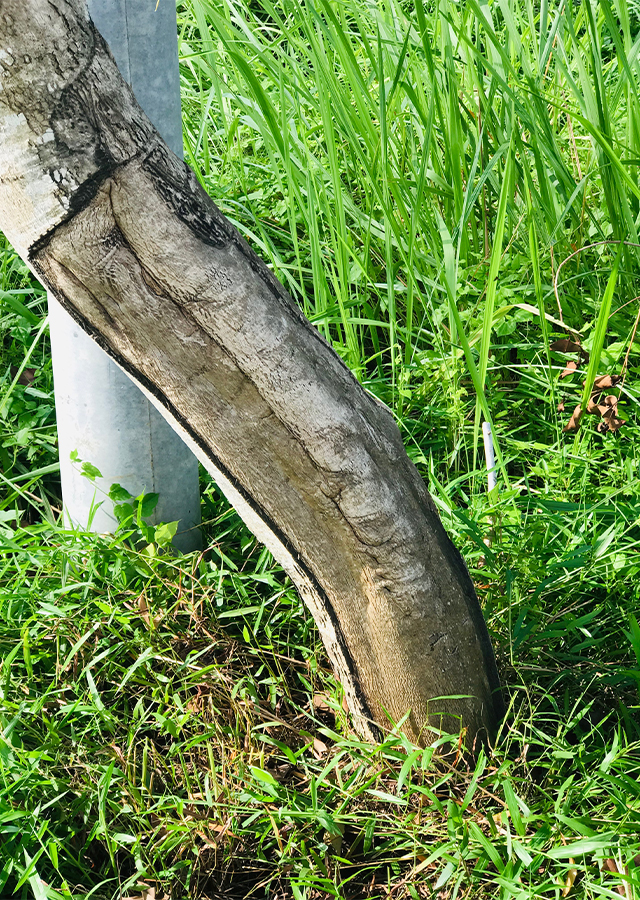
- Stem low-branching, regular or round crown, thick, grows crookedly, and heavily branched.
- Leaves single, thick, broadly oblong, wide wedge-shaped base, smooth edges, pinnate venation, glossy upper surface, green.
- Flowers compound, growing at leaf axils and branch tips, bell-shaped calyx, light green, egg-shaped petals.
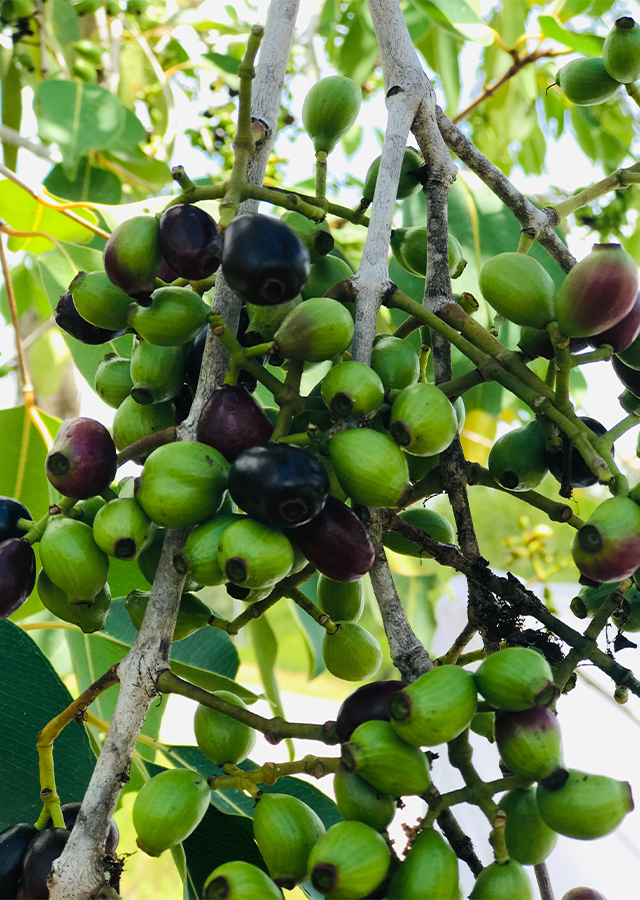
- Fruit a berry, oblong. Young fruit green, ripe fruit dark purplish-red, sour-astringent taste.
- Seeds hard, oblong shape.
Cultivation
Generally propagated by seed, though superior cultivars can be propagated by air-layering.
Chemical Content
Alkaloids, flavonoids, saponins, quinones, tannins, steroids, polyphenols, monoterpenes, essential oils, β-sitosterol, quercetin, myricetin, flavonol glycosides, anthocyanins, betulinic acid, cyanidin.
Benefits
Treats gout, prevents DNA damage, antioxidant, antibacterial, anti-inflammatory, antianemic, antipyretic, and antidiabetic.
Simplisia
- Wash the bark thoroughly. Separate the bark from the inner stem using a knife.
- Dry in an oven at 45-50 °C for 4-5 days.
- Cut the dried bark into small pieces. Pound into powder.
Local Names
Jambee kleng (Aceh), Nunang (Gayo), Jambu koliong (Jambi), Jambulan (Flores), Duwet (Java), Juwet (Jakarta, Bali).
Traditional Recipes
The following recipes reflect traditional knowledge passed down through generations, not a substitute for professional medical diagnosis or advice. Consult a healthcare provider before use.
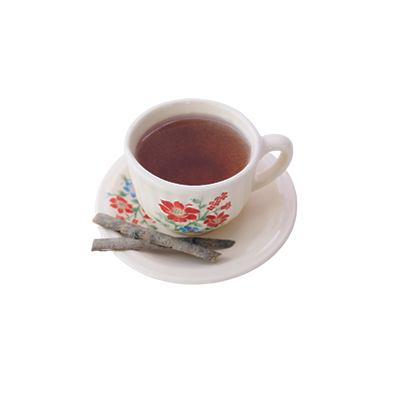
1. Diabetes
- Boil 1 piece of jamblang bark (about the size of a palm) with 5 glasses of water until it boils and the water is reduced to 3 glasses.
- Drink 3 times a day, 1 glass each time.
Reference Sources
- Fern, Ken. (2019). Useful Tropical Plants Database. Syzygium cumini. http://tropical.theferns.info/viewtropical.php?id=Syzygium+cumini. 16-07-2020.
- Health Benefits Times Database. (No date). Black Pulm, Syzygium cumini. https://www.healthbenefitstimes.com/black-plum/. 16-07-2020.
- Lim, T.K. (2016). Edible Medicinal and Non-Medicinal Plants. New York. Springer Vol. 3 page 745.
- Stuart Xchange. (2016). Philippines Medicinal Plants: Duhat-Syzygium cumini (L.) Skeels http://www.stuartxchange.com/Duhat.html. 22-01-2021.