Syzygium polyanthum (Wight) Walp.
Summary
Daun salam (Syzygium polyanthum) is a tree up to 30 meters tall of the Myrtaceae family, distributed from Burma and Indo-China to Sumatra, Java, and Kalimantan. Its distinctively aromatic leaves are an essential cooking spice in Nusantara cuisine, while its wood is used to make furniture. Traditionally, daun salam is also believed to help address gout, diabetes, and lower cholesterol.
Agroecology
Grows from lowlands to mountains at elevations of 1,800 m above sea level, air temperature 25-30 °C. Prefers sandy clay soil texture with pH around 5.5-6.5. Found growing wild in primary and secondary forests.
Morphology
- Roots taproot, spear-shaped tapering to the tip.
- Stem grayish-brown (bark), peeling or scaly.
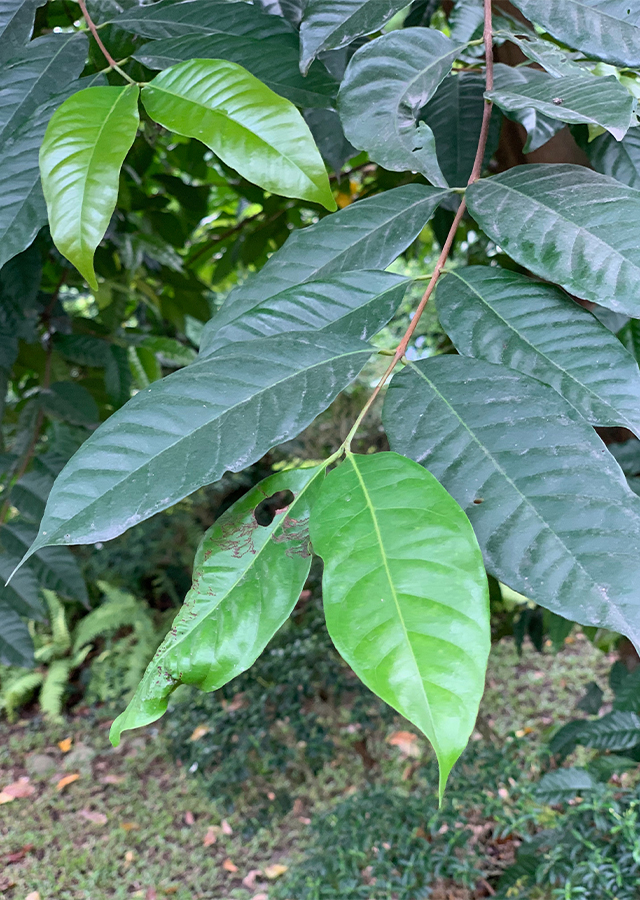
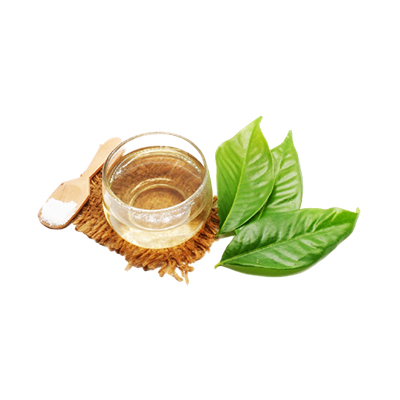
- Leaves single, arranged opposite. Leaf blade narrowly oblong shaped, hairless with secondary veins.
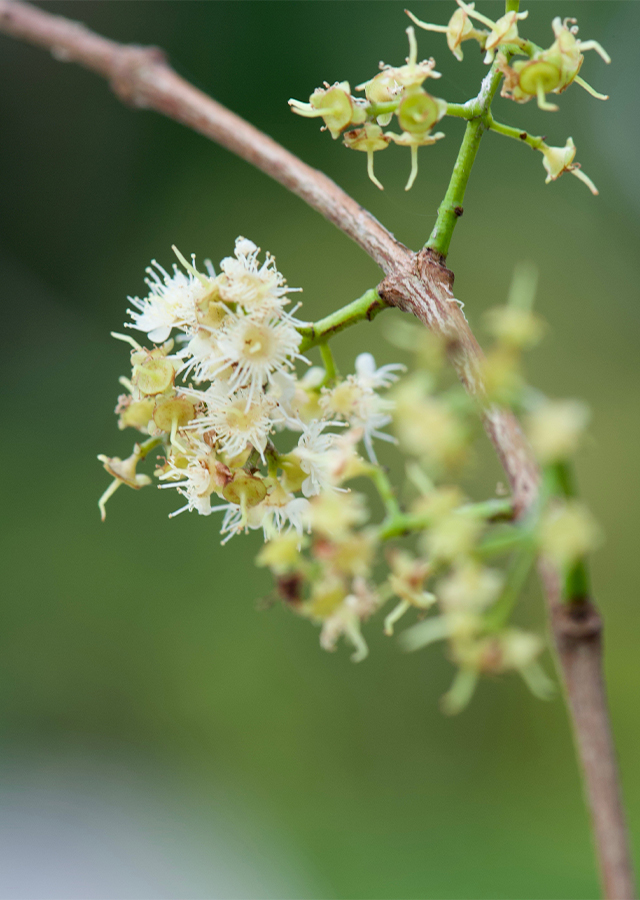
- Flowers small, emerging below the leaf axil, fragrant, bowl-shaped calyx.
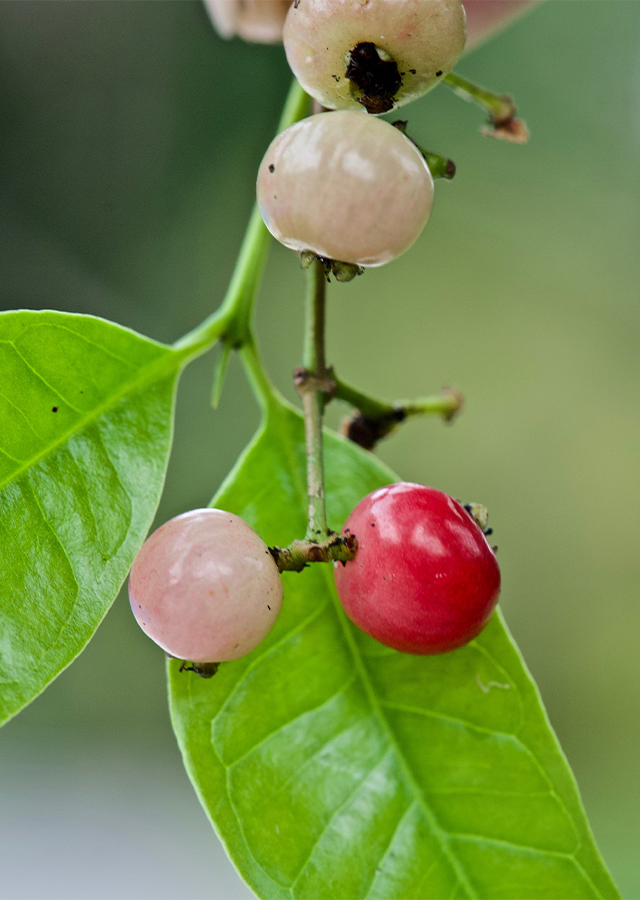
- Fruit round shaped, crowned with calyx segments, red to purplish-black when ripe.
Cultivation
- Propagated generatively (by seed) and vegetatively (cuttings), from superior plants.
- Generatively, sown seeds are planted in the field once the seedling is 6-7 months old.
- Vegetatively (cuttings), by cutting a productive branch with at least 3 twigs, 20-25 cm long, then planting in a polybag.
Chemical Content
Tannins, flavonoids, essential oils, caffeic acid, eugenol, linalool, β-sitosterol, α-pinene, squalene, phytol, gallic acid, β-tocopherol hentriacontane, nerolidol, α-tocopherol, sesquiterpenes, phenols, steroids, saponins, coumarins, terpenoids.
Benefits
Addresses gout, diabetes, gastritis, heart problems and anxiety, itching, diarrhea, rheumatism, lowers cholesterol and blood pressure, improves blood circulation, antibacterial.
Simplisia
- Pick dark green daun salam leaves. Wet-sort to remove dirt from the leaves then wash thoroughly.
- Chop the leaves then dry with an oven at 40 °C. Dry-sort.
- Grind using a blender. Store in a clean, airtight container.
Local Names
Meselengan (Sumatra), Ubar serai (Malay), Kastolam (Kangean).
Traditional Recipes
The following recipes reflect traditional knowledge passed down through generations, not a substitute for professional medical diagnosis or advice. Consult a healthcare provider before use.
1. Diabetes
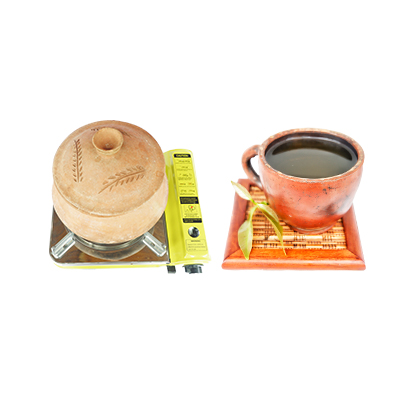
- Take 8 daun salam leaves, boil with 2 glasses of water until it boils and 1 glass of water remains.
- Drink 2 x 1 glass a day.
2. Diarrhea
- Wash 15 g daun salam leaves thoroughly then boil with 1 glass of clean water for 15 minutes over low heat.
- Add a little salt.
- Once cool, strain then drink.